Want to be in the loop?
subscribe to
our notification
Business News
VIỆT NAM PROMOTES HUMAN RESOURCES AND R&D INVESTMENT
Việt Nam needs investment in research and development (R&D) and high-quality human resources for the journey of technological development and increasing competitiveness.

Even in HCM City, Việt Nam’s leading R&D hub, the burden of funding still falls largely on the private sector. —VNA/VNS Photo
HÀ NỘI — Việt Nam needs investment in research and development (R&D) and a high-quality workforce on the journey of technological development and increasing competitiveness.
Việt Nam ranks 44th among the 133 economies featured in the Global Innovation Index 2024, published by the World Intellectual Property Organisation (WIPO), an encouraging two-place rise from the previous year.
Particularly noteworthy is the country’s leap in the high-tech industry output index, with the country now ranked 28th globally.
However, Việt Nam's R&D expenditure remains modest, at just 0.4 per cent of GDP in 2023 - far below the global average of 2.3 per cent and trailing behind regional peers such as China (2.5 per cent), Singapore (1.9 per cent), and Malaysia (1 per cent).
This under investment reflects a shortage of high-quality technical professionals and limited access to capital for innovation-led enterprises.
The Deputy Director of the Institute of Information Technology under the Việt Nam Academy of Science and Technology, Nguyễn Long Giang, emphasised that developing a strong digital economy requires a skilled workforce, especially in areas like AI, cloud computing, blockchain and cybersecurity. Yet Việt Nam continues to struggle with both attracting and retaining such talent.
The domestic technology sector faces fierce competition - not just from within the country, but also from global markets. Cases of brain drain and frequent job-hopping are common.
Even large corporations like Viettel are feeling the pressure. To remain competitive, Viettel has increased salaries by about 20 per cent above the industry average, with top-tier roles commanding salaries in the top five per cent of the market, yet even this may not be enough to sustain long-term growth.
While businesses are eager to innovate, capital remains a significant hurdle. R&D activities - by nature uncertain and intangible - are often considered high-risk by traditional lenders.
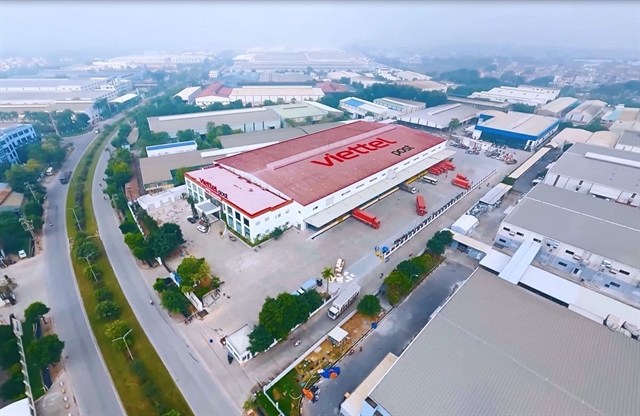
Large corporations like Viettel are feeling the pressure from investment to R&D activities. — VNA/VNS Photo
The Deputy Director of the Department of Startups and Technology Enterprises at the Ministry of Science and Technology, Phạm Đức Nghiệm, notes that the inability to value intangible assets such as patents and proprietary technologies continues to impede financing efforts.
One such case is Thuận Thành Technology Solutions Co, Ltd in Bắc Ninh. Despite nearly a decade in operation, the company faces persistent challenges in securing funding for infrastructure expansion due to stringent collateral requirements - typically favouring tangible assets like property and vehicles, which tech start-ups often lack.
The Institute for Digital Economic Development Strategy (IDS) also noted that although Việt Nam has several technology companies with the potential to compete globally, these enterprises still face challenges in scaling up due to difficulties in capital mobilisation.
In response to these challenges, Việt Nam is preparing to roll out a VNĐ500 trillion (US$ 192 million) credit package to support digital infrastructure and technology enterprises.
However, experts warn that unless lending conditions are tailored to the realities of innovative businesses, disbursement may remain slow and ineffective.
In HCM City, Việt Nam’s leading R&D hub, the burden of funding still falls largely on the private sector. Despite being home to global R&D centres such as Intel, Samsung, and Bosch, along with top-tier universities and institutes, the city’s public R&D budget stands at a modest VNĐ200 billion per year.
Việt Nam’s digital economy is gaining ground, with revenues projected to hit US$152 billion in 2024 - a 35 per cent increase since 2019. More than 74,000 enterprises now operate in this space. Yet to maintain this momentum, urgent action is needed to tackle the core bottlenecks, including limited R&D investment and a shortage of skilled professionals.
To address these challenges, the Politburo’s Resolution No 57-NQ/TW sets a bold vision that by 2030, R&D investment should reach two per cent of GDP, with more than 60 per cent coming from the private sector.
Additionally, at least 15 per cent of the science budget is earmarked for strategic technologies such as AI, semiconductors and renewable energy.
Achieving this goal requires systemic reform, including amendment of the 2013 Law on Science and Technology, more flexible budgeting mechanisms and streamlined fund allocation processes.
Although several companies have embraced the Science and Technology Development Fund mechanism, overall use remains low. Between 2016 and 2018, Viettel used only 60 per cent of its allocated funds, about VNĐ2.37 trillion.
Many businesses hesitate to engage with the fund due to unclear guidelines and cumbersome establishment procedures - currently taking up to a year to complete.
Experts argue that simplifying these mechanisms could significantly increase corporate investment in science and technology. Resolution 193 from the National Assembly has taken a step in this direction, but implementation is still awaiting detailed government regulations. — VNS
Source: VNS
Related News

INFRASTRUCTURE / CONSTRUCTION / LOGISTIC / PORT
VIỆT NAM-CAMBODIA TRADE GATHERS PACE TOWARDS $20 BILLION TARGET
Trade between Việt Nam and Cambodia continues to grow, remaining a bright spot and a key pillar of bilateral cooperation as the two countries aim to raise two-way trade to US$20 billion in the coming years. After setting a record of more than $11.3 billion last year, bilateral trade reached about $8.7 billion in the first eight months of this year, up 8.3 per cent year on year.
TECHNOLOGY
AI BEGINNING TO RESHAPE RECRUITMENT CRITERIA
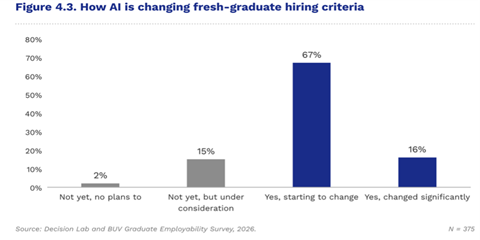
Digital literacy is the only capability area in which fresh graduates meet employers’ expectations, according to a new report. Yet, it is also the standard rising fastest, as businesses increasingly expect new hires to use AI effectively in the workplace. Some 83 per cent of employers say AI has changed, or is beginning to change, their hiring criteria, while 94 per cent report higher expectations for digital and AI capabilities than they had two to three years ago.

INFRASTRUCTURE / CONSTRUCTION / LOGISTIC / PORT
ĐÀ NẴNG GREEN-LIGHTS US$105 MILLION THAI DEVELOPMENT DEAL
The central city has approved an investment proposal by Thailand’s WHA Group to develop infrastructure for the 400ha WHA Đà Nẵng Industrial Park project on two communes of Thăng Bình and Đồng Dương, with an investment of more than VNĐ2.7 trillion (US$105 million). The city said it approved WHA Industrial Development International's status as an investor in the project, which is expected to take place between 2027 and 2034.

VIETNAM ECONOMY INVESTMENT
MOBILE PHONE EXPORTS RISE 20% TO $51.8 BILLION IN FIRST NINE MONTHS
Exports of mobile phones and components rose 20 per cent year-on-year to nearly US$51.8 billion in the first nine months of 2026, with China, the US and Republic of Korea accounting for more than half of the total. Shipments to the three markets reached a combined $26.18 billion, or 50.6 per cent of total exports of the product group during the period, according to data from the Vietnam Department of Customs under the Ministry of Finance.

VIETNAM ECONOMY INVESTMENT
FRUIT AND VEGETABLE EXPORTS POISED TO HIT $10 BILLION IN 2026
Fruit and vegetable exports are on track to reach nearly US$10 billion in 2026, after rising 19.9 per cent year on year to nearly US$7.4 billion in the first nine months, driven by strong seasonal demand and abundant tropical fruit supplies. The Ministry of Agriculture and Environment said the growth reflected stronger international demand for fresh produce and processed agricultural products.
GARMENT / TEXTILE
TEXTILE EXPORTS FACE DUAL CHALLENGES OF SUSTAINING ORDERS AND BOOSTING EFFICIENCY AMID GROWING COMPETITION
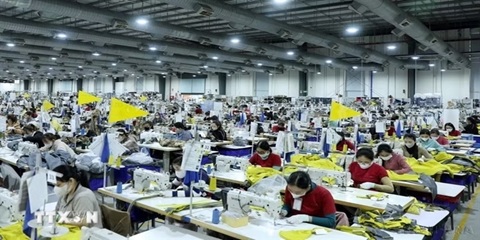
Data shows that the textile and garment sector maintained its growth momentum in the first nine months of this year. The industry's total export turnover reached an estimated US$35.721 billion in the first nine months of this year, up 3.3 per cent year-on-year. Despite posting encouraging export figures, Vietnamese textile and garment enterprises continue to navigate unpredictable market variables.
Events Sponsors






















