Want to be in the loop?
subscribe to
our notification
Business News
VIỆT NAM’S AUTO MARKET GAINS MOMENTUM IN EARLY 2025
The country's auto sales saw a robust 21 per cent increase year-on-year, a clear indication of market recovery.
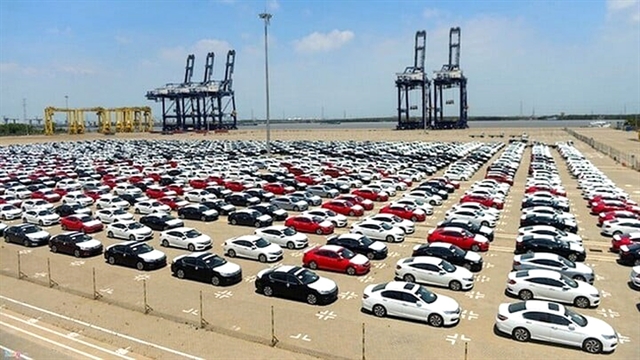
Việt Nam Automobile Manufacturers’ Association members saw total vehicle sales of 29,585 units in April. — Photo vtc.vn
HÀ NỘI — The Vietnamese auto market is showing signs of a solid rebound in the early months of 2025, with both sales volume and consumer sentiment on the rise after a sluggish period in the previous year.
Việt Nam Automobile Manufacturers’ Association (VAMA) members saw total vehicle sales of 29,585 units in April, the association said. While this marked a slight 7 per cent drop compared to March, it represented a robust 21 per cent increase year-on-year, a clear indication of market recovery.
Sales performance in April highlighted the continued dominance of passenger vehicles, with 20,766 units sold, though this segment also experienced a 7 per cent decline from the previous month. Commercial vehicle sales mirrored this trend with 8,619 units, while special-purpose vehicles bucked the pattern, increasing 11 per cent month-on-month to 200 units.
A breakdown of vehicle origin showed that domestic assembly accounted for 13,890 vehicles sold, down 7 per cent, while completely built-up (CBU) imported vehicles totalled 15,695 units, also down 7 per cent. Despite these monthly dips, the broader picture for the first four months of 2025 paints a more optimistic scenario.
From January to April, total market sales climbed to 101,834 vehicles, a 23 per cent surge compared to the same period in 2024. Passenger car sales rose by 22 per cent, commercial vehicles increased by 27 per cent and special-purpose vehicles saw a remarkable 49 per cent jump. Notably, imported vehicles saw the sharpest rise at 35 per cent, indicating growing consumer preference for international models, while locally assembled units grew 13 per cent.
Toyota led the sales charts in April with 5,566 units sold, maintaining its market-leading position. Other strong performers included Ford (3,997 units), Mitsubishi (2,038), THACO Mazda (2,736) and THACO Kia (2,055). In terms of individual models, the Mitsubishi Xpander proved to be the best-selling vehicle across the market, with 4,013 units sold (combined CBU and CKD). The Ford Ranger also performed well with 4,164 units, followed by the Toyota Vios (3,058), Ford Everest (1,090) and Toyota Yaris Cross (1,030).
SUVs continued to be the preferred choice among Vietnamese consumers, leading all vehicle categories with 5,867 units sold in April. MPVs followed with 3,798 units and sedans came in at 3,292 units. In the commercial sector, pickup trucks and small vans remained the most in-demand.
One standout trend is the growing popularity of hybrid vehicles. In April alone, 973 hybrid vehicles were sold, pushing the cumulative total for the year to 3,535 units - a remarkable 82 per cent increase compared to the same period in 2024. This growth aligns with the global shift toward greener transportation solutions and is further supported by favourable Government tax and fee policies.
Despite these promising figures, the market data does come with notable exclusions. Major players like VinFast and Hyundai have yet to release their sales results for April 2025, making it difficult to form a complete picture of overall market dynamics. The absence of official data from other brands such as Mercedes-Benz, Audi, Subaru and Volvo also adds to the uncertainty around the full scope of Việt Nam’s auto landscape.
Nonetheless, industry analysts remain optimistic. With Việt Nam’s economy on the path to recovery, consumer spending is expected to increase. Coupled with aggressive marketing campaigns, new model launches and improved after-sales service from automakers, the outlook for the rest of the year is encouraging. The market is expected to pick up even further in the second and third quarters of 2025, driven by both demand-side recovery and supply-side stimulus.
The electric and hybrid segments are particularly poised for growth, not only because of environmental awareness but also due to Government incentives designed to shift the market toward sustainable transport. Automakers are increasingly aligning their product strategies with these trends, signalling a new era for Việt Nam’s auto industry.
As more complete data becomes available, particularly from key players yet to report, a clearer picture will emerge. But for now, the signs are positive - Việt Nam’s auto market is shifting gears toward a brighter, more dynamic 2025. — VNS
Source: VNS
Related News

CHARITY / EXHIBITION / OTHER EVENTS
INVESTMENT OPPORTUNITIES IN CA MAU PROVINCE: 96 PROJECTS AND 20 STRATEGIC PROJECTS
We are pleased to share with you information on investment projects currently seeking investors in Ca Mau Province. Should your esteemed company or association be interested, we kindly invite you to review the project information and complete the registration form via the links provided. The Ho Chi Minh City Investment and Trade Promotion Centre (ITPC) will consolidate the expressions of interest and facilitate connections with the leadership of Ca Mau Province at a meeting tentatively scheduled for 13 November 2026 in Ho Chi Minh City.

MEMBER CORNER / PROMOTIONS
BẰNG KIỀU LIVESHOW - A SYMPHONY OF LOVE UNDER THE GOLDEN GLOW
A masterclass in live music that takes the audience on a soulful journey through immortal love songs, guided by the peerless artistry and emotive storytelling of renowned singer Bằng Kiều. The highlight of the night is his seamless musical chemistry with special guest Triệu Hồng Ngọc, promising passionate and deeply resonant duets inside the magnificent Grand Ballroom.

INFRASTRUCTURE / CONSTRUCTION / LOGISTIC / PORT
ĐÀ NẴNG GREEN-LIGHTS US$105 MILLION THAI DEVELOPMENT DEAL
The central city has approved an investment proposal by Thailand’s WHA Group to develop infrastructure for the 400ha WHA Đà Nẵng Industrial Park project on two communes of Thăng Bình and Đồng Dương, with an investment of more than VNĐ2.7 trillion (US$105 million). The city said it approved WHA Industrial Development International's status as an investor in the project, which is expected to take place between 2027 and 2034.

VIETNAM ECONOMY INVESTMENT
MOBILE PHONE EXPORTS RISE 20% TO $51.8 BILLION IN FIRST NINE MONTHS
Exports of mobile phones and components rose 20 per cent year-on-year to nearly US$51.8 billion in the first nine months of 2026, with China, the US and Republic of Korea accounting for more than half of the total. Shipments to the three markets reached a combined $26.18 billion, or 50.6 per cent of total exports of the product group during the period, according to data from the Vietnam Department of Customs under the Ministry of Finance.

INFRASTRUCTURE / CONSTRUCTION / LOGISTIC / PORT
VIỆT NAM-CAMBODIA TRADE GATHERS PACE TOWARDS $20 BILLION TARGET
Trade between Việt Nam and Cambodia continues to grow, remaining a bright spot and a key pillar of bilateral cooperation as the two countries aim to raise two-way trade to US$20 billion in the coming years. After setting a record of more than $11.3 billion last year, bilateral trade reached about $8.7 billion in the first eight months of this year, up 8.3 per cent year on year.

VIETNAM ECONOMY INVESTMENT
FRUIT AND VEGETABLE EXPORTS POISED TO HIT $10 BILLION IN 2026
Fruit and vegetable exports are on track to reach nearly US$10 billion in 2026, after rising 19.9 per cent year on year to nearly US$7.4 billion in the first nine months, driven by strong seasonal demand and abundant tropical fruit supplies. The Ministry of Agriculture and Environment said the growth reflected stronger international demand for fresh produce and processed agricultural products.
Events Sponsors






















