Want to be in the loop?
subscribe to
our notification
Business News
VIỆT NAM’S DIGITAL ECONOMY TO REACH $49 BILLION IN 2026, FASTEST-GROWING IN SOUTHEAST ASIA
The report identifies Việt Nam as Southeast Asia's most engaged market for AI.

According to the 2026 e-Conomy SEA report released by Google, Temasek and Bain & Company, most sectors of Việt Nam’s digital economy are maintaining double-digit growth. — VNA/VNS Photo
HÀ NỘI — Việt Nam’s digital economy is expected to reach a gross merchandise value (GMV) of US$49 billion this year, up 20 per cent year-on-year, making it one of Southeast Asia’s fastest-growing digital economies, alongside Malaysia.
The country also leads the region in growth in e-commerce and online travel.
According to the 2026 e-Conomy SEA report released by Google, Temasek and Bain & Company, most sectors of Việt Nam’s digital economy are maintaining double-digit growth, driven by platforms expanding their operations and generating more revenue from changing consumer habits.
E-commerce remains the main growth engine, accounting for around two-thirds of the country's total digital economy. The sector is projected to reach $32 billion in GMV this year, up 22 per cent from a year earlier, and is expected to hit $61 billion by 2030.
Growth is being fuelled by the integration of artificial intelligence (AI) into e-commerce platforms to improve product discovery and conversion rates, while helping sellers streamline operations through tools such as automated product listings.
Online travel is also maintaining strong momentum, with GMV rising 15 per cent year on year to $5 billion this year. Việt Nam shares the position of the region’s fastest-growing market in this sector with Malaysia.
Across Southeast Asia, specialised generative AI (GenAI) platforms have overtaken social media to become the second most popular choice for users starting to plan their trips, highlighting AI's growing role in destination discovery and itinerary design.
Double-digit growth is also spreading across other digital sectors.
Online media is expected to expand 17 per cent to $7 billion in GMV this year, while ride-hailing and food delivery services are projected to grow by the same rate to $6 billion, amid intensifying competition from electric vehicle operators.
The report identifies Việt Nam as Southeast Asia's most engaged market for AI. As GenAI moves beyond early adopters into wider workplace use, the country has recorded 45 million users, equivalent to 65 per cent of its workforce, generating 31 billion AI prompts annually.
Việt Nam also leads the region in daily GenAI engagement, with two in every five users accessing the technology every day. On average, each user employs at least five different AI tools, reflecting the growing integration of the technology into daily life.
AI is also reshaping consumer behaviour. Some 44 per cent of consumer journeys now begin with AI, while four in five users are willing to delegate shopping tasks to AI agents.
Vietnamese is the dominant language in AI interactions in the country, accounting for 80 per cent of all conversations. This is the highest proportion of native-language use among the six largest Southeast Asian economies (SEA-6).
The strong preference for local-language interactions also results in higher token consumption per interaction, pointing to growing demand for AI models tailored to the Vietnamese market.
Marc Woo, managing director of Google Vietnam, said the country's digital economy continued to demonstrate strong growth, supported by positive user adoption and proactive national AI policies.
He noted that Việt Nam's $49-billion digital economy and its regional lead in daily AI engagement in the local language reflected Vietnamese consumers' readiness to embrace technological trends. With nearly half of consumer journeys starting with AI and four in five users willing to delegate shopping to AI agents, the country is well positioned to turn everyday AI adoption into a major economic driver. — VNA/VNS
Source: VNS
Related News
GARMENT / TEXTILE
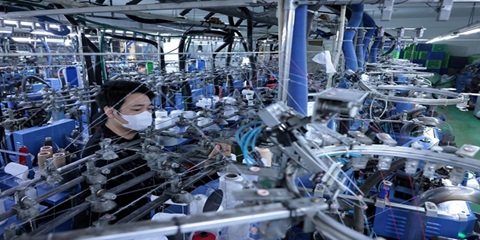
TEXTILE, GARMENT FIRMS REFORM TO MEET CPTPP ORIGIN RULES
Vietnamese textile and garment manufacturers are aggressively restructuring their supply chains and diversifying material sources to unlock untapped tariff benefits. To capitalise on the Comprehensive and Progressive Agreement for Trans-Pacific Partnership (CPTPP), companies are racing to align with the pact's strict "yarn-forward" rules — a task made difficult by a shortage of raw materials within the trade bloc.

MEMBER CORNER / PROMOTIONS
COSMOPARK ECO INDUSTRIAL ZONE – LONG-TERM ADVANTAGES FOR INDUSTRIAL INVESTORS IN VIETNAM
Spanning 322.3 hectares, with a project operational term extending to 2095 and plans for large-scale power infrastructure, COSMOPARK Eco Industrial Zone offers a strong foundation for manufacturing, high-tech industries, and international supply chain development. As global supply chains continue to evolve, Vietnam is strengthening its position as a strategic destination for international businesses seeking to diversify their manufacturing operations.
INFRASTRUCTURE / CONSTRUCTION / LOGISTIC / PORT
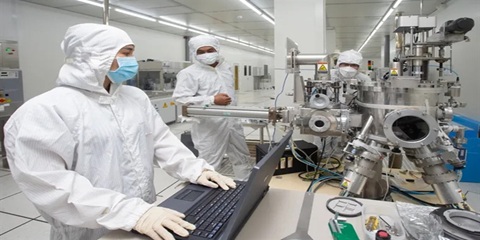
HCM CITY ACCELERATES POWER INFRASTRUCTURE INVESTMENT TO ATTRACT HIGH-TECH CAPITAL
High-tech projects, particularly data centres, are not confined to SHTP but are also expanding into export processing zones and industrial parks across HCM City, driving up electricity demand. Proactively developing power infrastructure, diversifying energy supplies and expanding access to green energy are becoming essential for HCM City to maintain its competitive edge in attracting high-tech foreign direct investment (FDI).
VIETNAM ECONOMY INVESTMENT
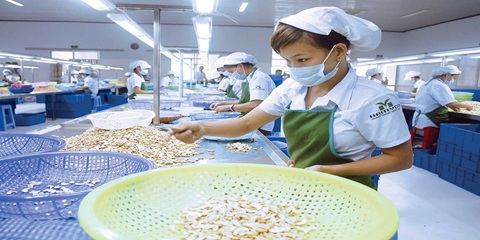
VIETNAMESE COMPANIES OPTIMISTIC ON INTERNATIONAL GROWTH
Vietnamese businesses are among the most confident about the outlook for international trade, according to HSBC’s Global Trade Pulse Survey 2026, released on November 16. The survey captures the views of 10,000 senior business leaders across 26 markets on trade, tariffs, supply chains, and technology. Findings show that 94 per cent of Vietnamese businesses expect their international trade to grow over the next two years. Vietnam ranks joint top in the survey with the Philippines, compared with 86 per cent globally.
TECHNOLOGY
ĐÀ NẴNG SEEKS TO BUILD HIGH-TECH AGRICULTURE, INTEGRATED VALUE CHAINS
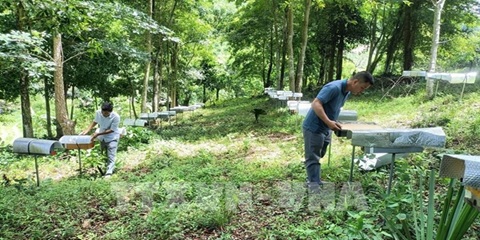
Đà Nẵng is seeking to transform its agricultural sector from a supplier of raw materials into a technology-driven, market-oriented economy, with investment opportunities spanning concentrated production areas, deep processing, logistics and agricultural product distribution. The city aims to shift from traditional agricultural production towards agricultural economic development, organising value chains and increasing the technological content and added value of products through closer links between production and processing.
TECHNOLOGY
VIỆT NAM'S DIGITAL TECHNOLOGY INDUSTRY REVENUE SURGES 53% TO $254.6B
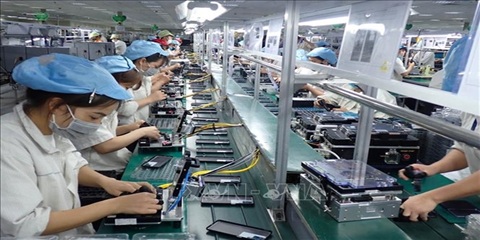
Việt Nam's digital technology industry generated an estimated US$254.6 billion in revenue in the first 10 months of 2026, up 53 per cent from a year earlier, while exports rose 46.2 per cent to $212 billion, the Ministry of Science and Technology said in its latest report. According to the report, hardware and electronics exports reached an estimated $30.681 billion in October, up 108 per cent from the same month last year.
Events Sponsors