Want to be in the loop?
subscribe to
our notification
Business News
VIỆT NAM’S GARMENT INDUSTRY REBOUNDS, BUT CHALLENGES LOOM
Businesses in the sector are facing mounting challenges - from high capital and logistics costs to growing pressure to green their operations and navigate shifting trade policies.
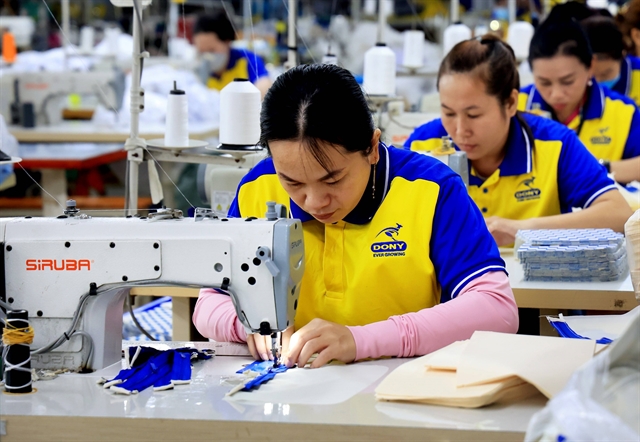
The textile and garment industry’s export turnover reached US$34.75 billion in the first nine months of 2025. VNA/VNS Photos
The textile and garment industry has shown clear signs of recovery in 2025, bouncing back after a difficult period of stagnation.
However, businesses in the sector continue to face mounting challenges, from high capital and logistics costs to growing pressure to green their operations and navigate shifting trade policies.
According to Vũ Đức Giang, chairman of the Việt Nam Textile and Apparel Association (VITAS), the industry’s export turnover reached US$34.75 billion in the first nine months of 2025, an increase of 7.7 per cent year-on-year. This marks a robust comeback and highlights the resilience of Việt Nam’s textile exports in the global market.
Despite the gains, the industry remains heavily reliant on imported raw materials, with import turnover totalling $16 billion, including $11 billion for fabric alone. This dependency poses significant risks, particularly as global trade dynamics shift.
Việt Nam has now climbed to third place globally in textile and garment exports, a major leap from its earlier role as a low-cost processing hub.
Giang said high-value-added products were becoming a larger share of exports, signalling the industry’s move beyond contract manufacturing to brand-building and innovation.
Vietnamese textile and garment products are now exported to 138 countries, boosted by 16 free trade agreements (FTAs), with that number expected to grow to 22 by 2027.
Emerging markets like the Middle East and Africa offer new growth opportunities, according to Giang. Once overlooked, these regions have become more prominent.
In 2024, exports to Islamic countries alone reached $1 billion, and by July 2025, revenue from the Middle East had already hit $700 million.
Vietnamese firms are also targeting premium segments, offering products with higher design and technological content – a move that supports long-term competitiveness.
Rising costs
One of the biggest hurdles is production costs, which are about 40-45 per cent higher in Việt Nam compared to Indonesia, Malaysia and Myanmar – despite Vietnamese labour being around 40 per cent more productive.
On the upside, the industry is rapidly embracing automation and green technologies, becoming second only to China in regional supply chain modernisation.
However, logistics remain a bottleneck.
According to Đặng Thị Minh Phương, chairwoman of the HCM City Logistics Association, shipping and warehousing costs have surged. Despite salaries of VNĐ35-40 million ($1,300-1,500) per month, businesses are struggling to recruit container drivers.
She urged firms to restructure supply chains and invest in logistics technology to improve competitiveness.
Besides that, the shift from traditional processing models to FOB (Free on Board) and DDP (Delivered Duty Paid) purchasing methods has changed the financial landscape.
Giang stressed the need for stronger cooperation between banks and exporters, urging banks to offer tailored credit packages aligned with modern contract terms.
“Banks must understand the nature of today’s export contracts and build trust with businesses through transparency,” Giang said.
“Only then can we ensure a stable flow of capital to support growth.”
Trade policy is also a pressing concern. The US imposed a 20 per cent reciprocal tax on Vietnamese textile and garment products (down from an initially proposed 40 per cent), significantly impacting export dynamics.
While the first nine months of 2025 saw steady demand as customers rushed to place orders ahead of the tax implementation, new orders from the US have since dropped sharply.
With buyers now demanding that Vietnamese producers absorb part of the tariff cost, profit margins are shrinking.
Furthermore, US authorities have signalled potential tax hikes on products lacking clear origin documentation, in a bid to prevent transit-based origin evasion – a warning to Vietnamese firms re-exporting goods from China.
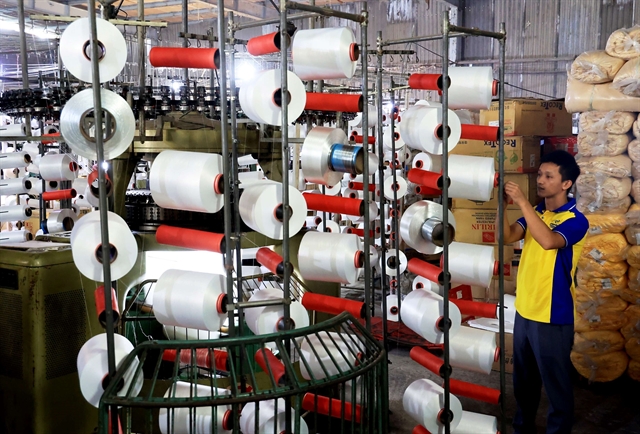
Việt Nam currently imports 100 per cent of its cotton and up to 95 per cent of its synthetic fibres.
Local input gaps
Additionally, Việt Nam currently imports 100 per cent of its cotton and up to 95 per cent of its synthetic fibres. Chemicals and dyes are also almost entirely imported. This lack of domestic input production remains a major weakness, especially under tightening origin rules and shifting trade policies.
To mitigate risks, industry leaders are calling for increased localisation of raw materials, ensuring traceability and reducing exposure to foreign supply shocks.
Despite the industry's export success, brand development remains a longstanding weakness.
“Vietnamese fashion brands are still small and in the early stages,” said Vinatex general director Cao Hữu Hiếu. “Meanwhile, international brands dominate even in our domestic market.”
Major global brands invest heavily in design talent, which is currently lacking in Việt Nam, according to Hiếu. Building a strong brand identity, especially in fashion, requires a long-term commitment to training, design, and product differentiation.
While Việt Nam has made strides in automation, its overall productivity remains moderate compared to other leading textile producers in Asia and Europe. Investments in modern machinery, smart factories, and automation are seen as essential to maintaining competitiveness.
Hiếu noted that Vinatex’s strategic goal was to become a complete solutions provider for green fashion – from yarn and fabric to finished garments. The company planned to focus on sustainable, circular, and recycled products, aligning with global trends in eco-conscious consumption. VNS
Source: VNS
Related News

INFRASTRUCTURE / CONSTRUCTION / LOGISTIC / PORT
VIỆT NAM-CAMBODIA TRADE GATHERS PACE TOWARDS $20 BILLION TARGET
Trade between Việt Nam and Cambodia continues to grow, remaining a bright spot and a key pillar of bilateral cooperation as the two countries aim to raise two-way trade to US$20 billion in the coming years. After setting a record of more than $11.3 billion last year, bilateral trade reached about $8.7 billion in the first eight months of this year, up 8.3 per cent year on year.
TECHNOLOGY
AI BEGINNING TO RESHAPE RECRUITMENT CRITERIA
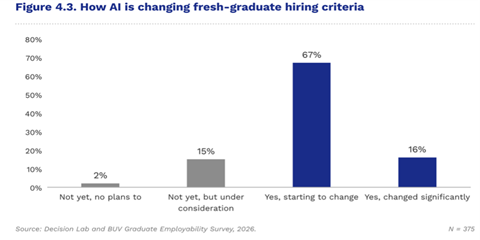
Digital literacy is the only capability area in which fresh graduates meet employers’ expectations, according to a new report. Yet, it is also the standard rising fastest, as businesses increasingly expect new hires to use AI effectively in the workplace. Some 83 per cent of employers say AI has changed, or is beginning to change, their hiring criteria, while 94 per cent report higher expectations for digital and AI capabilities than they had two to three years ago.
INFRASTRUCTURE / CONSTRUCTION / LOGISTIC / PORT
ĐÀ NẴNG GREEN-LIGHTS US$105 MILLION THAI DEVELOPMENT DEAL
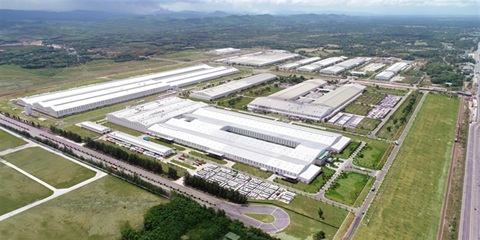
The central city has approved an investment proposal by Thailand’s WHA Group to develop infrastructure for the 400ha WHA Đà Nẵng Industrial Park project on two communes of Thăng Bình and Đồng Dương, with an investment of more than VNĐ2.7 trillion (US$105 million). The city said it approved WHA Industrial Development International's status as an investor in the project, which is expected to take place between 2027 and 2034.
VIETNAM ECONOMY INVESTMENT
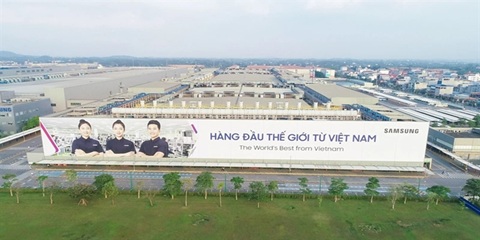
MOBILE PHONE EXPORTS RISE 20% TO $51.8 BILLION IN FIRST NINE MONTHS
Exports of mobile phones and components rose 20 per cent year-on-year to nearly US$51.8 billion in the first nine months of 2026, with China, the US and Republic of Korea accounting for more than half of the total. Shipments to the three markets reached a combined $26.18 billion, or 50.6 per cent of total exports of the product group during the period, according to data from the Vietnam Department of Customs under the Ministry of Finance.
VIETNAM ECONOMY INVESTMENT
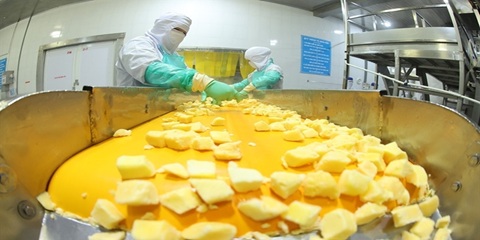
FRUIT AND VEGETABLE EXPORTS POISED TO HIT $10 BILLION IN 2026
Fruit and vegetable exports are on track to reach nearly US$10 billion in 2026, after rising 19.9 per cent year on year to nearly US$7.4 billion in the first nine months, driven by strong seasonal demand and abundant tropical fruit supplies. The Ministry of Agriculture and Environment said the growth reflected stronger international demand for fresh produce and processed agricultural products.
GARMENT / TEXTILE
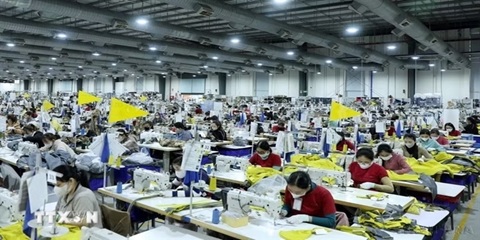
TEXTILE EXPORTS FACE DUAL CHALLENGES OF SUSTAINING ORDERS AND BOOSTING EFFICIENCY AMID GROWING COMPETITION
Data shows that the textile and garment sector maintained its growth momentum in the first nine months of this year. The industry's total export turnover reached an estimated US$35.721 billion in the first nine months of this year, up 3.3 per cent year-on-year. Despite posting encouraging export figures, Vietnamese textile and garment enterprises continue to navigate unpredictable market variables.
Events Sponsors






















