Want to be in the loop?
subscribe to
our notification
Business News
VIỆT NAM’S HOTEL INVESTMENT MARKET TO CROSS $125 MILLION IN FY25: JLL
Việt Nam's hotel market will attract over US$125 million in cumulative investments in 2025 as the country’s tourism market eclipses pre-Covid levels, according to data and analysis by JLL Vietnam, a professional services firm specialising in real estate and investment management.
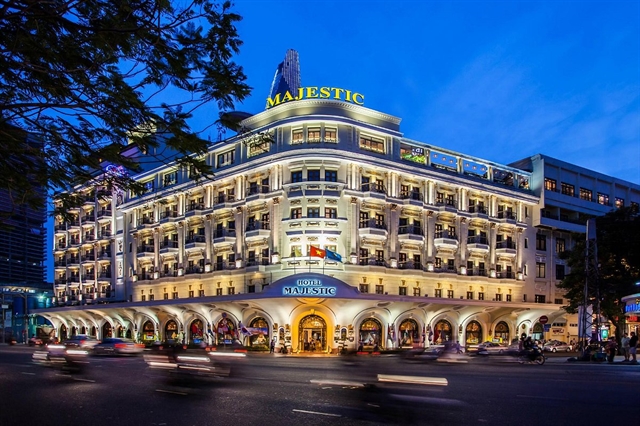
A hotel in HCM City. Việt Nam's hotel market will attract over US$125 million in cumulative investments in 2025. – Photo courtesy of TripAdvisor
HCM CITY – Việt Nam's hotel market will attract over US$125 million in cumulative investments in 2025 as the country’s tourism market eclipses pre-Covid levels, according to data and analysis by JLL Vietnam, a professional services firm specialising in real estate and investment management.
The company said that the market is poised to enter a prolonged period of investment growth driven by an influx of tourists and the completion of new infrastructure.
The positive outlook for the country’s hotel investment market to reach $125 million in 2025 is revised upward from an earlier forecast of $100 million, reflecting improved market conditions and strong investor sentiment.
Looking ahead to 2026, JLL projects transaction volumes to climb to $200 million, driven by robust tourism recovery, strong domestic economic growth, and available capital.
Southeast Asia, including Việt Nam, is expected to maintain its historical share of 10 – 13 per cent of Asia Pacific’s total hotel investment volume, aligning with pre-pandemic levels.
“Despite recent political uncertainties limiting transaction activity, investor interest remains strong. Foreign buyers are targeting well-established assets with long lease terms in key destinations, while domestic capital is increasingly active in Hà Nội and HCM City. However, challenges persist in unlocking institutional-grade assets, which is critical to sustaining transaction momentum,” said Trang Lê, country head, JLL Vietnam.
Việt Nam’s tourism revenue has fully recovered from the pandemic, achieving remarkable milestones in 2024 with approximately VNĐ840 trillion ($32.96 billion), a VNĐ84 trillion ($3.2 billion) increase compared to pre-pandemic 2019 levels.
Key drivers include the rise in cruise tourism, meetings, incentives, conferences, and exhibitions (MICE) activities, and high-profile social events, bolstered by major cruise lines like Royal Caribbean and MSC Cruises adding Việt Nam to their itineraries.
While Mainland China, historically Việt Nam’s largest source market at 32 per cent pre-pandemic, accounted for just 24 per cent of visitors in early 2025 due to slower outbound travel recovery and then 29 per cent in the first eight months of the year, other markets have shown resilience.
Year-to-date August 2025 data indicates significant year-on-year growth from Russia and Cambodia, alongside steady demand from South Korea, Taiwan, the USA, and Japan, while India continues to grow strongly.
The outlook is further supported by Việt Nam’s favourable visa policies, security, stability, and proactive tourism promotion campaigns in Europe. The Government’s emphasis on sustainability and digitalisation is shaping future supply, particularly in the upscale segment.
“If owners bring quality assets to market, we see significant scope for Vietnam to capture increasing investor demand over the next 18 months,” said Trang. – VNS
Source: VNS
Related News

INFRASTRUCTURE / CONSTRUCTION / LOGISTIC / PORT
VIỆT NAM-CAMBODIA TRADE GATHERS PACE TOWARDS $20 BILLION TARGET
Trade between Việt Nam and Cambodia continues to grow, remaining a bright spot and a key pillar of bilateral cooperation as the two countries aim to raise two-way trade to US$20 billion in the coming years. After setting a record of more than $11.3 billion last year, bilateral trade reached about $8.7 billion in the first eight months of this year, up 8.3 per cent year on year.
TECHNOLOGY
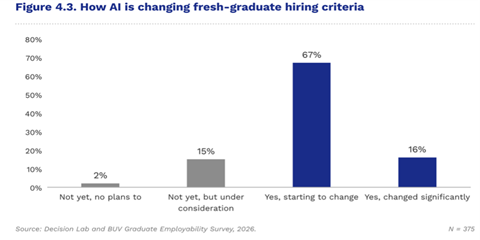
AI BEGINNING TO RESHAPE RECRUITMENT CRITERIA
Digital literacy is the only capability area in which fresh graduates meet employers’ expectations, according to a new report. Yet, it is also the standard rising fastest, as businesses increasingly expect new hires to use AI effectively in the workplace. Some 83 per cent of employers say AI has changed, or is beginning to change, their hiring criteria, while 94 per cent report higher expectations for digital and AI capabilities than they had two to three years ago.

INFRASTRUCTURE / CONSTRUCTION / LOGISTIC / PORT
ĐÀ NẴNG GREEN-LIGHTS US$105 MILLION THAI DEVELOPMENT DEAL
The central city has approved an investment proposal by Thailand’s WHA Group to develop infrastructure for the 400ha WHA Đà Nẵng Industrial Park project on two communes of Thăng Bình and Đồng Dương, with an investment of more than VNĐ2.7 trillion (US$105 million). The city said it approved WHA Industrial Development International's status as an investor in the project, which is expected to take place between 2027 and 2034.

VIETNAM ECONOMY INVESTMENT
MOBILE PHONE EXPORTS RISE 20% TO $51.8 BILLION IN FIRST NINE MONTHS
Exports of mobile phones and components rose 20 per cent year-on-year to nearly US$51.8 billion in the first nine months of 2026, with China, the US and Republic of Korea accounting for more than half of the total. Shipments to the three markets reached a combined $26.18 billion, or 50.6 per cent of total exports of the product group during the period, according to data from the Vietnam Department of Customs under the Ministry of Finance.

VIETNAM ECONOMY INVESTMENT
FRUIT AND VEGETABLE EXPORTS POISED TO HIT $10 BILLION IN 2026
Fruit and vegetable exports are on track to reach nearly US$10 billion in 2026, after rising 19.9 per cent year on year to nearly US$7.4 billion in the first nine months, driven by strong seasonal demand and abundant tropical fruit supplies. The Ministry of Agriculture and Environment said the growth reflected stronger international demand for fresh produce and processed agricultural products.
GARMENT / TEXTILE
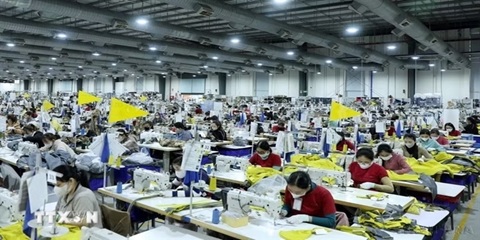
TEXTILE EXPORTS FACE DUAL CHALLENGES OF SUSTAINING ORDERS AND BOOSTING EFFICIENCY AMID GROWING COMPETITION
Data shows that the textile and garment sector maintained its growth momentum in the first nine months of this year. The industry's total export turnover reached an estimated US$35.721 billion in the first nine months of this year, up 3.3 per cent year-on-year. Despite posting encouraging export figures, Vietnamese textile and garment enterprises continue to navigate unpredictable market variables.
Events Sponsors






















