Want to be in the loop?
subscribe to
our notification
Business News
VIỆT NAM’S PEPPER EXPORTS TOP $1.3 BILLION, MAINTAIN GROWTH MOMENTUM
The outlook for the pepper industry remains positive, but greater efforts are needed to standardise growing areas, improve product value and strengthen competitiveness.
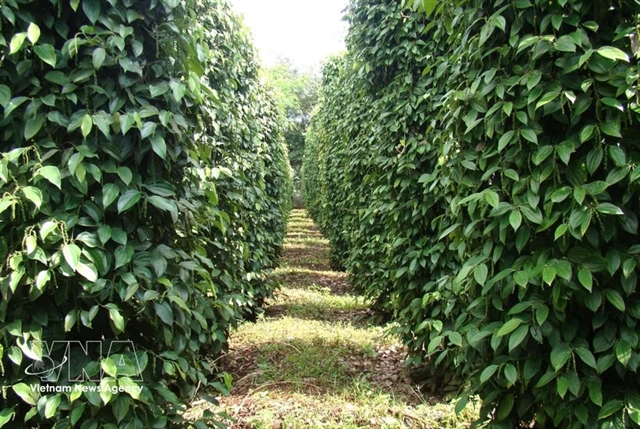
Việt Nam ships abroad 10,915 tonnes of pepper worth US$70 million in the first half of September alone. — VNA/VNS Photo
HÀ NỘI — Việt Nam exported 202,414 tonnes of pepper from the beginning of this year to September 15, earning US$1.32 billion in revenue, up 15.2 per cent in volume and 10.3 per cent in value year-on-year.
The outlook for the pepper industry remains positive, but greater efforts are needed to standardise growing areas, improve product value and strengthen competitiveness.
During the reviewed period, the US remained Việt Nam’s largest pepper export market, purchasing 47,254 tonnes, or 23.5 per cent of the total. It was followed by China with 22,620 tonnes and the UAE with 13,486 tonnes.
According to the Vietnam Pepper and Spice Association (VPSA), the country shipped abroad 10,915 tonnes of pepper worth $70 million in the first half of September alone.
Meanwhile, Việt Nam imported 959 tonnes of pepper worth $5.3 million in the first half of September. During the period through September 15, imports reached 47,961 tonnes, up about 35 per cent year-on-year.
Despite strong export growth amid shrinking domestic production, domestic pepper prices have yet to recover as expected. The main reasons include additional supplies from imports and market uncertainties caused by conflicts in the Middle East and US tariff policies.
As of September 29, pepper prices in major growing areas ranged from VNĐ136,000- VNĐ140,000 ($5.24- $5.29) per kg, up VNĐ1,000-3,000 per kg from the end of August but still VNĐ10,000- VNĐ12,000 lower than a year earlier.
Building transparent supply chains
VPSA said global pepper production this year is forecast to remain below earlier estimates, as output in Việt Nam, Indonesia and India has fallen due to adverse weather and lower yields. Although Brazil has recorded higher production, the increase is not enough to offset shortages in other major producing countries.
The industry also faces increasingly stringent quality requirements. Notably, the European Food Safety Authority (EFSA) is moving towards cumulative risk assessment for multiple pesticide active substances, a trend expected to tighten controls on spice products.
Therefore, businesses need to strengthen control over raw-material areas, establish transparent traceability systems, regularly test products and proactively update themselves on new regulations in import markets.
Assessing the outlook, Lê Việt Anh, Secretary General of VPSA, said several positive factors would continue to support Việt Nam’s pepper industry.
Global carry-over stocks from 2025 to 2026 are forecast at only around 170,000 tonnes, including nearly 60,000 tonnes in Việt Nam, according to Anh. With supplies no longer abundant, recovering demand in the US and China is helping keep pepper prices relatively high.
However, businesses continue to face pressure from tariff policies, logistics costs and increasingly stringent technical standards. They therefore need to strengthen competitiveness to maintain growth momentum in the final months of the year.
Nguyễn Đỗ Anh Tuấn, director of the International Cooperation Department under the Ministry of Agriculture and Environment, said limited global supply, together with a gradual recovery in import demand in major markets, had helped maintain relatively high pepper prices, creating favourable conditions for exports and improving the value of the sector.
In this context, developing standardised raw-material areas, building an industry database, standardising growing-area codes and establishing transparent supply chains had become essential to maintaining the competitiveness of Việt Nam’s pepper industry. — VNA/VNS
Source: VNS
Related News
VIETNAM ECONOMY INVESTMENT
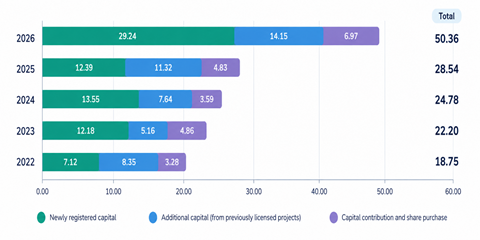
VIETNAM’S REGISTERED FDI SURPASSES $50 BILLION IN NINE MONTHS
According to the National Statistics Office under the Ministry of Finance, total registered foreign direct investment (FDI) reached $50.36 billion as of September 30, up 76.4 per cent on-year. Of the total, newly registered capital came from 3,108 newly licensed projects with combined registered capital of $29.24 billion, up 6.2 per cent in project numbers and 2.4 times the registered capital compared with the same period last year.
VIETNAM ECONOMY INVESTMENT
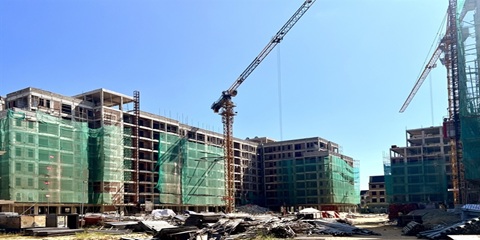
FIRMS EXPECT STRONGER Q4 ACTIVITY DESPITE COST, FINANCING PRESSURES
More than VNĐ5 quadrillion is registered to be poured into the economy in the first nine months of this year, up 6.1 per cent. Enterprises are expecting stronger business and production in the last quarter of this year, with new orders, output and labour demand set to improve, although high input costs and cash-flow constraints remain major concerns, according to a survey by the National Statistics Office (NSO) released late last week.

MEMBER CORNER / PROMOTIONS
COSMOPARK ECO INDUSTRIAL ZONE – A STRATEGIC DESTINATION FOR HIGH-TECH AND SUSTAINABLE INVESTMENT IN SOUTHERN VIETNAM
As international manufacturers continue to diversify their supply chains and expand their presence in Asia, Vietnam is becoming increasingly relevant to companies seeking a long-term manufacturing and investment base. Beyond land availability and operating costs, investors are placing greater emphasis on tax efficiency, investment tenure, regional connectivity, infrastructure readiness, energy security, digital capability, sustainability and future expansion potential.

MEMBER CORNER / PROMOTIONS
THE REVERIE SAIGON AND ZS HOSPITALITY UNVEIL LYS: A SOFT FRENCH IDENTITY BLOOMS IN HO CHI MINH CITY
On 15th October, an expressive new story unfolds at The Reverie Saigon as Hong Kong-based ZS Hospitality marks its international debut with Lys. Rooted in a gentle, contemporary French culinary identity, Lys combines quiet refinement, luminous local freshness and poetic personal connection bridging Italy and Vietnam. The opening is a pivotal moment, contributing to the collective ambition of establishing Ho Chi Minh City as one of Asia’s premier gastronomic destinations.

VIETNAM ECONOMY INVESTMENT
LOW-ALTITUDE ECONOMY COULD GROW TO $500 MILLION BY 2035
Việt Nam's low-altitude economy is at an early stage of development and is forecast to grow by around 13 per cent annually by 2035. Việt Nam is seeking to develop a broader low-altitude economy ecosystem, moving beyond drone manufacturing to applications, data services and supporting infrastructure, as unmanned aerial vehicles (UAVs) create new opportunities in agriculture, logistics, energy, transport and other sectors.
BANKING / FINANCE / INSURANCE / TAX
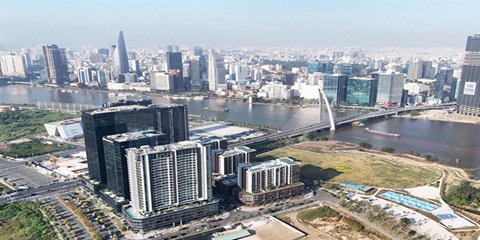
VIỆT NAM TARGETS INVESTMENT-GRADE SOVEREIGN CREDIT RATING BY 2030
Việt Nam has revised the plan to improve its sovereign credit rating which sets a target of reaching investment-grade status by 2030 while linking the effort more closely to economic growth, innovation, digital transformation and fiscal sustainability. Deputy Prime Minister Nguyễn Văn Thắng has signed Decision 1919/QĐ-TTg amending the Government’s 2022 scheme on improving the country’s sovereign credit rating through 2030.
Events Sponsors






















