Want to be in the loop?
subscribe to
our notification
Business News
VIỆT NAM’S REAL ESTATE MARKET SEES OPPORTUNITIES FROM THREE KEY SHIFTS
The Government’s decision to merge certain provinces and cities is expected to necessitate adjustments to all existing master plans while streamlining project approval procedures.
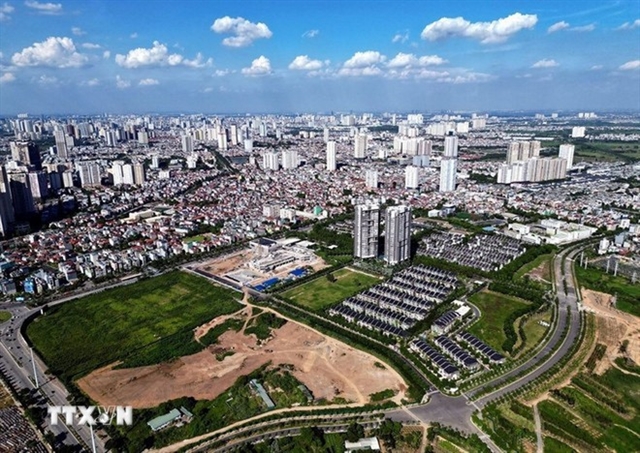
The expansion and connectivity of the national infrastructure network are widening access to labour resources and consumer markets. — VNA/VNS Photo
HÀ NỘI — Việt Nam’s real estate market is undergoing a pivotal transition, shaped by three major structural changes – the administrative boundary mergers, the rollout of large-scale infrastructure projects, and the implementation of the amended Land Law 2025, which will take effect in early next year.
The Government’s decision to merge certain provinces and cities is expected to necessitate adjustments to all existing master plans while streamlining project approval procedures. This is set to reduce administrative barriers, accelerate project timelines, and refresh project promotion strategies.
At the same time, the expansion and connectivity of the national infrastructure network are widening access to labour resources and consumer markets. Reduced transportation time and logistics costs are expected to boost trade flows, especially in emerging secondary markets.
Meanwhile, the enhanced legal framework lays the foundation for a more transparent mechanism in compensation, project approval, licensing, and secondary market transactions.
Among all sectors, industrial real estate is poised for the most significant growth, driven by the global supply chain shift and Việt Nam’s export-oriented economy.
For the segment, in the first nine months of this year, foreign direct investment (FDI) reached over US$28.5 billion, up 15.2 per cent year-on-year. This surge shows increased demand for manufacturing expansion, larger investment scales, and industrial infrastructure development, signaling a strong long-term outlook.
As a result, assets such as ready-built factories, warehouses, cold storage facilities, and sorting centres are drawing heightened investor attention, leading to rising rental prices. Major infrastructure projects located near ring roads, expressways, international airports, and deep-water ports are expected to shorten delivery times, cut logistics costs, and strengthen regional connectivity.
The key challenges in this segment remain land clearance and uneven progress in transport infrastructure.
Improved transport links and revised local planning post-merger are set to spur tourism in new destinations. Expressways, airports, and coastal routes will reduce travel times and make it easier for visitors to explore areas with coastal and highland attractions. Ultimately, the speed of infrastructure development will determine the success of resort and tourism real estate projects.
The retail property segment also holds strong promise. Robust domestic consumption, a growing middle class, and rapid urbanisation are fueling demand for modern shopping facilities.
Future retail supply is expected to expand notably in secondary and tertiary markets such as Tây Ninh, Đồng Tháp, Cần Thơ, Hưng Yên, Hải Phòng, Nghệ An, and Thái Nguyên. Meanwhile, demand for urban shopping experiences and integrated retail spaces remains high, supporting both geographical expansion and financial performance growth across the segment. — VNS
Source: VNS
Related News

INFRASTRUCTURE / CONSTRUCTION / LOGISTIC / PORT
VIỆT NAM-CAMBODIA TRADE GATHERS PACE TOWARDS $20 BILLION TARGET
Trade between Việt Nam and Cambodia continues to grow, remaining a bright spot and a key pillar of bilateral cooperation as the two countries aim to raise two-way trade to US$20 billion in the coming years. After setting a record of more than $11.3 billion last year, bilateral trade reached about $8.7 billion in the first eight months of this year, up 8.3 per cent year on year.
TECHNOLOGY
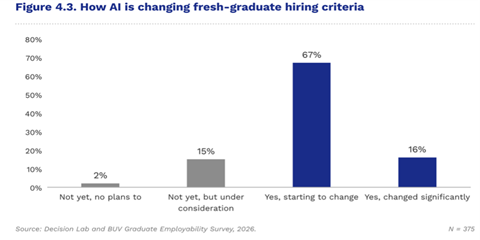
AI BEGINNING TO RESHAPE RECRUITMENT CRITERIA
Digital literacy is the only capability area in which fresh graduates meet employers’ expectations, according to a new report. Yet, it is also the standard rising fastest, as businesses increasingly expect new hires to use AI effectively in the workplace. Some 83 per cent of employers say AI has changed, or is beginning to change, their hiring criteria, while 94 per cent report higher expectations for digital and AI capabilities than they had two to three years ago.

INFRASTRUCTURE / CONSTRUCTION / LOGISTIC / PORT
ĐÀ NẴNG GREEN-LIGHTS US$105 MILLION THAI DEVELOPMENT DEAL
The central city has approved an investment proposal by Thailand’s WHA Group to develop infrastructure for the 400ha WHA Đà Nẵng Industrial Park project on two communes of Thăng Bình and Đồng Dương, with an investment of more than VNĐ2.7 trillion (US$105 million). The city said it approved WHA Industrial Development International's status as an investor in the project, which is expected to take place between 2027 and 2034.

VIETNAM ECONOMY INVESTMENT
MOBILE PHONE EXPORTS RISE 20% TO $51.8 BILLION IN FIRST NINE MONTHS
Exports of mobile phones and components rose 20 per cent year-on-year to nearly US$51.8 billion in the first nine months of 2026, with China, the US and Republic of Korea accounting for more than half of the total. Shipments to the three markets reached a combined $26.18 billion, or 50.6 per cent of total exports of the product group during the period, according to data from the Vietnam Department of Customs under the Ministry of Finance.

VIETNAM ECONOMY INVESTMENT
FRUIT AND VEGETABLE EXPORTS POISED TO HIT $10 BILLION IN 2026
Fruit and vegetable exports are on track to reach nearly US$10 billion in 2026, after rising 19.9 per cent year on year to nearly US$7.4 billion in the first nine months, driven by strong seasonal demand and abundant tropical fruit supplies. The Ministry of Agriculture and Environment said the growth reflected stronger international demand for fresh produce and processed agricultural products.
GARMENT / TEXTILE
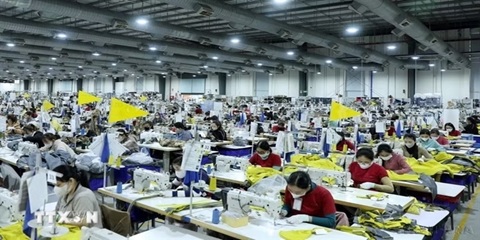
TEXTILE EXPORTS FACE DUAL CHALLENGES OF SUSTAINING ORDERS AND BOOSTING EFFICIENCY AMID GROWING COMPETITION
Data shows that the textile and garment sector maintained its growth momentum in the first nine months of this year. The industry's total export turnover reached an estimated US$35.721 billion in the first nine months of this year, up 3.3 per cent year-on-year. Despite posting encouraging export figures, Vietnamese textile and garment enterprises continue to navigate unpredictable market variables.
Events Sponsors






















