Want to be in the loop?
subscribe to
our notification
Business News
VIÊT NAM’S TEXTILE SECTOR THREADS THROUGH RECORD EXPORT MOMENTUM
According to the Vietnam Textile and Apparel Association (VITAS), the industry has expanded its export reach to 132 countries and territories this year, up from 104 in 2024.
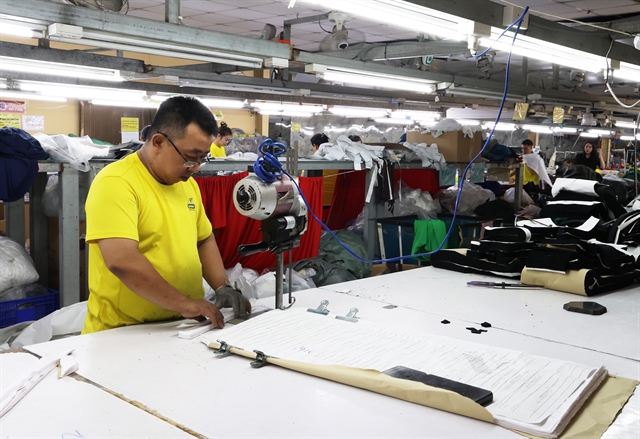
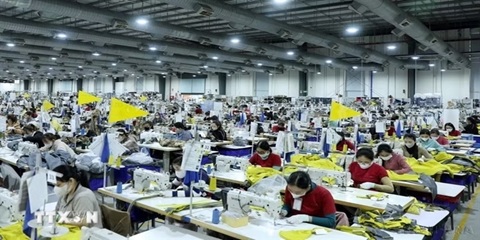
Sample designs for export production underway at DONY Garment Co in HCM City.— VNA/VNS Photos
HÀ NỘI — Việt Nam’s textile and garment industry is charging into the final months of 2025 with robust momentum, aiming to meet an ambitious export target of US$47–48 billion, buoyed by strong order flows and growing global reach.
Since the start of the year, the industry has received encouraging signals. Export turnover in the first seven months of 2025 reached more than $26.33 billion, up $5.3 billion, or 9 per cent, compared with the same period in 2024. Many enterprises have already secured orders through the end of the year, sustaining growth through to the year’s close.
To reach the annual target, exports must average over $4 billion per month for the remainder of the year. While this presents a challenge, industry experts believe the goal is achievable given the current growth trajectory.
According to the Vietnam Textile and Apparel Association (VITAS), the industry has expanded its export reach to 132 countries and territories this year, up from 104 in 2024. Notably, Việt Nam is now exporting high-quality garment products to China, as well as strengthening its market presence in Russia, the Commonwealth of Independent States (CIS), and ASEAN nations.
In addition, Vietnamese enterprises are pursuing overseas investment projects in Mexico and Myanmar, with further expansion planned in India and Egypt. This broader footprint demonstrates Việt Nam’s strengthened position on the global textile and garment map.
Chairman of VITAS Vũ Đức Giang said that with growth exceeding 10 per cent, the sector had a solid foundation to meet its ambitious targets.
However, he stressed that continued success depended on enterprises making effective use of 17 new-generation free trade agreements (FTAs), while adapting to shifting trade dynamics and differing economic policies across major markets.
Simultaneously, the industry needed adaptive solutions to cope with evolving global conditions and regulatory frameworks, as some major economies remained divided over trade and economic policies.
Each enterprise must reinforce its supply chain linkages. Drawing lessons from tariff disputes and Europe’s stringent green-product standards, businesses were encouraged to proactively develop more sustainable and resilient value chains, Giang said.
Chairman of the Vietnam National Textile and Garment Group (Vinatex) Lê Tiến Trường emphasised the importance of wisely adjusting production plans in the coming months to safeguard jobs and ensure stable incomes for workers.
He also said that enterprises must adopt flexible financial management strategies to stay competitive, absorb rising input costs and adapt pricing mechanisms to retain orders in an increasingly challenging global market.
Shifting toward green and high-value production
To meet increasingly strict requirements in demanding markets, many garment enterprises are accelerating their transition towards green production and sustainable development.
Companies are investing in modern machinery, upgrading workers’ skills, and shifting from traditional cut‑make‑trim (CMT) models to higher‑value methods such as FOB (free on board), ODM (original design manufacturing), and OBM (original brand manufacturing).
These efforts not only raise product value but also strengthen Việt Nam’s competitiveness in global supply chains.
Trường said that his group’s member companies were striving to maximise existing production capacity in order to meet their export targets.
Key measures included optimising machinery and equipment efficiency, boosting productivity and tightening cost control to reduce resource consumption.
At the same time, enterprises were developing niche products to create unique value, strengthening the link between research and development and actual market orders and promoting digital transformation to enhance governance.
Vinatex had set a consolidated revenue target of more than VNĐ18.31 trillion for 2025—equivalent to last year’s level—alongside a pre‑tax profit goal of VNĐ910 billion, a year‑on‑year increase of 9 per cent, Trường told daidoanket.vn.
To achieve these targets, his group would focus on stabilising its export markets—particularly in the US, Japan, and the EU—while also exploring new and emerging markets.
VITAS chairman Vũ Đức Giang said despite challenges from increasingly strict US tariff policies and global trade uncertainties, Việt Nam’s textile and garment exports still had significant room for growth. He affirmed that the industry was fully capable of reaching the $48 billion export milestone this year. — VNS
Source: VNS
Related News

INFRASTRUCTURE / CONSTRUCTION / LOGISTIC / PORT
VIỆT NAM-CAMBODIA TRADE GATHERS PACE TOWARDS $20 BILLION TARGET
Trade between Việt Nam and Cambodia continues to grow, remaining a bright spot and a key pillar of bilateral cooperation as the two countries aim to raise two-way trade to US$20 billion in the coming years. After setting a record of more than $11.3 billion last year, bilateral trade reached about $8.7 billion in the first eight months of this year, up 8.3 per cent year on year.
TECHNOLOGY
AI BEGINNING TO RESHAPE RECRUITMENT CRITERIA
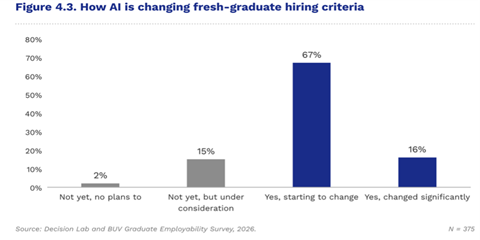
Digital literacy is the only capability area in which fresh graduates meet employers’ expectations, according to a new report. Yet, it is also the standard rising fastest, as businesses increasingly expect new hires to use AI effectively in the workplace. Some 83 per cent of employers say AI has changed, or is beginning to change, their hiring criteria, while 94 per cent report higher expectations for digital and AI capabilities than they had two to three years ago.
INFRASTRUCTURE / CONSTRUCTION / LOGISTIC / PORT
ĐÀ NẴNG GREEN-LIGHTS US$105 MILLION THAI DEVELOPMENT DEAL
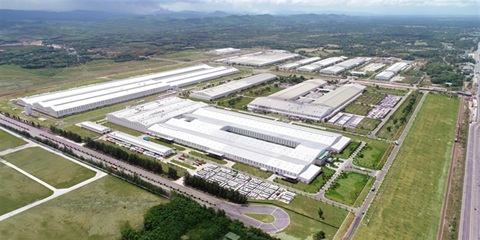
The central city has approved an investment proposal by Thailand’s WHA Group to develop infrastructure for the 400ha WHA Đà Nẵng Industrial Park project on two communes of Thăng Bình and Đồng Dương, with an investment of more than VNĐ2.7 trillion (US$105 million). The city said it approved WHA Industrial Development International's status as an investor in the project, which is expected to take place between 2027 and 2034.
VIETNAM ECONOMY INVESTMENT
MOBILE PHONE EXPORTS RISE 20% TO $51.8 BILLION IN FIRST NINE MONTHS
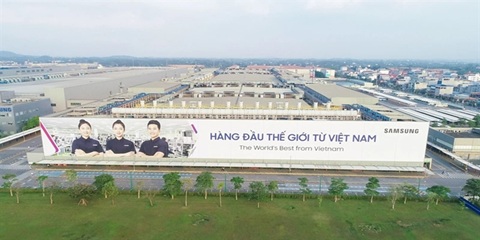
Exports of mobile phones and components rose 20 per cent year-on-year to nearly US$51.8 billion in the first nine months of 2026, with China, the US and Republic of Korea accounting for more than half of the total. Shipments to the three markets reached a combined $26.18 billion, or 50.6 per cent of total exports of the product group during the period, according to data from the Vietnam Department of Customs under the Ministry of Finance.

VIETNAM ECONOMY INVESTMENT
FRUIT AND VEGETABLE EXPORTS POISED TO HIT $10 BILLION IN 2026
Fruit and vegetable exports are on track to reach nearly US$10 billion in 2026, after rising 19.9 per cent year on year to nearly US$7.4 billion in the first nine months, driven by strong seasonal demand and abundant tropical fruit supplies. The Ministry of Agriculture and Environment said the growth reflected stronger international demand for fresh produce and processed agricultural products.
GARMENT / TEXTILE
TEXTILE EXPORTS FACE DUAL CHALLENGES OF SUSTAINING ORDERS AND BOOSTING EFFICIENCY AMID GROWING COMPETITION
Data shows that the textile and garment sector maintained its growth momentum in the first nine months of this year. The industry's total export turnover reached an estimated US$35.721 billion in the first nine months of this year, up 3.3 per cent year-on-year. Despite posting encouraging export figures, Vietnamese textile and garment enterprises continue to navigate unpredictable market variables.
Events Sponsors






















