Want to be in the loop?
subscribe to
our notification
Business News
VIỆT NAM'S WAREHOUSES DELIVER STEADY GROWTH AMID GLOBAL SLOWDOWN
In HCM City, prime warehouse rents average around US$5.3 per square metre per month, while in Hà Nội, rates are slightly higher at $5.5. Supported by a steady supply of new facilities and cost-conscious tenants, Việt Nam avoids the steep price spikes seen elsewhere.
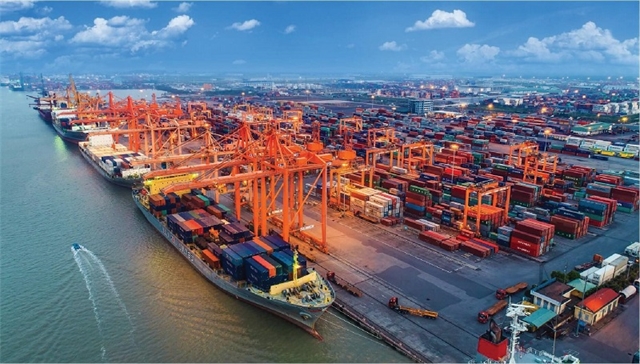
A view of Hải Phòng seaport which is one of important part at Việt Nam logistics system. Photo chinhphu.vn
HÀ NỘI — While major logistics hubs like London, Sydney and Dubai face soaring costs and slowing rental growth, Việt Nam is emerging as a standout market for warehouse investment. Offering reasonable rental rates and strong long-term potential, the country is carving out a crucial role in regional supply chains.
A recent global report from real estate consultancy Savills reveals that prime warehouse rents worldwide rose by only 1.1 per cent in the first half of 2025 - the slowest growth in three years. This follows a surge between 2020 and 2022, driven by the pandemic-fuelled e-commerce boom.
Economic uncertainty, rising interest rates and geopolitical tensions have cooled momentum globally, pushing tenants to reconsider costs and supply chain strategies amid an oversupply of warehouses. Yet Việt Nam bucks this trend, maintaining moderate and sustainable rental increases.
In HCM City, prime warehouse rents average around US$5.3 per square metre per month, while in Hà Nội, rates are slightly higher at $5.5. Supported by a steady supply of new facilities and cost-conscious tenants, Việt Nam avoids the steep price spikes seen elsewhere.
John Campbell, Head of Industrial Services at Savills Viet Nam, comments, “Việt Nam reflects the regional trend of stability seen across Asia-Pacific. With consistent supply and tenants who manage costs strategically, the market has maintained reasonable rent levels and avoided the dramatic surges experienced in other global hotspots.”
Beyond affordability, Việt Nam benefits from low land and construction costs compared with established logistics markets such as Japan and Singapore. Government efforts to boost investment in logistics infrastructure also help keep operational expenses manageable.
Strategically located in Southeast Asia, with a growing consumer market and political stability, Việt Nam attracts international logistics providers and manufacturers aiming to diversify supply chains. Infrastructure projects - including expressway expansions, port modernisations, and aviation logistics hubs - are further strengthening its logistics network.
Many global players now prefer Build-to-Suit warehouses in Việt Nam, offering tailored solutions that enhance flexibility and long-term savings.
Campbell notes, “We are seeing a clear trend toward long-term supply chain control. Tenants are prioritising scalability, ESG compliance, and operational control, which is why long-term land leases and custom-built warehouses are becoming more common.”
Locations near residential areas, seaports, or major transport nodes are receiving heightened interest from international investors. These strategic moves not only help reduce logistics costs but also provide businesses with greater flexibility to navigate market volatility.
To cement its status as a regional logistics hub, Việt Nam must advance multimodal transport integration, streamline customs, develop digital platforms, and invest in green logistics and skilled labour, especially in automation and technology.
With continued investment and policy support, Việt Nam is poised to evolve from a low-cost warehouse market into a fully integrated and sustainable logistics powerhouse in Asia-Pacific. — VNS
Source: VNS
Related News

MEMBER CORNER / PROMOTIONS
HCMC | CERTIFIED SUSTAINABILITY PROFESSIONAL (CSP) TRAINING | REGISTRATION OPEN
As sustainability becomes deeply embedded in corporate strategy and supply-chain operations across Vietnam, Hong Kong Business Association Vietnam is pleased to endorse the upcoming Certified Sustainability Professional (CSP) training program by the Asia Institute for Sustainability (AIS) - a premier internationally recognized ESG credential in Vietnam.
VIETNAM ECONOMY INVESTMENT
HCM CITY SAYS HOW IT PLANS TO ACHIEVE 10-11% ANNUAL EXPORT GROWTH FOR REST OF DECADE
The southern economic hub aims to strengthen its role as the country’s largest import-export centre while developing into a regional transhipment centre in Southeast Asia, supported by green and digital transformation and a circular economy. HCM City has outlined measures to expand production capacity, cut logistics costs, diversify export markets, and help businesses meet increasingly stringent international standards as it targets average annual export growth of 10-11 per cent through 2030.
VIETNAM ECONOMY INVESTMENT
HCM CITY LEADS ECONOMIC RESTRUCTURING IN SOUTHEAST REGION
According to Associate Professor, Dr Vũ Tuấn Hưng, director of the Institute of Social Sciences of the Southern Region, the Southeast is a strategically important socio-economic space in Việt Nam’s development given its advantages in location, industry, trade, services, logistics, science and technology, urbanisation and human resources.
TECHNOLOGY
DIGITAL TRANSFORMATION TURNED INTO PRACTICAL TOOLS FOR PEOPLE, BUSINESSES
Việt Nam is moving its digital transformation agenda beyond policy frameworks and individual technology platforms towards practical applications that address everyday needs, as authorities seek measurable outcomes from science, technology and innovation. Under Politburo Resolution No. 57-NQ/TW issued on December 22, 2024, the implementation is increasingly shifting from simply completing assigned tasks towards developing concrete products and services for citizens and businesses.
TECHNOLOGY
APPLYING TECHNOLOGY FOR ECONOMIC TRANSFORMATION
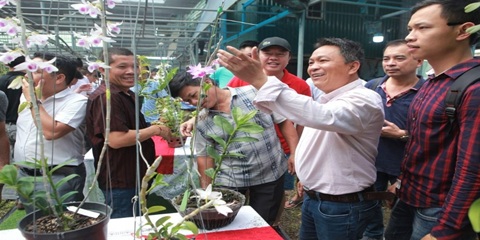
Having completed its new rural development program, Hanoi is shifting its focus toward improving development quality and building smart, sustainable rural areas. The transformation of Dong La orchid-growing village in An Khanh, a western commune of Hanoi, shows how digital technology is becoming a driver of production, market expansion, and higher incomes for local residents.

MEMBER CORNER / PROMOTIONS
VIGLACERA HONORED AS THE "LEADING GREEN INDUSTRIAL REAL ESTATE DEVELOPER 2026"
Organized by the Vietnam Investment Review, this prestigious awards program recognizes industry pioneers advancing eco-industrial parks, clean energy transition, and rigorous ESG standards. Outperforming competitors through a rigorous evaluation, Viglacera Corporation – JSC proudly ranked among the Top 5 highest-positioned enterprises in the Leading Green Industrial Real Estate Developers 2026 category, reinforcing its premier position in Vietnam’s industrial real estate sector.
Events Sponsors






















