Want to be in the loop?
subscribe to
our notification
Business News
VIET NAM SEES GROWTH IN GARMENT EXPORTS IN FIRST FIVE MONTHS
Việt Nam achieved high export growth in the first five months of this year as businesses strived to promote investment in production and exports.
In the first five months of the year, Việt Nam's textile and garment export value reached US$18.7 billion, up 23.5 per cent.
According to Nam Định Textile and Garment Corporation (Natexco), its revenue was more than VNĐ1 trillion in the first five months, 23 per cent higher than the same period last year.
At present, the corporation has orders to produce until the end of September. It is also continuing to negotiate with partners about year-end orders.
Besides that, Natexco will continue to restructure its resources for becoming a textile centre in the northern region, meeting the demands of the domestic market and exports.
Natexco deputy general Nguyễn Thị Khánh said the Textile 1 JSC had completed its factory No 2 meeting European standards, while factory No 1 reached those standards in 2017. The factories would give Textile 1 JSC an opportunity in developing its brand and promoting exports.
Deputy General Director of Việt Thắng Corporation Đậu Phi Quyết said that in the first quarter of 2022, despite many difficulties and challenges, the corporation brought in 25 per cent of the revenue plan and 35 per cent of the profit plan.
However, the conflict between Russia and Ukraine had caused instability in the world supply chain and the risk of supply disruption. Both high input cost and cost of logistics and petrol forced the textile and garment companies to find ways to adapt.
So far, the supply of raw materials and accessories of Việt Thắng had been basically stable. However, importing spare parts, equipment and supplies from Europe would take 12 to 20 weeks, higher than the 6-8 weeks before. If this situation does not improve, it would affect its production and export plans.
Meanwhile, the chairman of Việt Nam National Textile and Garment Group (Vinatex) Lê Tiến Trường, said that Vinatex gained a growth of 50 per cent in revenue during the first quarter of 2022.
However, Vinatex also faced many challenges impacting negatively on the domestic textile industry as well as the group in the first quarter, including the Russia-Ukraine conflict and a reduction in the economic growth of developed regions like the US and EU.
Vinatex general director Cao Hữu Hiếu said that it gained the results due to previous investment in preparing raw materials. In 2015-2020, Vinatex invested in a number of yarn production projects with modern technology to produce common high quality products.
In 2021, Vinatex also put two yarn production projects into operation to increase Vinatex's yarn production capacity to more than 50,000 spindles.
Most of the group's yarn production companies had enough orders signed by the end of 2021 to produce until the end of 2022.
For the garment industry, after the pandemic was under control, member companies quickly stabilised labour and recovered effective production.
The garment companies have enough orders to produce in the second quarter, and many have signed contracts to produce until the end of the third quarter or even the end of this year.
To promote the export of textile and garment products, enterprises must continue investment in expanding production facilities and proactively supply materials and auxiliary materials to meet rules of origin and take export opportunities from new-generation free trade agreements, experts say.
In addition, market research should be promoted to develop short- and long-term strategies and goals. Risk management is also a top priority.
For free-on-board (FOB) businesses, it is necessary to carefully study the market and not sign contracts too early to avoid the risk of low prices not keeping up with the increase in input material prices.
FOB service suppliers help their clients in almost every stage of the manufacturing process. They arrange to source materials, carry out inbound logistics, cut the garments, make products, and do packaging and carry out outbound logistics.
Source: VNS
Related News

INFRASTRUCTURE / CONSTRUCTION / LOGISTIC / PORT
VIỆT NAM-CAMBODIA TRADE GATHERS PACE TOWARDS $20 BILLION TARGET
Trade between Việt Nam and Cambodia continues to grow, remaining a bright spot and a key pillar of bilateral cooperation as the two countries aim to raise two-way trade to US$20 billion in the coming years. After setting a record of more than $11.3 billion last year, bilateral trade reached about $8.7 billion in the first eight months of this year, up 8.3 per cent year on year.
TECHNOLOGY
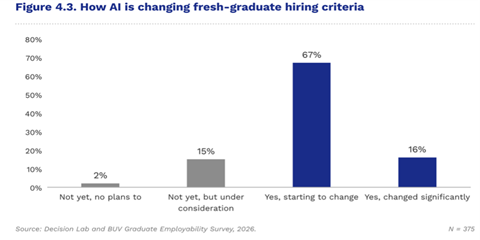
AI BEGINNING TO RESHAPE RECRUITMENT CRITERIA
Digital literacy is the only capability area in which fresh graduates meet employers’ expectations, according to a new report. Yet, it is also the standard rising fastest, as businesses increasingly expect new hires to use AI effectively in the workplace. Some 83 per cent of employers say AI has changed, or is beginning to change, their hiring criteria, while 94 per cent report higher expectations for digital and AI capabilities than they had two to three years ago.

INFRASTRUCTURE / CONSTRUCTION / LOGISTIC / PORT
ĐÀ NẴNG GREEN-LIGHTS US$105 MILLION THAI DEVELOPMENT DEAL
The central city has approved an investment proposal by Thailand’s WHA Group to develop infrastructure for the 400ha WHA Đà Nẵng Industrial Park project on two communes of Thăng Bình and Đồng Dương, with an investment of more than VNĐ2.7 trillion (US$105 million). The city said it approved WHA Industrial Development International's status as an investor in the project, which is expected to take place between 2027 and 2034.
VIETNAM ECONOMY INVESTMENT
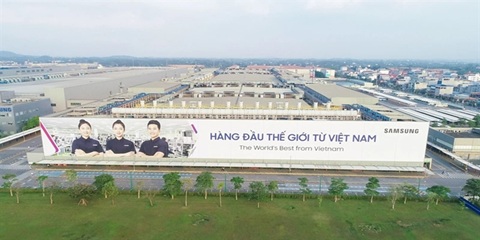
MOBILE PHONE EXPORTS RISE 20% TO $51.8 BILLION IN FIRST NINE MONTHS
Exports of mobile phones and components rose 20 per cent year-on-year to nearly US$51.8 billion in the first nine months of 2026, with China, the US and Republic of Korea accounting for more than half of the total. Shipments to the three markets reached a combined $26.18 billion, or 50.6 per cent of total exports of the product group during the period, according to data from the Vietnam Department of Customs under the Ministry of Finance.
VIETNAM ECONOMY INVESTMENT
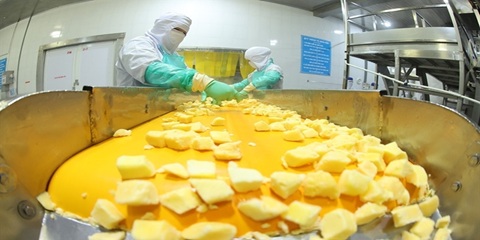
FRUIT AND VEGETABLE EXPORTS POISED TO HIT $10 BILLION IN 2026
Fruit and vegetable exports are on track to reach nearly US$10 billion in 2026, after rising 19.9 per cent year on year to nearly US$7.4 billion in the first nine months, driven by strong seasonal demand and abundant tropical fruit supplies. The Ministry of Agriculture and Environment said the growth reflected stronger international demand for fresh produce and processed agricultural products.
GARMENT / TEXTILE
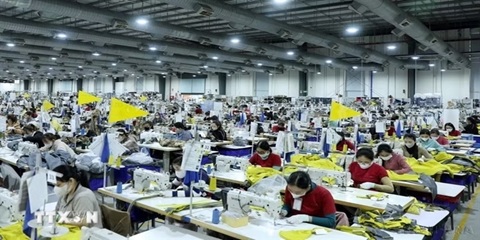
TEXTILE EXPORTS FACE DUAL CHALLENGES OF SUSTAINING ORDERS AND BOOSTING EFFICIENCY AMID GROWING COMPETITION
Data shows that the textile and garment sector maintained its growth momentum in the first nine months of this year. The industry's total export turnover reached an estimated US$35.721 billion in the first nine months of this year, up 3.3 per cent year-on-year. Despite posting encouraging export figures, Vietnamese textile and garment enterprises continue to navigate unpredictable market variables.
Events Sponsors






















