Want to be in the loop?
subscribe to
our notification
Business News
VIET NAM STEPS UP IMPLEMENTATION OF LABOUR COMMITMENTS IN FREE-TRADE AGREEMENTS
Việt Nam is continuing to improve its legal system, demonstrating its seriousness in implementing labour commitments in the EVFTA, CPTPP and UKVFTA trade agreements.
Reports on the implementation results of the Comprehensive and Progressive Agreement for Trans-Pacific Partnership (CPTPP), the Việt Nam-EU Free Trade Agreement (EVFTA) and UK-Việt Nam Free Trade Agreement (UKVFTA) of the Ministry of Industry and Trade in 2022 show that to implement the CPTPP, UKVFTA, EVFTA, Việt Nam continues to complete its legal system to regulate labour relations and labour standards in accordance with international standards, commitments, and conventions on labour.
Accordingly, recently, with the efforts of the Vietnamese Government and relevant parties, by the end of December 2022, Việt Nam had joined 25 Conventions of the International Labour Organization (ILO), including nine out of 10 Fundamental Conventions, three out of four Administrative Conventions and 13 Technical Conventions. This demonstrates the country's efforts in ratifying appropriate ILO Conventions, reflecting its seriousness in implementing labour commitments in the CPTPP, EVFTA and UKVFTA.
Regarding Convention 98 - Application of principles of the right to organize and collective bargaining, and Convention No. 105 - Abolition of forced labour, after the National Assembly ratified the accession to these two conventions, the Prime Minister issued an implementation plan.
The contents of the above conventions have been all internalised into in the Vietnamese legal system, especially the 2019 Labour Code. After nearly three years of implementation, despite being heavily impacted by the Covid-19 pandemic, the provisions of the 2019 Labour Code have basically been implemented relatively well by the business community and workers, without major difficulties or problems.
In particular, in 2021, the Government of Việt Nam submitted the first national report on the implementation of Convention 98. In 2023, Việt Nam developed and sent the ILO a second report on the implementation of Convention 98 and its first report on the implementation of Convention 105 on the abolition of forced labour. Regarding Convention 87 on freedom of association, the Ministry of Labour, Invalids and Social Affairs has issued a study plan and proposal to join Convention 87.
The plan has identified seven specific areas of work that will be carried out to propose accession to Convention 87 and promote the completion of documents in the dossier to join Convention 87 according to the provisions of the Law on Treaties for submission. Competent authorities will discuss and give opinions on the plan.
Although it has not yet been ratified, the basic contents of Convention 87 have been codified into the 2019 Labour Code, specifically the issue of organising workers who are not part of the Viet Nam General Confederation of Labour system and this organisation's activities in representing and protecting the rights of workers in labour relations.
In addition, regarding amendments to labour laws, according to the Ministry of Industry and Trade, up to now, in the field of labour, Việt Nam has issued the 2019 Labour Code regulating organisations representing workers and collective bargaining that contains many new, complex and unprecedented aspects into the Vietnamese legal system.
Records show that, locally, most provinces and cities focus on improving the lives of workers, strengthening reconciliation between workers and businesses, and encouraging trade unions. Provinces and cities proactively work with business owners to resolve recommendations and problems, ensuring the legal and legitimate rights and interests of workers and businesses.
Along with that, Việt Nam is also strengthening the organizational apparatus of state agencies by managing the establishment and operation of labour organisations at enterprises.
The Ministry of Labour, Invalids and Social Affairs has also built the functions, tasks, powers and organisational structure of the Department of Labour Relations and Wages, which is responsible for advising and helping the ministry carry out its management function for employee representative organisations at enterprises. At the same time, the Ministry has directed the Department of Labour Relations and Wages to arrange civil servants to perform this task.
In addition, the Ministry also guides the functions, tasks and powers of the Departments of Labour, Invalids and Social Affairs under the People's Committees of provinces and cities. Accordingly, these departments are responsible for guiding and organising the implementation of labour law provisions and state management of workers' organisations and act at the enterprise according to the provisions of law and as assigned or authorised by the Provincial People's Committees.
Currently, the Ministry of Labour, Invalids and Social Affairs is researching and urgently completing draft laws related to the social sector, including developing new resolutions on social policy for the period 2023-2030, with a vision towards 2045, which have been adopted by the Central Party Committee at the October meeting. These resolutions will replace current resolutions on a number of social issues in the 2012-2020 period with breakthroughs in approaches and solutions to social issues to meet the country's development requirements.
On the local side, according to the Ministry of Industry and Trade, provinces and cities must focus on social and security policies to support workers, especially in the context of difficult labour conditions due to the Covid-19 pandemic. The implemented policies are relatively diverse, ranging from strengthening business connections with vocational education institutions, financial support, and training.
Source: VNS
Related News

MEMBER CORNER / PROMOTIONS
KNIC ENGAGES WITH GOVERNMENT AND HIGH-TECH BUSINESS COMMUNITIES IN CHINA
From Beijing to Shandong, KN Holdings and KN Industrial City are continuing to expand their engagement with government authorities, trade promotion organizations, and high-tech business communities in China. In Beijing, the delegation met with the Center for International Economic and Technological Cooperation under the Ministry of Industry and Information Technology (MIIT), exchanging perspectives on industrial and technology cooperation between the two markets.
VIETNAM ECONOMY INVESTMENT
VIETNAM’S TRADE TOPS $825 BILLION BY MID-SEPTEMBER
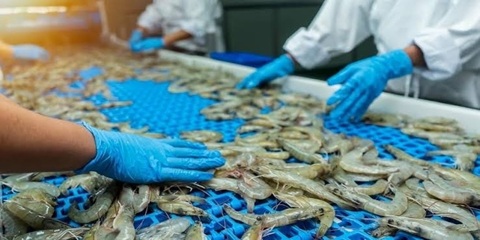
Figures released on September 21 showed goods trade reached nearly $55 billion in the first 15 days of September alone, bringing cumulative turnover since the beginning of the year to more than $825 billion. The strong growth reflects robust trade flows, with demand for consumer goods and production inputs remaining high.

TECHNOLOGY
VIỆT NAM'S BUSINESSES MOVE TOWARDS AI AGENTS
Việt Nam’s AI landscape is entering a new phase as businesses move beyond generative AI (GenAI) tools designed to assist human users towards autonomous AI, agentic AI and AI agents that can take action with limited supervision, experts have said. The shift comes as Việt Nam seeks to accelerate science and technology, innovation and digital transformation under Politburo Resolution 57-NQ/TW, issued on December 22, 2024.
GARMENT / TEXTILE
VIỆT NAM TARGETS $48 BILLION IN TEXTILE-GARMENT EXPORTS
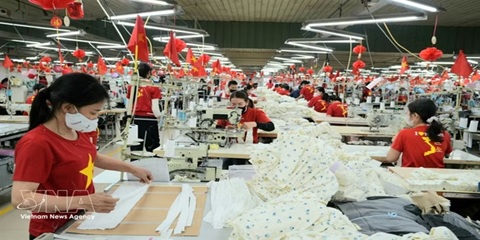
Việt Nam’s textile and garment industry is facing both opportunities and challenges amid complex and unpredictable developments in the global market, prompting businesses to improve growth quality, optimise production costs and enhance adaptability in pursuit of an export turnover of about $48 billion this year. The target is considered an important milestone that requires concerted efforts from management agencies and the business community.
INFRASTRUCTURE / CONSTRUCTION / LOGISTIC / PORT
CUTTING LOGISTICS COSTS KEY TO BOOSTING EXPORTS
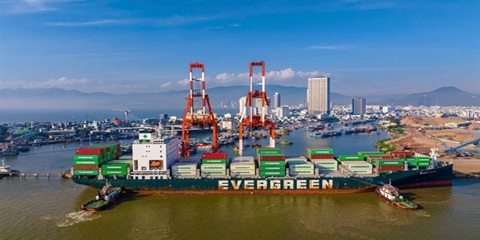
Reducing costs has become an increasingly urgent priority for import-export activities, particularly logistics costs, a conference in Hà Nội was told on Tuesday. According to Deputy General Director of the Ministry of Industry and Trade's Agency for Foreign Trade, Trần Thanh Hải, import-export activities has remained a bright spot for the economy in recent years, playing an important role and helping drive macroeconomic growth.
LEGAL UPDATE / POLICY
FLEXIBLE FISCAL POLICY HELPS DRIVE ECONOMIC GROWTH
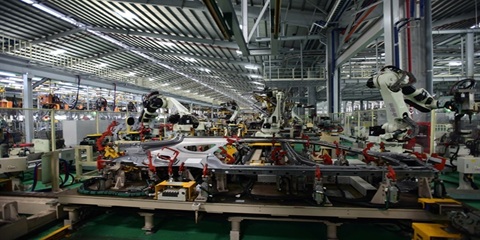
Việt Nam’s fiscal policy has been implemented in a targeted expansionary manner since early 2026, helping maintain macroeconomic stability and supporting the country’s goal of achieving double-digit economic growth. According to the Ministry of Finance, State budget revenue in the first eight months of 2026 was estimated at VNĐ2.02 quadrillion (US$77.7 billion), equivalent to 80 per cent of the annual estimate and up 16 per cent year-on-year.
Events Sponsors






















