Want to be in the loop?
subscribe to
our notification
Business News
VIỆT NAM URGED TO PRIORITISE FOREIGN INVESTMENT QUALITY OVER INVESTMENT SCALE
The country attracted US$54.85 billion in registered foreign investment during the January-October period, up 74 per cent from a year earlier and the highest level since 2008, according to the Ministry of Finance's National Statistics Office.
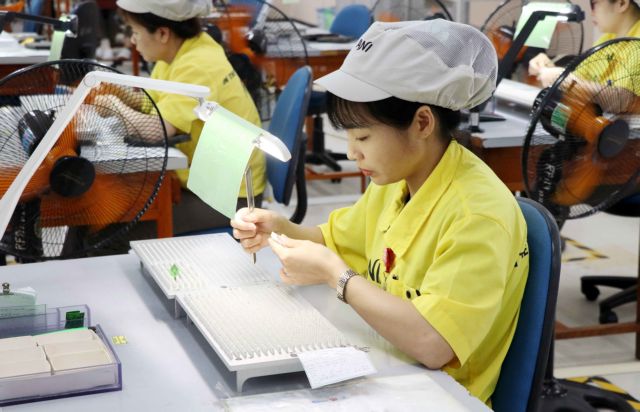
Medical equipments are produced at a foreign-invested firm in Thái Nguyên Province. — VNA/VNS Photos
HÀ NỘI — Việt Nam needs to move beyond headline foreign investment figures and place greater emphasis on investment quality, technology transfer and links with domestic businesses, experts have said, as registered foreign investment reached an 18-year high in the first 10 months of 2026.
The country attracted US$54.85 billion in registered foreign investment during the January-October period, up 74 per cent from a year earlier and the highest level since 2008, according to the Ministry of Finance's National Statistics Office.
However, realised investment rose by just 13 per cent to $24.08 billion, highlighting a widening gap between investment commitments and actual capital disbursements. The ratio of realised to registered capital fell to 44 per cent in the first 10 months of 2026, from approximately 68 per cent in the same period last year.
While the increase in realised capital remained positive, the disparity highlighted why Việt Nam should not assess the effectiveness of its foreign investment policies solely through registered investment figures, said Phan Hữu Thắng, former director of the Foreign Investment Agency under the former Ministry of Planning and Investment.
Manufacturing leads investment inflows
The processing and manufacturing sector remained the largest recipient of foreign investment, attracting $14.61 billion in newly registered capital, equivalent to 47.5 per cent of the total.
Including additional capital registered by existing projects, investment in the sector reached $24.19 billion, accounting for 51.6 per cent of the combined value of new and adjusted investment.
The concentration of realised investment in manufacturing was consistent with Việt Nam's ambition to develop into a regional manufacturing hub, Thắng told vnbusiness.vn.
However, the sector's share alone did not indicate the quality of investment, which should also be assessed through technological capabilities, domestic value added and links with Vietnamese companies.
Projects involving research and development (R&D), design and advanced technologies could generate substantially greater economic benefits than those focused primarily on assembly, he added.
Vương Thị Minh Hiếu, deputy director of the Ministry of Finance's Foreign Investment Agency, also called for a shift from prioritising investment scale to improving the quality and efficiency of foreign investment.
She said priority should be given to high-tech industries, electronics, semiconductors, supporting industries and R&D, while projects should be assessed based on their ability to connect with domestic businesses, facilitate technology transfer and increase added value.
A high-quality foreign-invested project should not be measured solely by its registered capital or the modernity of its production lines, Hiếu said. Its contribution should also be reflected in the development of domestic suppliers, the creation of skilled jobs and improvements in local production capacity.
If enterprises remain confined to simple production stages while most components and materials are imported, the spillover benefits of foreign investment will remain limited, she added.
FDI sources remain concentrated
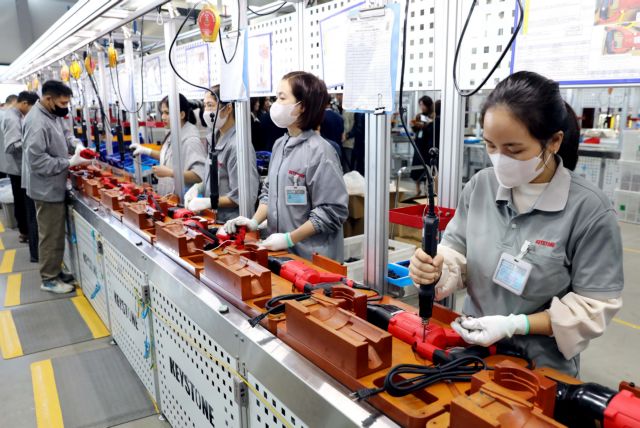
Workers manufacture handheld power tools at the Keystone Electrical Vietnam factory in Hưng Yên Province.
Although investors from 80 countries and territories registered new projects in Việt Nam during the first 10 months, capital remained heavily concentrated among a small number of economies, Thắng noted.
Singapore led with $9.52 billion in newly registered capital, followed by South Korea ($5.81 billion), Luxembourg ($4.99 billion), mainland China ($3.77 billion), Hong Kong ($3.57 billion) and Japan ($1.58 billion). Together, the six economies accounted for $29.24 billion, or more than 95 per cent of total newly registered capital.
Thắng said greater attention should be paid to identifying the ultimate beneficial owners, the actual origins of investment capital and the technologies being introduced into Việt Nam, rather than relying solely on the jurisdictions where investors are registered.
He added that the concentration also exposed Việt Nam's foreign investment inflows to potential changes in investment policies and economic cycles in a relatively small group of major source markets.
Focus shifts towards strategic investment
The experts said Việt Nam's foreign investment strategy should be aligned with Politburo Resolution No 10-NQ/TW, issued on June 8, 2026, on developing the foreign-invested economic sector.
The resolution calls for priority to be given to projects using advanced technologies and modern management practices, ensuring environmental protection and strengthening links with the domestic economy.
Alongside attracting major multinational corporations, local authorities need to select projects capable of developing supplier networks and helping Vietnamese enterprises participate more deeply in global value chains, Hiếu said.
Meanwhile, Thắng said Việt Nam should shift from attracting foreign investment primarily in terms of volume towards selectively pursuing strategic investment, with greater emphasis on technology transfer, localisation, domestic supply-chain participation and workforce development.
Such efforts should also safeguard economic and technological security and protect the environment. — VNS
Source: VNS
Related News
GARMENT / TEXTILE
TEXTILE, GARMENT FIRMS REFORM TO MEET CPTPP ORIGIN RULES
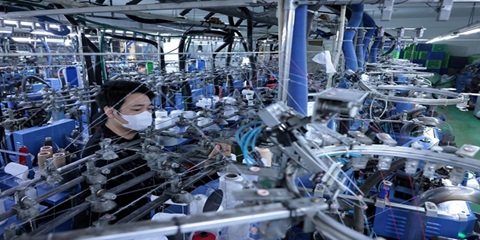
Vietnamese textile and garment manufacturers are aggressively restructuring their supply chains and diversifying material sources to unlock untapped tariff benefits. To capitalise on the Comprehensive and Progressive Agreement for Trans-Pacific Partnership (CPTPP), companies are racing to align with the pact's strict "yarn-forward" rules — a task made difficult by a shortage of raw materials within the trade bloc.

MEMBER CORNER / PROMOTIONS
COSMOPARK ECO INDUSTRIAL ZONE – LONG-TERM ADVANTAGES FOR INDUSTRIAL INVESTORS IN VIETNAM
Spanning 322.3 hectares, with a project operational term extending to 2095 and plans for large-scale power infrastructure, COSMOPARK Eco Industrial Zone offers a strong foundation for manufacturing, high-tech industries, and international supply chain development. As global supply chains continue to evolve, Vietnam is strengthening its position as a strategic destination for international businesses seeking to diversify their manufacturing operations.
INFRASTRUCTURE / CONSTRUCTION / LOGISTIC / PORT
HCM CITY ACCELERATES POWER INFRASTRUCTURE INVESTMENT TO ATTRACT HIGH-TECH CAPITAL
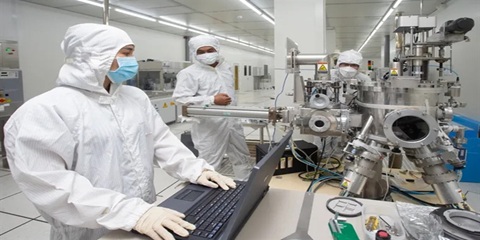
High-tech projects, particularly data centres, are not confined to SHTP but are also expanding into export processing zones and industrial parks across HCM City, driving up electricity demand. Proactively developing power infrastructure, diversifying energy supplies and expanding access to green energy are becoming essential for HCM City to maintain its competitive edge in attracting high-tech foreign direct investment (FDI).
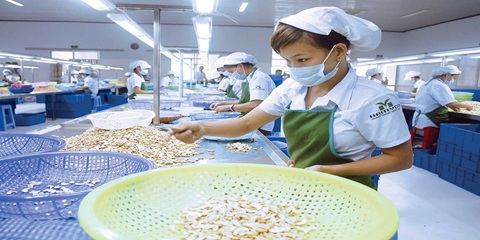
VIETNAM ECONOMY INVESTMENT
VIETNAMESE COMPANIES OPTIMISTIC ON INTERNATIONAL GROWTH
Vietnamese businesses are among the most confident about the outlook for international trade, according to HSBC’s Global Trade Pulse Survey 2026, released on November 16. The survey captures the views of 10,000 senior business leaders across 26 markets on trade, tariffs, supply chains, and technology. Findings show that 94 per cent of Vietnamese businesses expect their international trade to grow over the next two years. Vietnam ranks joint top in the survey with the Philippines, compared with 86 per cent globally.
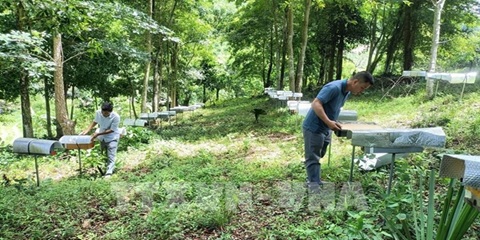
TECHNOLOGY
ĐÀ NẴNG SEEKS TO BUILD HIGH-TECH AGRICULTURE, INTEGRATED VALUE CHAINS
Đà Nẵng is seeking to transform its agricultural sector from a supplier of raw materials into a technology-driven, market-oriented economy, with investment opportunities spanning concentrated production areas, deep processing, logistics and agricultural product distribution. The city aims to shift from traditional agricultural production towards agricultural economic development, organising value chains and increasing the technological content and added value of products through closer links between production and processing.
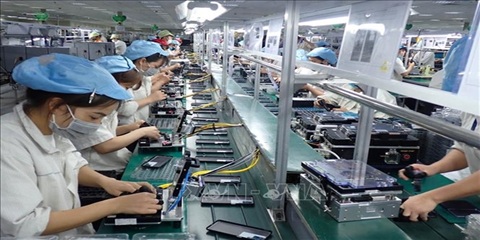
TECHNOLOGY
VIỆT NAM'S DIGITAL TECHNOLOGY INDUSTRY REVENUE SURGES 53% TO $254.6B
Việt Nam's digital technology industry generated an estimated US$254.6 billion in revenue in the first 10 months of 2026, up 53 per cent from a year earlier, while exports rose 46.2 per cent to $212 billion, the Ministry of Science and Technology said in its latest report. According to the report, hardware and electronics exports reached an estimated $30.681 billion in October, up 108 per cent from the same month last year.
Events Sponsors






















