Want to be in the loop?
subscribe to
our notification
Business News
VIETNAM ENTERS NEXT PHASE OF E-COMMERCE EXPORT GROWTH
Vietnam’s fast-growing e-commerce sector is increasingly viewed as a contributor to export growth.

As the ecosystem matures, the focus is shifting from selling across borders to building the operational capacity required to run global businesses at scale.
Vietnam’s e-commerce market reached $31 billion in 2025, growing more than 25 per cent on-year and accounting for roughly 10 per cent of total retail sales. While domestic consumption continues to drive overall volume, cross-border e-commerce is becoming a more meaningful source of value for small and medium-sized enterprises (SMEs), particularly those seeking to diversify markets.
Vietnam is also positioning itself more deeply within regional and global digital trade frameworks. Efforts to strengthen e-commerce provisions globally point to a longer-term shift. Cross-border e-commerce is emerging as a strategic growth engine, underpinned by Vietnam’s young, digitally savvy population, competitive manufacturing base, and rising integration into global supply chains.
Tran Xuan Thuy, southern regional manager at Amazon Global Selling Vietnam, said, “Vietnam’s cross-border e-commerce is growing two to three times faster than the overall e-commerce market, even outpacing the growth of traditional exports. For example, in the fashion industry, cross-border e-commerce sales are growing 5.2 times faster than traditional export methods. These trends suggest that Vietnam is on track to become a regional digital export hub.”
“Many Vietnamese businesses have built their own brands and are gradually entering international markets. Each year, Amazon continues to welcome more Vietnamese sellers to its platform, growing at around 35 per cent annually. Some companies achieve revenues exceeding $1 million after only a short period of online operations,” he said.
Amazon will implement initiatives such as training businesses to bridge the gap in technology and e-commerce, supporting the development of “Made in Vietnam” brands aligned with consumer trends and international standards, and expanding its support ecosystem, including logistics, technology, and digital tools.
As cross-border e-commerce evolves into always-on, multi-market operations, Vietnamese sellers are also under increasing pressure to manage the demands of scaling globally. Payments, cash flow, compliance, and logistics are no longer secondary considerations, but core functions that shape day-to-day operations.
Against this backdrop, financial infrastructure is emerging as a critical enabler of sustainable cross-border growth. Rather than simply facilitating transactions, modern payment and financial systems are expected to support operational complexity across markets.
Centralised account structures allow businesses to consolidate revenues from different countries and platforms, improving financial visibility and control. This supports more effective clearer forecasting, and smoother coordination with suppliers and partners. For SMEs operating internationally, it also reduces reliance on fragmented local banking arrangements and manual reconciliation processes.
Nagesh Devata, senior vice president of Asia-Pacific at Payoneer said, “As cross-border e-commerce matures in Southeast Asia, the focus will increasingly shift from market entry to execution. The businesses that succeed will be those that can manage cash flow, compliance, and financial operations consistently across markets.”
The joint effort with Amazon Global Selling Vietnam reflects a broader industry shift of Payoneer towards addressing execution gaps rather than simply expanding market access. The collaboration aims to close execution gaps, ensuring that payments, currency management, and compliance can keep pace with commercial growth.
Looking ahead, Vietnam’s next phase of cross-border e-commerce growth is likely to be defined less by expansion alone and more by operational resilience, as rising logistics costs, compliance requirements, and competitive pressures place greater demands on execution. While competition intensifies and international operations grow more complex, businesses that can manage cash flow, compliance, and financial visibility effectively will be better positioned to grow sustainably.
Source: VIR
Related News
INFRASTRUCTURE / CONSTRUCTION / LOGISTIC / PORT
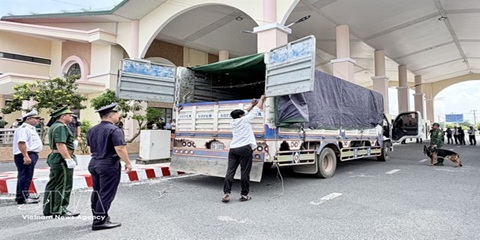
VIỆT NAM-CAMBODIA TRADE GATHERS PACE TOWARDS $20 BILLION TARGET
Trade between Việt Nam and Cambodia continues to grow, remaining a bright spot and a key pillar of bilateral cooperation as the two countries aim to raise two-way trade to US$20 billion in the coming years. After setting a record of more than $11.3 billion last year, bilateral trade reached about $8.7 billion in the first eight months of this year, up 8.3 per cent year on year.
TECHNOLOGY
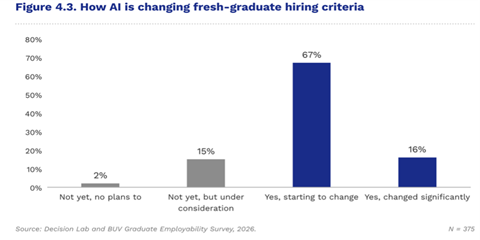
AI BEGINNING TO RESHAPE RECRUITMENT CRITERIA
Digital literacy is the only capability area in which fresh graduates meet employers’ expectations, according to a new report. Yet, it is also the standard rising fastest, as businesses increasingly expect new hires to use AI effectively in the workplace. Some 83 per cent of employers say AI has changed, or is beginning to change, their hiring criteria, while 94 per cent report higher expectations for digital and AI capabilities than they had two to three years ago.
INFRASTRUCTURE / CONSTRUCTION / LOGISTIC / PORT
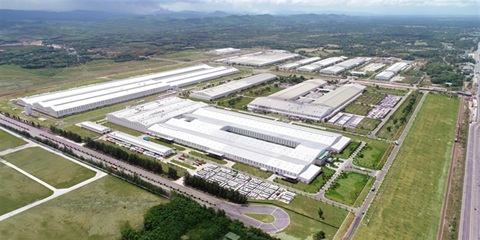
ĐÀ NẴNG GREEN-LIGHTS US$105 MILLION THAI DEVELOPMENT DEAL
The central city has approved an investment proposal by Thailand’s WHA Group to develop infrastructure for the 400ha WHA Đà Nẵng Industrial Park project on two communes of Thăng Bình and Đồng Dương, with an investment of more than VNĐ2.7 trillion (US$105 million). The city said it approved WHA Industrial Development International's status as an investor in the project, which is expected to take place between 2027 and 2034.
VIETNAM ECONOMY INVESTMENT
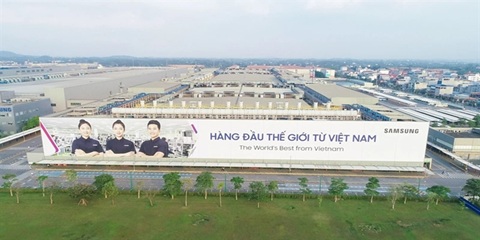
MOBILE PHONE EXPORTS RISE 20% TO $51.8 BILLION IN FIRST NINE MONTHS
Exports of mobile phones and components rose 20 per cent year-on-year to nearly US$51.8 billion in the first nine months of 2026, with China, the US and Republic of Korea accounting for more than half of the total. Shipments to the three markets reached a combined $26.18 billion, or 50.6 per cent of total exports of the product group during the period, according to data from the Vietnam Department of Customs under the Ministry of Finance.
VIETNAM ECONOMY INVESTMENT
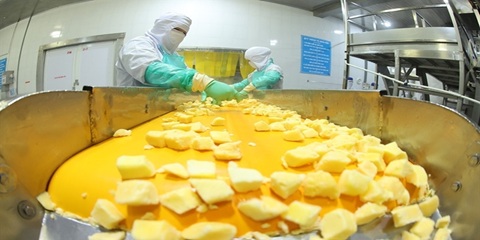
FRUIT AND VEGETABLE EXPORTS POISED TO HIT $10 BILLION IN 2026
Fruit and vegetable exports are on track to reach nearly US$10 billion in 2026, after rising 19.9 per cent year on year to nearly US$7.4 billion in the first nine months, driven by strong seasonal demand and abundant tropical fruit supplies. The Ministry of Agriculture and Environment said the growth reflected stronger international demand for fresh produce and processed agricultural products.
GARMENT / TEXTILE
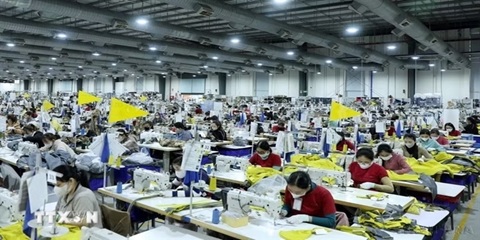
TEXTILE EXPORTS FACE DUAL CHALLENGES OF SUSTAINING ORDERS AND BOOSTING EFFICIENCY AMID GROWING COMPETITION
Data shows that the textile and garment sector maintained its growth momentum in the first nine months of this year. The industry's total export turnover reached an estimated US$35.721 billion in the first nine months of this year, up 3.3 per cent year-on-year. Despite posting encouraging export figures, Vietnamese textile and garment enterprises continue to navigate unpredictable market variables.
Events Sponsors






















