Want to be in the loop?
subscribe to
our notification
Business News
VIETNAM LOGISTICS & PORTS: BOOSTING INDUSTRIAL REAL ESTATE AND INT’L TRADE
Vietnam is rapidly becoming a regional logistics and manufacturing hub, fueled by rising global trade and shifting supply chains. Its deepwater ports and strong links to industrial zones attract more international tenants. Logistics readiness is now a key advantage in the competitive industrial real estate market. Vietnam’s growing port network and infrastructure upgrades strengthen its role in global trade.
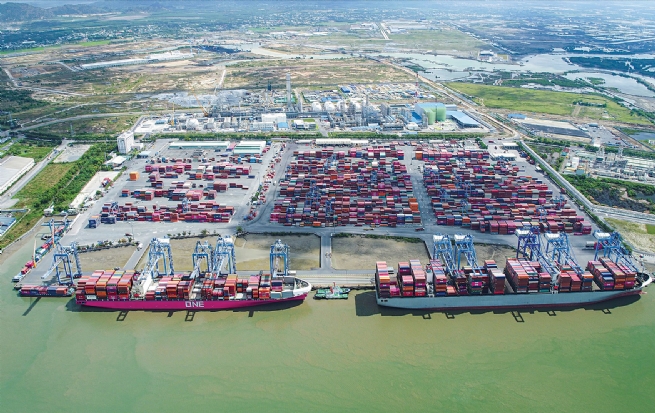
Overview of Tan Cang-Cai Mep International Terminal (TCIT)
Port network - A national competitive advantage
Global cargo volumes surged by 7.3% in 2024, climbing to 504.7 million TEUs across the world’s 50 busiest ports, according to Savills’ Global Occupier Insight - Industrial Focus 2025 report. The upswing, seen across all regions albeit at different speeds, underscores a broader shift as companies rethink supply chain strategies, diversify production bases, and reposition logistics hubs in response to geopolitical frictions, tariff risks, and evolving consumer demand.
“From North America to the Middle East, port throughput has rebounded on the back of stronger trade flows and enhanced connectivity. The Asia-Pacific, long regarded as the world’s manufacturing heartland, is regaining momentum, with Vietnam, Thailand, and Indonesia rising as pivotal production and logistics hubs,” said Thomas Rooney, Associate Director, Industrial Services at Savills Hanoi.
Vietnam is capitalizing on this trend, leveraging its strategic coastline, competitive labor pool, and increasingly sophisticated industrial real estate to cement its place as an emerging logistics powerhouse.
Ports remain the backbone of Vietnam’s export-driven economy. In the north, the Lach Huyen deepwater seaport anchors trade for the Northern Economic Zone, while in the south, Cat Lai and Cai Mep-Thi Vai serve as critical gateways for the Southern Economic Zone, linking industrial provinces to global shipping lanes. The Vietnam Seaports Association reported that the country’s ports handled more than 22 million TEUs in 2024, with steady growth forecast in the years ahead.
The value of this port network lies in its tight integration with major industrial and export zones, enabling cost-effective and efficient shipment of goods to global markets. Significant strides have been made to align port expansion with the development of supporting logistics and industrial infrastructure. Deepwater ports like Cai Mep-Thi Vai are now surrounded by logistics parks, bonded warehouses, and modern cold chain facilities that meet global standards.
The Prime Minister approved in 2025 the Can Gio international transshipment port project by Saigon Port and MSC’s Terminal Investment Limited, with an investment of at least VND50 trillion (US$1.96 billion). Meanwhile, the Lien Chieu deep-sea port, set for completion in 2025, will redirect Da Nang’s freight flows and enhance multi-modal connectivity across the Central Highlands, Laos, and Northeast Thailand.
However, progress is uneven. “In several secondary provinces, despite abundant and affordable industrial land, the quality and availability of supporting logistics infrastructure remain limited. Key challenges include insufficient Grade-A warehouse space, limited cold storage capacity, and a lack of multimodal links such as railways or inland waterways. Additionally, last-mile connectivity between seaports and manufacturing hubs still requires major investment, especially in the central and highland regions,” Rooney explained.
Shifting tenant preferences: proximity to ports, faster to market
As global manufacturers recalibrate operations, many are prioritizing proximity to deepwater ports and efficient logistics corridors in their site selection strategies. Vietnam is seeing this trend unfold vividly. Ho Chi Minh City is attracting large-scale tenants due to its direct access to Cai Mep’s deepwater capacity and international shipping routes. In the north, Hai Phong and its surrounding areas are increasingly favored over inland Hanoi, thanks to improved port infrastructure and customs efficiency.
Emerging clusters like Quang Ninh, Thanh Hoa, and Da Nang are gaining recognition not only for cost advantages but also for their expanding logistics offerings. Investors are evaluating these provinces not just for land prices and labor but for their logistical connectivity to ports and cross-border corridors. This shift underscores a broader evolution: industrial development in Vietnam is no longer solely about land - it’s about logistics readiness and trade facilitation.
“One of the most transformative developments in 2024-2025 has been the administrative reorganization, with several inland provinces merging with or integrating into neighboring coastal regions. This has enabled formerly landlocked industrial hubs to gain direct access to maritime trade infrastructure,” Rooney noted. These mergers deliver tangible benefits: shorter supply chains, lower freight costs, and streamlined export processes. A factory once reliant on lengthy inland trucking routes can now connect swiftly to seaports, bonded logistics zones, or export terminals. This is expected to stimulate new industrial corridors, attract higher-quality FDI, and balance regional development across Vietnam, decentralizing growth from traditional hotspots and creating new investment destinations with credible access to global trade flows.
“Vietnam’s industrial and logistics transformation is not happening in isolation; it is deeply linked to global shifts in trade, production, and consumption. As companies increasingly prioritize supply chain resilience, geopolitical neutrality, and proximity to fast-growing consumer markets, Vietnam is perfectly positioned to benefit,” Rooney said. However, he warned, “This opportunity is not automatic. To seize its moment, Vietnam must ensure that its ports are not only efficient but also embedded within a seamless logistics ecosystem. It must also ensure that industrial parks are well-serviced, connected, and future-ready locations for global manufacturers.”
To reinforce its role as a regional logistics and manufacturing hub, Vietnam must prioritize long-term investments and coordinated policy reforms. Key actions include integrated planning and infrastructure upgrades, expanding expressways, improving road networks, and investing in rail and inland waterways to better connect ports, industrial zones, warehouses, and border gates. Building a skilled logistics workforce and promoting digital transformation in smart warehousing, digital logistics, and electronic customs are equally critical. Streamlining land and licensing procedures will enhance the investment environment. Finally, sustainable development must take center stage, with green port models, clean energy adoption, and strict environmental standards to meet the rising ESG expectations of global investors and ensure long-term competitiveness in regional trade flows.
Vietnam’s port network is more than infrastructure - it’s a strategic asset redefining the industrial real estate landscape. By committing to logistics excellence and forward-thinking reforms, Vietnam is poised to solidify its position as a global manufacturing and trade powerhouse, driving balanced regional growth and capturing new investment opportunities.
Source: VCCI
Related News

MEMBER CORNER / PROMOTIONS
HCMC | CERTIFIED SUSTAINABILITY PROFESSIONAL (CSP) TRAINING | REGISTRATION OPEN
As sustainability becomes deeply embedded in corporate strategy and supply-chain operations across Vietnam, Hong Kong Business Association Vietnam is pleased to endorse the upcoming Certified Sustainability Professional (CSP) training program by the Asia Institute for Sustainability (AIS) - a premier internationally recognized ESG credential in Vietnam.
VIETNAM ECONOMY INVESTMENT
HCM CITY SAYS HOW IT PLANS TO ACHIEVE 10-11% ANNUAL EXPORT GROWTH FOR REST OF DECADE
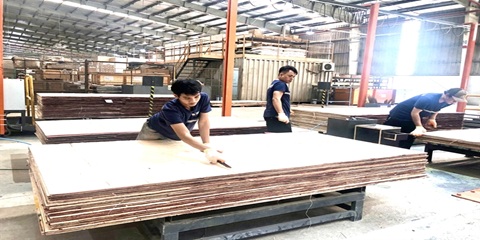
The southern economic hub aims to strengthen its role as the country’s largest import-export centre while developing into a regional transhipment centre in Southeast Asia, supported by green and digital transformation and a circular economy. HCM City has outlined measures to expand production capacity, cut logistics costs, diversify export markets, and help businesses meet increasingly stringent international standards as it targets average annual export growth of 10-11 per cent through 2030.
VIETNAM ECONOMY INVESTMENT
HCM CITY LEADS ECONOMIC RESTRUCTURING IN SOUTHEAST REGION
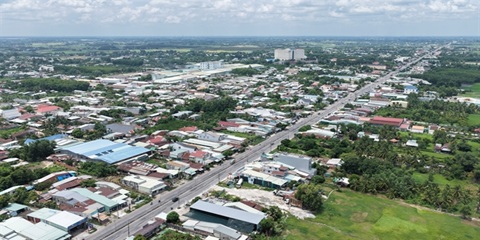
According to Associate Professor, Dr Vũ Tuấn Hưng, director of the Institute of Social Sciences of the Southern Region, the Southeast is a strategically important socio-economic space in Việt Nam’s development given its advantages in location, industry, trade, services, logistics, science and technology, urbanisation and human resources.
TECHNOLOGY
DIGITAL TRANSFORMATION TURNED INTO PRACTICAL TOOLS FOR PEOPLE, BUSINESSES
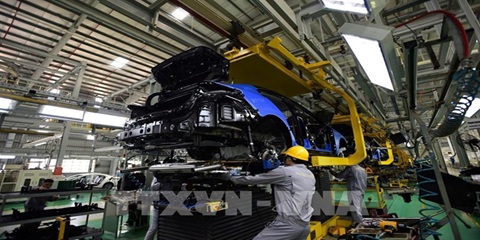
Việt Nam is moving its digital transformation agenda beyond policy frameworks and individual technology platforms towards practical applications that address everyday needs, as authorities seek measurable outcomes from science, technology and innovation. Under Politburo Resolution No. 57-NQ/TW issued on December 22, 2024, the implementation is increasingly shifting from simply completing assigned tasks towards developing concrete products and services for citizens and businesses.

TECHNOLOGY
APPLYING TECHNOLOGY FOR ECONOMIC TRANSFORMATION
Having completed its new rural development program, Hanoi is shifting its focus toward improving development quality and building smart, sustainable rural areas. The transformation of Dong La orchid-growing village in An Khanh, a western commune of Hanoi, shows how digital technology is becoming a driver of production, market expansion, and higher incomes for local residents.

MEMBER CORNER / PROMOTIONS
VIGLACERA HONORED AS THE "LEADING GREEN INDUSTRIAL REAL ESTATE DEVELOPER 2026"
Organized by the Vietnam Investment Review, this prestigious awards program recognizes industry pioneers advancing eco-industrial parks, clean energy transition, and rigorous ESG standards. Outperforming competitors through a rigorous evaluation, Viglacera Corporation – JSC proudly ranked among the Top 5 highest-positioned enterprises in the Leading Green Industrial Real Estate Developers 2026 category, reinforcing its premier position in Vietnam’s industrial real estate sector.
Events Sponsors






















