Want to be in the loop?
subscribe to
our notification
Business News
VIETNAM RECORDS 8.02% GDP GROWTH, FASTEST IN ASEAN
Vietnam’s 8.02% economic growth in 2025 stood out amid ongoing global economic fluctuations, particularly trade tensions and U.S. reciprocal tariff policies. This rate was the highest in the ASEAN region and among the leading growth rates worldwide.
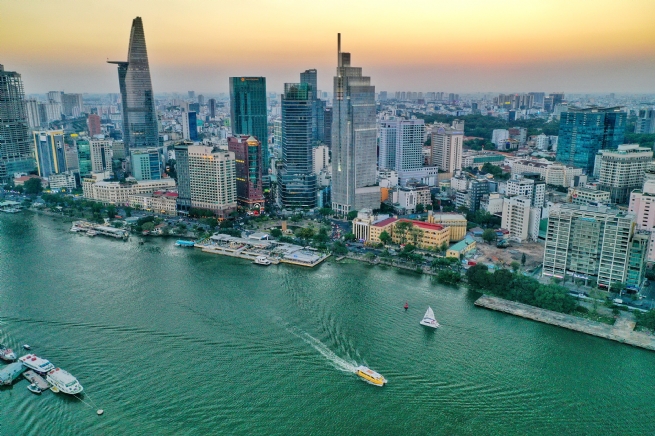
In 2025, Ho Chi Minh City is the largest contributor to the country’s total GDP, accounting for 23.11% of overall national growth
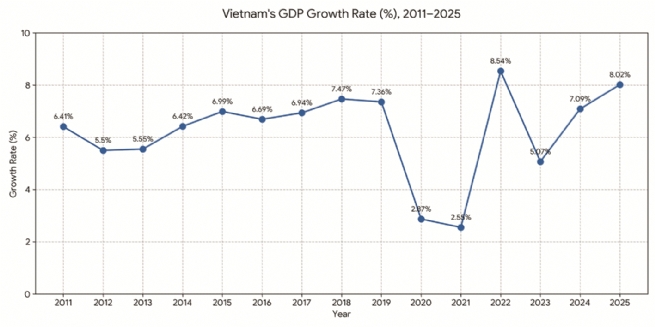
According to the National Statistics Office (Ministry of Finance), Vietnam’s GDP in 2025 increased by 8.02% compared with 2024. This was slightly below the 8.12% growth recorded in 2022, the highest level in the past 15 years, driven primarily by the services and industrial manufacturing sectors. With this outcome, the average GDP growth for the 2021-2025 period reached approximately 6.3% per year, surpassing the 6.2% achieved in the previous term.
Nguyen Thi Huong, Director of the National Statistics Office, reported that GDP in Q4 2025 reached the highest growth rate of the 2021-2025 period. The economy maintained a pattern of stronger growth in each successive quarter throughout the year.
At current prices, Vietnam’s GDP in 2025 was estimated at US$514 billion, up US$38 billion from the previous year. GDP per capita reached US$5,026, an increase of US$326 from 2024 (US$4,700), placing Vietnam among upper-middle-income countries. Average consumer price inflation (CPI) in 2025 rose 3.31% compared with the previous year.
In terms of gross value added, the agriculture, forestry, and fisheries sector grew 3.78%, contributing 5.30%; the industry and construction sector increased 8.95%, contributing 43.62%; and the services sector rose 8.62%, contributing 51.08%.
Within the agriculture, forestry, and fisheries sector, despite adverse impacts from storms and flooding, timely measures mitigated damage, keeping production stable. Agricultural value added in 2025 was estimated to increase 3.48%, contributing 3.59% to overall economic growth; forestry grew 5.70% but with a small share, contributing 0.38%; and fisheries grew 4.41%, contributing 1.33%.
In the industry and construction sector, industrial growth reached its highest level since 2019. Industrial value added in 2025 was estimated to grow 8.80% year-on-year, contributing 35.15% to total economic growth. Manufacturing increased 9.97%, the highest rate in the 2019-2025 period, remaining a key growth driver and contributing 31.49%.
Trade and tourism activities rose significantly, with international arrivals reaching an all-time high in 2025, providing strong support for service sector growth. Service sector value added in 2025 was estimated to increase 8.62%, slightly below the 10.66% growth recorded in 2022 during the 2011-2025 period.
Vietnam’s total trade value surpassed US$930 billion for the first time, increasing 18.2% compared with 2024. Exports reached US$475 billion, up 17%, with 36 products generating more than US$1 billion each.
In 2025, nearly 297,500 enterprises were newly registered or resumed operations, an increase of 27.4% compared with the same period in 2024. On average, nearly 24,800 enterprises were established or resumed operations each month, while approximately 18,900 enterprises exited the market monthly.
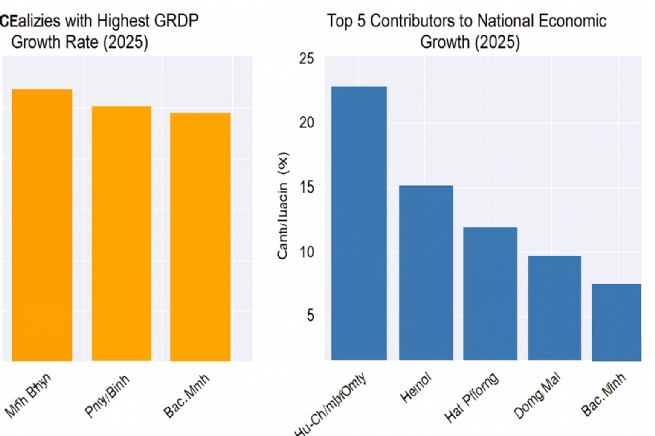
Regional gross regional domestic product (GRDP) growth ranged from 5.84% to 11.89%, with six localities exceeding 10%. Quang Ninh and Hai Phong led with GRDP growth of 11.89% and 11.81%, respectively, followed by Ninh Binh, Phu Tho, Bac Ninh, and Quang Ngai. Most other provinces achieved stable growth of 7-10%, while five provinces remained below 7%. In terms of contribution to national GDP growth, Hanoi, Ho Chi Minh City, Hai Phong, Dong Nai, and Bac Ninh continued to serve as the pillars of the economy, contributing 55.4% to overall growth.
For 2026, Vietnam aims to achieve double-digit growth while maintaining macroeconomic stability, controlling inflation, and ensuring key economic balances. According to Huong, this represents a significant challenge, requiring strong measures to accelerate public investment disbursement, particularly for major national projects. Simultaneously, Vietnam needs to resolve lingering projects and continue deep economic restructuring while promoting exports and expanding the domestic market.
Additionally, regulatory agencies need to implement competitive, business-friendly policies to attract large-scale, high-tech projects. Selective mechanisms should be established to draw foreign investment in high-potential sectors such as semiconductors, innovation, and green hydrogen, creating new drivers for growth.
Mariam Sherman, World Bank Country Director for Vietnam, said Vietnam should continue strengthening the private sector, prioritize human capital and technology, advance sustainable infrastructure and green growth, and ensure that the benefits of growth and institutional modernization are shared equitably.
She added that Vietnam’s goal of becoming a developed, high-income country is ambitious but achievable. Success will require optimism combined with a sense of urgency, along with clear objectives and timelines, consistent reforms, and a readiness to address challenges directly.
Source: VCCI
Related News

INFRASTRUCTURE / CONSTRUCTION / LOGISTIC / PORT
VIỆT NAM-CAMBODIA TRADE GATHERS PACE TOWARDS $20 BILLION TARGET
Trade between Việt Nam and Cambodia continues to grow, remaining a bright spot and a key pillar of bilateral cooperation as the two countries aim to raise two-way trade to US$20 billion in the coming years. After setting a record of more than $11.3 billion last year, bilateral trade reached about $8.7 billion in the first eight months of this year, up 8.3 per cent year on year.
TECHNOLOGY
AI BEGINNING TO RESHAPE RECRUITMENT CRITERIA
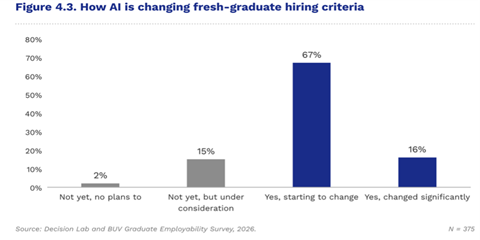
Digital literacy is the only capability area in which fresh graduates meet employers’ expectations, according to a new report. Yet, it is also the standard rising fastest, as businesses increasingly expect new hires to use AI effectively in the workplace. Some 83 per cent of employers say AI has changed, or is beginning to change, their hiring criteria, while 94 per cent report higher expectations for digital and AI capabilities than they had two to three years ago.
INFRASTRUCTURE / CONSTRUCTION / LOGISTIC / PORT
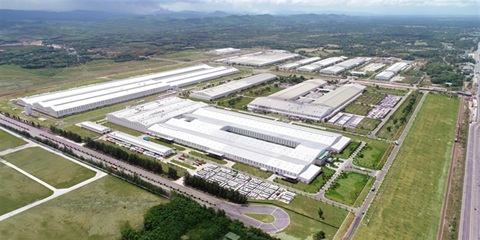
ĐÀ NẴNG GREEN-LIGHTS US$105 MILLION THAI DEVELOPMENT DEAL
The central city has approved an investment proposal by Thailand’s WHA Group to develop infrastructure for the 400ha WHA Đà Nẵng Industrial Park project on two communes of Thăng Bình and Đồng Dương, with an investment of more than VNĐ2.7 trillion (US$105 million). The city said it approved WHA Industrial Development International's status as an investor in the project, which is expected to take place between 2027 and 2034.
VIETNAM ECONOMY INVESTMENT
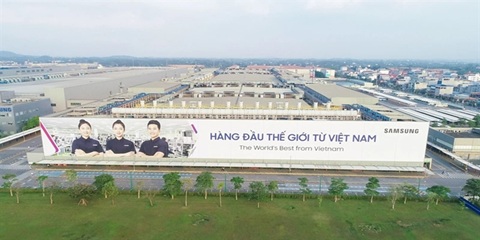
MOBILE PHONE EXPORTS RISE 20% TO $51.8 BILLION IN FIRST NINE MONTHS
Exports of mobile phones and components rose 20 per cent year-on-year to nearly US$51.8 billion in the first nine months of 2026, with China, the US and Republic of Korea accounting for more than half of the total. Shipments to the three markets reached a combined $26.18 billion, or 50.6 per cent of total exports of the product group during the period, according to data from the Vietnam Department of Customs under the Ministry of Finance.
VIETNAM ECONOMY INVESTMENT
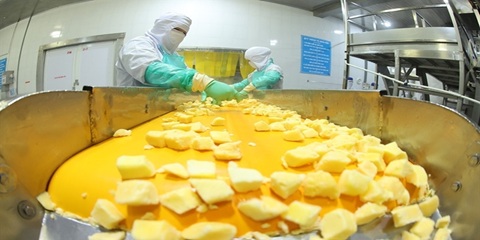
FRUIT AND VEGETABLE EXPORTS POISED TO HIT $10 BILLION IN 2026
Fruit and vegetable exports are on track to reach nearly US$10 billion in 2026, after rising 19.9 per cent year on year to nearly US$7.4 billion in the first nine months, driven by strong seasonal demand and abundant tropical fruit supplies. The Ministry of Agriculture and Environment said the growth reflected stronger international demand for fresh produce and processed agricultural products.
GARMENT / TEXTILE
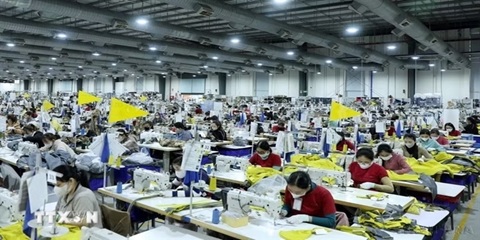
TEXTILE EXPORTS FACE DUAL CHALLENGES OF SUSTAINING ORDERS AND BOOSTING EFFICIENCY AMID GROWING COMPETITION
Data shows that the textile and garment sector maintained its growth momentum in the first nine months of this year. The industry's total export turnover reached an estimated US$35.721 billion in the first nine months of this year, up 3.3 per cent year-on-year. Despite posting encouraging export figures, Vietnamese textile and garment enterprises continue to navigate unpredictable market variables.
Events Sponsors






















