Want to be in the loop?
subscribe to
our notification
Business News
VIETNAM'S 8.18% FIRST-HALF GROWTH BOOSTS DOUBLE-DIGIT GDP HOPES
Vietnam's economy grew 8.18 percent in the first six months of 2026, the highest pace in 15 years, giving the country a solid foundation to pursue its target of double-digit GDP growth for the full year although significant challenges remain.
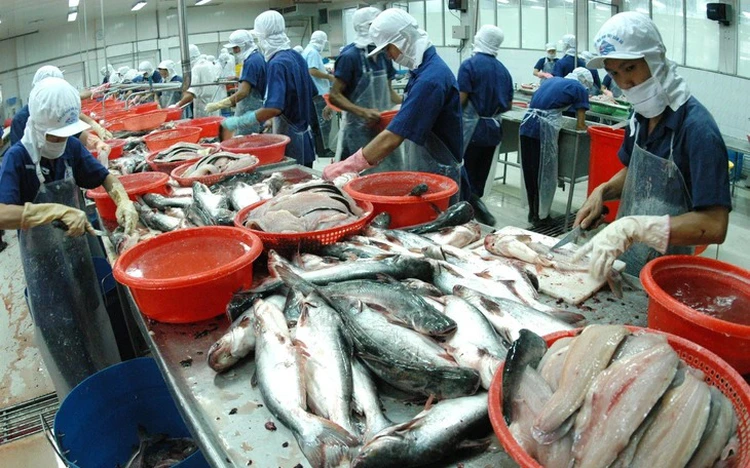
Workers process basa fish at a seafood export company in An Giang Province, southern Vietnam. Photo: T.T.D. / Tuoi Tre
Government Resolution No. 01/2026, issued in January, sets an official target of at least 10 percent GDP growth for 2026.
Achieving that goal, however, will require Vietnam to sustain traditional growth drivers, develop new growth engines, deepen institutional reforms, and strengthen economic resilience amid an increasingly uncertain global environment.
Ambitious growth target
The Vietnamese economy expanded 8.39 percent year on year in the second quarter, lifting its first-half GDP growth to 8.18 percent, the fastest first-half expansion since 2011, the National Statistics Office reported.
The performance came despite slower global growth projections by the International Monetary Fund, the World Bank, and the Organization for Economic Co-operation and Development amid persistent geopolitical tensions and trade uncertainties.
Against that backdrop, the government has maintained one of its most ambitious economic targets in recent years by aiming for GDP growth of at least 10 percent in 2026.
Unlike Government Resolution No. 01/2025, which outlined three growth scenarios for 2025, Government Resolution No. 01/2026 adopts a single growth scenario for 2026, according to Nhan Dan (People) newspaper.
The resolution calls for GDP growth of 9.1 percent in the first quarter, 10.2 percent in both the second and third quarters, and 10.4 percent in the fourth quarter to achieve full-year growth of at least 10 percent.
Unlocking traditional, new growth engines
No single growth driver is likely to be sufficient to deliver double-digit GDP growth in 2026, making it essential for Vietnam to strengthen both traditional and emerging growth engines.
Public investment, exports, foreign direct investment (FDI), and domestic consumption are expected to remain the backbone of economic growth.
At the same time, Vietnam's export sector remains heavily dependent on foreign-invested enterprises, highlighting the need to strengthen domestic firms and deepen linkages with FDI companies to increase local value creation.
Beyond these traditional drivers, policymakers are increasingly emphasizing new growth engines.
Politburo's Resolution No. 57 issued in late 2024 places greater emphasis on science, technology, innovation, and digital transformation as strategic areas to boost productivity and long-term competitiveness, with emerging fields such as artificial intelligence and semiconductors expected to play a greater role, Nhan Dan reported.
In May 2025, Resolution No. 68 identified the private sector as a key driver of the national economy while calling for a better business environment, broader access to capital, and stronger innovation to unlock the sector's full potential.
These policy directions spotlight the importance of improving the business environment, expanding access to capital, fostering innovation, and developing emerging fields such as artificial intelligence and semiconductors.
Institutional reforms to sustain long-term growth
While stronger investment, exports, consumption, and innovation are expected to support growth in the near term, economists say Vietnam's ability to achieve and sustain double-digit growth will ultimately depend on the pace and effectiveness of institutional reforms.
Many analysts argue that Vietnam's traditional growth model, driven mainly by capital accumulation and labor expansion, is approaching its limits, making productivity gains, technological advancement, and more efficient resource allocation increasingly important, VnEconomy reported.
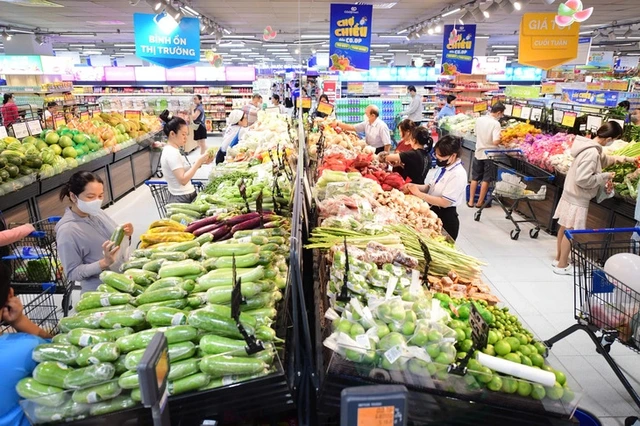
Shoppers browse fresh produce at a Co.opmart supermarket in Vietnam. Photo: Quang Dinh / Tuoi Tre
Economists have pushed for further efforts to streamline administrative procedures, remove institutional and legal bottlenecks, accelerate project approvals, strengthen decentralization, and create a more transparent regulatory framework to encourage private investment.
Improving the efficiency of public investment, boosting capital absorption, and strengthening spillover effects across the economy will also be crucial in enhancing Vietnam's long-term growth capacity.
Well-coordinated fiscal and monetary policies will also be essential to support growth while keeping inflation under control and maintaining exchange-rate and financial stability, according to Ha Noi Moi (New Hanoi) online newspaper.
Investing in human capital is another key priority.
Expanding the skilled workforce, strengthening university-business links, increasing research and development, and accelerating the commercialization of research and innovation will help Vietnam move further up global value chains and enhance its competitiveness, Nhan Dan reported.
Challenges remain
Vietnam's strong economic performance in the first half has strengthened confidence that the government's ambitious double-digit GDP growth target is within reach, although significant challenges remain.
The external environment remains the biggest source of uncertainty, with slower global growth, weaker global demand, rising trade protectionism, and geopolitical tensions likely to weigh on exports and investment, according to the International Monetary Fund and the World Bank.
Domestically, Vietnam needs to maintain momentum in investment, production, consumption, and exports while preserving macroeconomic stability, as challenges related to public investment disbursement, inflation risks, and business performance remain, VnEconomy reported.
Vietnam's return to a trade deficit in the first six months also underscores the economy's continued reliance on imported machinery, components and raw materials, posing risks to the trade balance, exchange-rate stability, and domestic industrial resilience.
Many small- and medium-sized enterprises continue to face pressure from financing costs, rising input costs, market uncertainty, and limited competitiveness despite the broader economic recovery.
In addition, Vietnam's continued reliance on foreign-invested enterprises for export growth highlights the need to strengthen domestic firms, improve local value creation, and deepen linkages between FDI companies and Vietnamese suppliers to enhance economic resilience.
Source: Tuổi Trẻ News
Related News

INFRASTRUCTURE / CONSTRUCTION / LOGISTIC / PORT
VIỆT NAM-CAMBODIA TRADE GATHERS PACE TOWARDS $20 BILLION TARGET
Trade between Việt Nam and Cambodia continues to grow, remaining a bright spot and a key pillar of bilateral cooperation as the two countries aim to raise two-way trade to US$20 billion in the coming years. After setting a record of more than $11.3 billion last year, bilateral trade reached about $8.7 billion in the first eight months of this year, up 8.3 per cent year on year.
TECHNOLOGY
AI BEGINNING TO RESHAPE RECRUITMENT CRITERIA
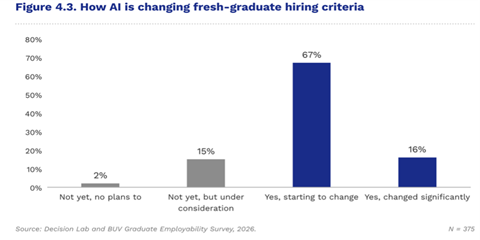
Digital literacy is the only capability area in which fresh graduates meet employers’ expectations, according to a new report. Yet, it is also the standard rising fastest, as businesses increasingly expect new hires to use AI effectively in the workplace. Some 83 per cent of employers say AI has changed, or is beginning to change, their hiring criteria, while 94 per cent report higher expectations for digital and AI capabilities than they had two to three years ago.

INFRASTRUCTURE / CONSTRUCTION / LOGISTIC / PORT
ĐÀ NẴNG GREEN-LIGHTS US$105 MILLION THAI DEVELOPMENT DEAL
The central city has approved an investment proposal by Thailand’s WHA Group to develop infrastructure for the 400ha WHA Đà Nẵng Industrial Park project on two communes of Thăng Bình and Đồng Dương, with an investment of more than VNĐ2.7 trillion (US$105 million). The city said it approved WHA Industrial Development International's status as an investor in the project, which is expected to take place between 2027 and 2034.

VIETNAM ECONOMY INVESTMENT
MOBILE PHONE EXPORTS RISE 20% TO $51.8 BILLION IN FIRST NINE MONTHS
Exports of mobile phones and components rose 20 per cent year-on-year to nearly US$51.8 billion in the first nine months of 2026, with China, the US and Republic of Korea accounting for more than half of the total. Shipments to the three markets reached a combined $26.18 billion, or 50.6 per cent of total exports of the product group during the period, according to data from the Vietnam Department of Customs under the Ministry of Finance.

VIETNAM ECONOMY INVESTMENT
FRUIT AND VEGETABLE EXPORTS POISED TO HIT $10 BILLION IN 2026
Fruit and vegetable exports are on track to reach nearly US$10 billion in 2026, after rising 19.9 per cent year on year to nearly US$7.4 billion in the first nine months, driven by strong seasonal demand and abundant tropical fruit supplies. The Ministry of Agriculture and Environment said the growth reflected stronger international demand for fresh produce and processed agricultural products.
GARMENT / TEXTILE
TEXTILE EXPORTS FACE DUAL CHALLENGES OF SUSTAINING ORDERS AND BOOSTING EFFICIENCY AMID GROWING COMPETITION
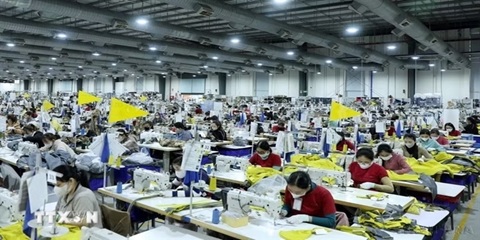
Data shows that the textile and garment sector maintained its growth momentum in the first nine months of this year. The industry's total export turnover reached an estimated US$35.721 billion in the first nine months of this year, up 3.3 per cent year-on-year. Despite posting encouraging export figures, Vietnamese textile and garment enterprises continue to navigate unpredictable market variables.
Events Sponsors






















