Want to be in the loop?
subscribe to
our notification
Business News
VIETNAM’S AGRO-FORESTRY-FISHERY EXPORTS JUMP NEARLY 30% IN JANUARY
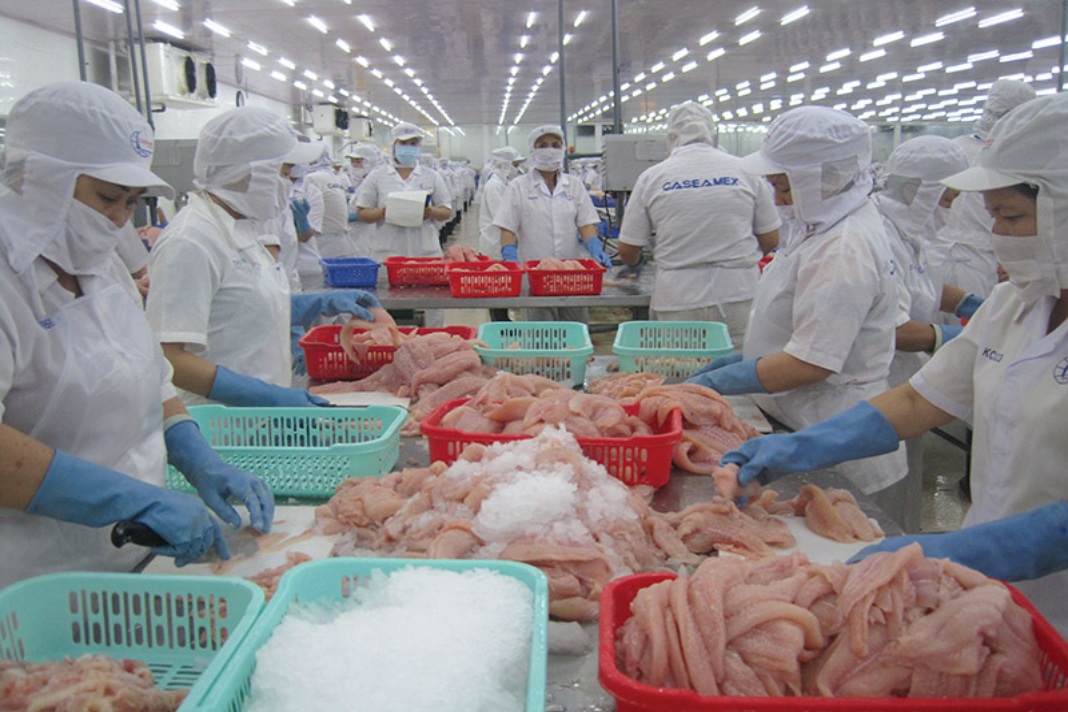
Workers process fish for export at a local facility – PHOTO: TRUNG CHANH
HCMC – Vietnam’s exports of agricultural, forestry and fishery products surged nearly 30% year-on-year in January 2026, driven by strong growth across major commodity groups and key export markets, according to the Ministry of Agriculture and Environment.
Export turnover for the sector in January is estimated at nearly US$6.51 billion, up 29.5% from the same period last year, the ministry said at a regular press briefing on February 5.
Agricultural products accounted for the largest share, with export value reaching US$3.6 billion, an increase of 41.8%. Forestry products brought in US$1.72 billion, up 13%, while seafood exports totaled US$940 million, rising 21.5%. Livestock products generated US$47.5 million, up 20.2%. Salt exports, though small in value, rose sharply to US$1.1 million, up 49%.
Asia remained Vietnam’s largest export market, accounting for 45.3% of total agro-forestry-fishery exports. The Americas and Europe followed with 22.7% and 13.4%, respectively. Africa and Oceania accounted for smaller proportions at 2.6% and 1.4%.
Compared with a year earlier, exports to Asia rose 41.1%, while shipments to the Americas increased 22.4%. Exports to Europe grew 11.2%, Africa 21.6%, and Oceania 32.3%.
China continued to be Vietnam’s largest single market, absorbing 22.6% of total exports. The U.S. ranked second with a 20.4% share, followed by Japan at 7%. Exports to China surged 66.1% year-on-year in January, while shipments to the U.S. and Japan rose 21.6% and 19.6%, respectively.
Several key commodities recorded strong growth in both volume and value, including coffee, rubber, tea, rice, fruits and vegetables, cashew nuts and pepper. Coffee and rubber remained the leading export earners.
Coffee exports reached about 180,000 tons, valued at US$981 million, while rubber exports totaled roughly 220,000 tons, worth US$416 million. Export prices for both commodities remained stable, with Europe and Asia as the main markets.
Tea and rice exports also posted solid gains. Tea shipments amounted to around 14,000 tons, valued at US$23 million, while rice exports reached about 600,000 tons, generating US$370 million. Although tea export prices edged lower, higher volumes supported revenue growth. Rice export prices rose about 4% to an average of US$616.6 per ton.
Exports of fruits and vegetables stood out, with turnover estimated at US$750 million in January, doubling from a year earlier. China remained the largest market, followed by the U.S. and South Korea.
Cashew nuts and pepper continued to show strong momentum. Cashew exports reached about 65,000 tons, valued at US$434 million, while pepper exports totaled around 20,000 tons, worth US$133 million. Both commodities recorded growth of more than 50% year-on-year, despite slightly lower average export prices.
Looking ahead, the Ministry of Agriculture and Environment said market development and consumption promotion would remain key priorities. The ministry plans to strengthen links between production and markets, boost trade promotion and support businesses and cooperatives in expanding both domestic and overseas markets.
At the same time, the sector will step up resource management, environmental protection and climate change adaptation, with a focus on water security and disaster risk reduction. The ministry also aims to improve production and business models, develop modern agricultural cooperatives, and enhance disease prevention for crops, livestock and aquaculture to safeguard production and stabilize markets.
Source: The Saigon Times
Related News

MEMBER CORNER / PROMOTIONS
KNIC ENGAGES WITH GOVERNMENT AND HIGH-TECH BUSINESS COMMUNITIES IN CHINA
From Beijing to Shandong, KN Holdings and KN Industrial City are continuing to expand their engagement with government authorities, trade promotion organizations, and high-tech business communities in China. In Beijing, the delegation met with the Center for International Economic and Technological Cooperation under the Ministry of Industry and Information Technology (MIIT), exchanging perspectives on industrial and technology cooperation between the two markets.
VIETNAM ECONOMY INVESTMENT
VIETNAM’S TRADE TOPS $825 BILLION BY MID-SEPTEMBER
Figures released on September 21 showed goods trade reached nearly $55 billion in the first 15 days of September alone, bringing cumulative turnover since the beginning of the year to more than $825 billion. The strong growth reflects robust trade flows, with demand for consumer goods and production inputs remaining high.

TECHNOLOGY
VIỆT NAM'S BUSINESSES MOVE TOWARDS AI AGENTS
Việt Nam’s AI landscape is entering a new phase as businesses move beyond generative AI (GenAI) tools designed to assist human users towards autonomous AI, agentic AI and AI agents that can take action with limited supervision, experts have said. The shift comes as Việt Nam seeks to accelerate science and technology, innovation and digital transformation under Politburo Resolution 57-NQ/TW, issued on December 22, 2024.
GARMENT / TEXTILE
VIỆT NAM TARGETS $48 BILLION IN TEXTILE-GARMENT EXPORTS
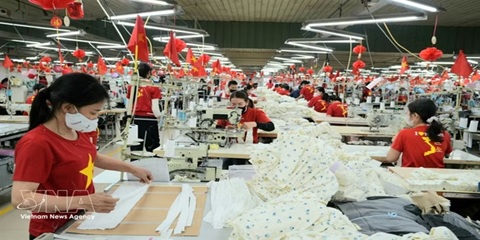
Việt Nam’s textile and garment industry is facing both opportunities and challenges amid complex and unpredictable developments in the global market, prompting businesses to improve growth quality, optimise production costs and enhance adaptability in pursuit of an export turnover of about $48 billion this year. The target is considered an important milestone that requires concerted efforts from management agencies and the business community.
INFRASTRUCTURE / CONSTRUCTION / LOGISTIC / PORT
CUTTING LOGISTICS COSTS KEY TO BOOSTING EXPORTS
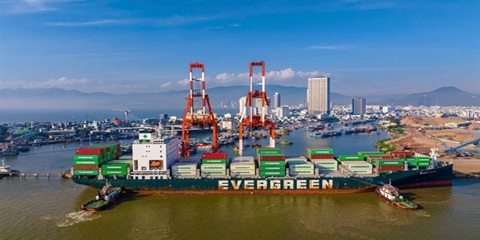
Reducing costs has become an increasingly urgent priority for import-export activities, particularly logistics costs, a conference in Hà Nội was told on Tuesday. According to Deputy General Director of the Ministry of Industry and Trade's Agency for Foreign Trade, Trần Thanh Hải, import-export activities has remained a bright spot for the economy in recent years, playing an important role and helping drive macroeconomic growth.
LEGAL UPDATE / POLICY
FLEXIBLE FISCAL POLICY HELPS DRIVE ECONOMIC GROWTH
Việt Nam’s fiscal policy has been implemented in a targeted expansionary manner since early 2026, helping maintain macroeconomic stability and supporting the country’s goal of achieving double-digit economic growth. According to the Ministry of Finance, State budget revenue in the first eight months of 2026 was estimated at VNĐ2.02 quadrillion (US$77.7 billion), equivalent to 80 per cent of the annual estimate and up 16 per cent year-on-year.
Events Sponsors






















