Want to be in the loop?
subscribe to
our notification
Business News
VIETNAM'S EXPORTS BRIGHT SPOT OF 2024
In 2024, despite global uncertainties, Vietnam's exports remain a bright spot thanks to measures addressing challenges, supporting production, promoting trade and expanding markets. Recognized as one of the fastest-growing exporters from 2019-2023, Vietnam ranks 23rd among the world's top 30 exporting economies, according to the WTO. The Sputnik has also hailed Vietnam as the "economic star" of the Asia-Pacific region.
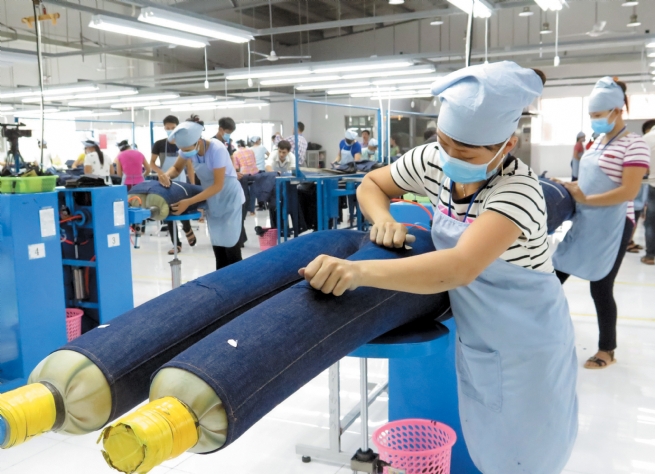
Vietnam's textile and garment export turnover is expected to reach nearly US$44 billion, securing the second position globally, just behind India
Export milestone
As of December 14, Vietnam's total trade turnover reached US$745.38 billion, up 15.3% from 2023. Exports were US$384.4 billion (up 14.46%), imports totaled US$360.98 billion (up 16.32%), resulting in a trade surplus of US$23.42 billion.
According to the General Department of Vietnam Customs, the robust recovery and growth in goods trade are expected to push total trade turnover for 2024 beyond US$782 billion, with a projected trade surplus of US$23.53 billion.
By the end of November 2024, export turnover from the agriculture, forestry and fishery sectors was estimated at US$35.5 billion, up 20.6% year-on-year. This remarkable growth was largely driven by high global prices, with several commodities recording significant increases. Pepper exports surged by 46.2%, coffee by 35.4%, and fruits and vegetables by 27.4%, solidifying Vietnam’s strong position in the global agricultural market.
The manufacturing sector continues to be the pillar of Vietnam’s exports, accounting for nearly 85% of total export turnover with a growth rate of 14.3%. Key products such as computers, electronic components, and machinery not only achieved high growth but also reinforced Vietnam’s role in the global supply chain, showcasing its competitiveness and critical position in the manufacturing industry. Meanwhile, the mineral fuel group experienced a 4.9% decline, a rare downside in the export outlook.
Domestic enterprises recorded an impressive growth rate of 20%, surpassing the 12.4% growth of foreign direct investment (FDI) enterprises. The share of export turnover by domestic firms also increased from 26.8% to 28%, signaling improved production capacity and market access for local businesses.
Vietnam’s export turnover in 2024 showed strong recovery across most major markets. As of November 30, the United States remained the largest export market, with turnover reaching US$98.4 billion, representing nearly 30% of total exports and a 24.2% increase from the previous year. The European Union recorded US$47.3 billion, up 18.1%, while South Korea and Japan saw growth of 8.7% and 4.8%, respectively. In contrast, exports to China declined slightly by 0.9%, reflecting stagnation in domestic demand.
Vietnam has signed and implemented 17 Free Trade Agreements (FTAs) with major global partners. Next-generation FTAs like the EVFTA and CPTPP have boosted export growth, sustained a trade surplus, and reinforced Vietnam’s key role in the global supply chain.
New momentum
While Vietnam’s export sector has achieved remarkable milestones, the disparity between the domestic economy and FDI enterprises remains significant. FDI enterprises currently account for 71.9% of total export turnover, maintaining a dominant role, while the domestic sector contributes only 28.1%.
Vietnam's exports mainly consist of low-value raw materials with weak branding, limiting competitiveness and sustainable growth. To thrive, businesses must invest in technology, build strong brands, and focus on high-value products. Digital transformation, process optimization and workforce development are essential for enhancing competitiveness in a more integrated market.
To boost exports, businesses should explore untapped markets like the Middle East, South America and Africa, which offer significant growth potential. The halal market is also emerging as a promising opportunity due to rising global demand. Additionally, leveraging major distribution channels such as Saigon Coop, AEON, and Central Retail can help Vietnamese products reach international consumers more effectively.
To support exporters, authorities should focus on building a national brand, diversifying products, improving the investment environment, enhancing infrastructure and promoting a green economy. Maximizing FTAs, expanding markets, strengthening official trade channels and fostering sustainable branding are essential for driving export growth. The Ministry of Industry and Trade aims to leverage existing FTAs, pursue new ones, diversify import-export products, strengthen supply chains, and tap into untapped markets while building strong national brands to ensure sustainable export growth.
In parallel, the ministry plans to innovate trade promotion activities and refine trade defense regulations to protect domestic businesses from international barriers. These measures aim to provide effective support for export industries in tackling global challenges. Together, these initiatives promise to lay a solid foundation for the continued growth of Vietnam's export sector.
Source: VCCI
Related News

CHARITY / EXHIBITION / OTHER EVENTS
INVESTMENT OPPORTUNITIES IN CA MAU PROVINCE: 96 PROJECTS AND 20 STRATEGIC PROJECTS
We are pleased to share with you information on investment projects currently seeking investors in Ca Mau Province. Should your esteemed company or association be interested, we kindly invite you to review the project information and complete the registration form via the links provided. The Ho Chi Minh City Investment and Trade Promotion Centre (ITPC) will consolidate the expressions of interest and facilitate connections with the leadership of Ca Mau Province at a meeting tentatively scheduled for 13 November 2026 in Ho Chi Minh City.

MEMBER CORNER / PROMOTIONS
BẰNG KIỀU LIVESHOW - A SYMPHONY OF LOVE UNDER THE GOLDEN GLOW
A masterclass in live music that takes the audience on a soulful journey through immortal love songs, guided by the peerless artistry and emotive storytelling of renowned singer Bằng Kiều. The highlight of the night is his seamless musical chemistry with special guest Triệu Hồng Ngọc, promising passionate and deeply resonant duets inside the magnificent Grand Ballroom.
INFRASTRUCTURE / CONSTRUCTION / LOGISTIC / PORT
ĐÀ NẴNG GREEN-LIGHTS US$105 MILLION THAI DEVELOPMENT DEAL
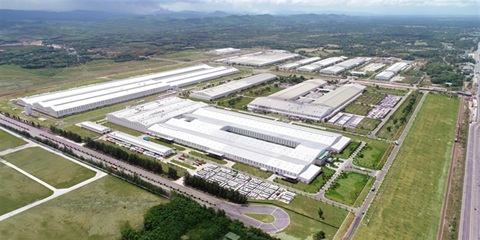
The central city has approved an investment proposal by Thailand’s WHA Group to develop infrastructure for the 400ha WHA Đà Nẵng Industrial Park project on two communes of Thăng Bình and Đồng Dương, with an investment of more than VNĐ2.7 trillion (US$105 million). The city said it approved WHA Industrial Development International's status as an investor in the project, which is expected to take place between 2027 and 2034.
VIETNAM ECONOMY INVESTMENT
MOBILE PHONE EXPORTS RISE 20% TO $51.8 BILLION IN FIRST NINE MONTHS
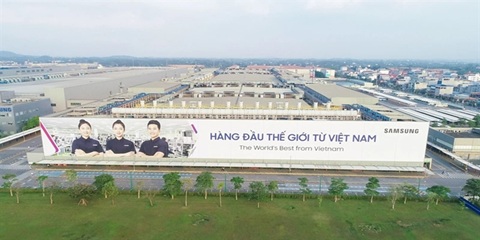
Exports of mobile phones and components rose 20 per cent year-on-year to nearly US$51.8 billion in the first nine months of 2026, with China, the US and Republic of Korea accounting for more than half of the total. Shipments to the three markets reached a combined $26.18 billion, or 50.6 per cent of total exports of the product group during the period, according to data from the Vietnam Department of Customs under the Ministry of Finance.

INFRASTRUCTURE / CONSTRUCTION / LOGISTIC / PORT
VIỆT NAM-CAMBODIA TRADE GATHERS PACE TOWARDS $20 BILLION TARGET
Trade between Việt Nam and Cambodia continues to grow, remaining a bright spot and a key pillar of bilateral cooperation as the two countries aim to raise two-way trade to US$20 billion in the coming years. After setting a record of more than $11.3 billion last year, bilateral trade reached about $8.7 billion in the first eight months of this year, up 8.3 per cent year on year.
VIETNAM ECONOMY INVESTMENT
FRUIT AND VEGETABLE EXPORTS POISED TO HIT $10 BILLION IN 2026
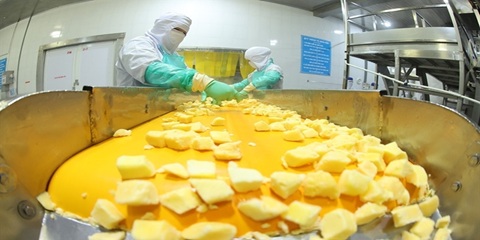
Fruit and vegetable exports are on track to reach nearly US$10 billion in 2026, after rising 19.9 per cent year on year to nearly US$7.4 billion in the first nine months, driven by strong seasonal demand and abundant tropical fruit supplies. The Ministry of Agriculture and Environment said the growth reflected stronger international demand for fresh produce and processed agricultural products.
Events Sponsors






















