Want to be in the loop?
subscribe to
our notification
Business News
VIETNAM’S INFRASTRUCTURE EXPANSION ACCELERATES ON BOND MARKET INNOVATION
Vietnam’s infrastructure ambitions, which are estimated to cost $245 billion through 2030, depend on unlocking long-term private capital.
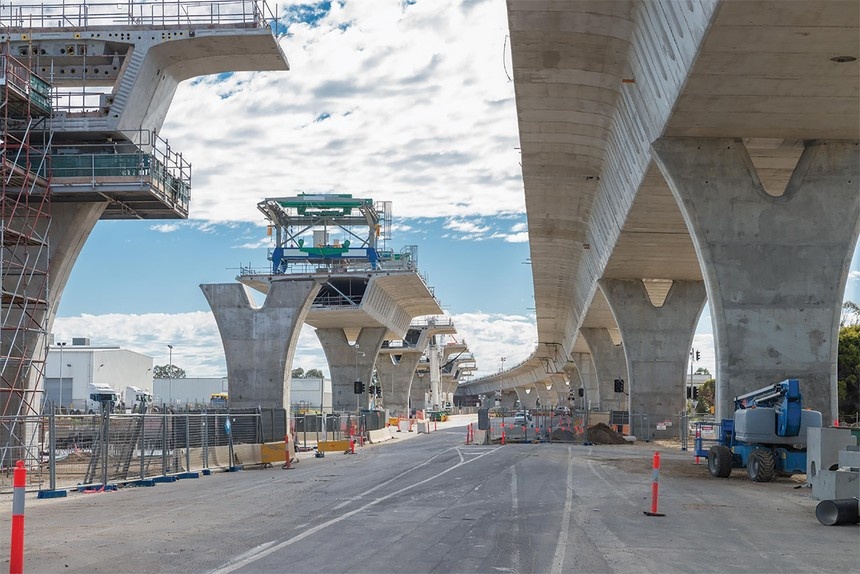
Photo: Istock
According to a report by VIS Rating and Credit Guarantee & Investment Facility (CGIF) on July 24, with public funding falling short and bank lending constrained, Vietnam’s infrastructure ambitions hinge on mobilising private capital through the corporate bond market. Between 2025 and 2030, the country will need an estimated $245 billion for expressways, high-speed rail, and power projects, yet public funding can only cover 70 per cent. Private investment has already become a key driver, accounting for over half of registered fixed asset investment.
As bank lending tightens, due to regulatory limits on using short-term deposits for long-term loans, the role of the bond market becomes even more critical. Bank credit to toll road projects, for instance, has declined by 6 per cent annually since 2020. To close the infrastructure financing gap, Vietnam must deepen its corporate bond market and attract long-term private capital.
Indeed, Vietnam’s bond market is gaining traction as a key channel for infrastructure financing. Recent regulatory reforms are paving the way for companies to issue bonds more flexibly, such as through private placements without historical financials under the amended Public-Private Partnership Law. The state is also stepping in with higher equity contributions to ease debt burdens and improve credit quality.
A forthcoming decree is expected to further unlock the market by allowing public offerings and immediate listings of infrastructure bonds. While issuance conditions will be eased, post-issuance controls, such as trustee oversight, escrow accounts, and regulated disbursements, will tighten, creating a more robust legal framework.
Meanwhile, new requirements on disclosure, issuance standards, and mandatory credit ratings are boosting transparency and investor confidence. Together, these reforms position corporate bonds as a more viable, long-term funding tool for Vietnam’s infrastructure ambitions.
The report also indicates that credit guarantees and credit ratings are crucial tools for unlocking private capital for infrastructure development. Infrastructure projects often carry weaker credit profiles due to high leverage, single revenue streams, and exposure to construction risks. Limited track records and restricted access to project agreements further complicate investor assessments. Long tenors, often 15 to 20 years, also heighten liquidity risk.
Credit guarantees provide support to project bond issuers, thereby enhancing credit quality and reducing bondholders’ exposure to project-related risks. CGIF’s regional portfolio, including several infrastructure projects in Vietnam, demonstrates how credit guarantees can support project owners in broadening their investor base and facilitating access to capital markets.
Recent regulatory reforms, along with stronger disclosure, credit ratings, and guarantees, are laying the groundwork for deeper investor participation.
Source: VIR
Related News

MEMBER CORNER / PROMOTIONS
HCMC | CERTIFIED SUSTAINABILITY PROFESSIONAL (CSP) TRAINING | REGISTRATION OPEN
As sustainability becomes deeply embedded in corporate strategy and supply-chain operations across Vietnam, Hong Kong Business Association Vietnam is pleased to endorse the upcoming Certified Sustainability Professional (CSP) training program by the Asia Institute for Sustainability (AIS) - a premier internationally recognized ESG credential in Vietnam.
VIETNAM ECONOMY INVESTMENT
HCM CITY SAYS HOW IT PLANS TO ACHIEVE 10-11% ANNUAL EXPORT GROWTH FOR REST OF DECADE
The southern economic hub aims to strengthen its role as the country’s largest import-export centre while developing into a regional transhipment centre in Southeast Asia, supported by green and digital transformation and a circular economy. HCM City has outlined measures to expand production capacity, cut logistics costs, diversify export markets, and help businesses meet increasingly stringent international standards as it targets average annual export growth of 10-11 per cent through 2030.
VIETNAM ECONOMY INVESTMENT
HCM CITY LEADS ECONOMIC RESTRUCTURING IN SOUTHEAST REGION
According to Associate Professor, Dr Vũ Tuấn Hưng, director of the Institute of Social Sciences of the Southern Region, the Southeast is a strategically important socio-economic space in Việt Nam’s development given its advantages in location, industry, trade, services, logistics, science and technology, urbanisation and human resources.

TECHNOLOGY
DIGITAL TRANSFORMATION TURNED INTO PRACTICAL TOOLS FOR PEOPLE, BUSINESSES
Việt Nam is moving its digital transformation agenda beyond policy frameworks and individual technology platforms towards practical applications that address everyday needs, as authorities seek measurable outcomes from science, technology and innovation. Under Politburo Resolution No. 57-NQ/TW issued on December 22, 2024, the implementation is increasingly shifting from simply completing assigned tasks towards developing concrete products and services for citizens and businesses.

TECHNOLOGY
APPLYING TECHNOLOGY FOR ECONOMIC TRANSFORMATION
Having completed its new rural development program, Hanoi is shifting its focus toward improving development quality and building smart, sustainable rural areas. The transformation of Dong La orchid-growing village in An Khanh, a western commune of Hanoi, shows how digital technology is becoming a driver of production, market expansion, and higher incomes for local residents.

MEMBER CORNER / PROMOTIONS
VIGLACERA HONORED AS THE "LEADING GREEN INDUSTRIAL REAL ESTATE DEVELOPER 2026"
Organized by the Vietnam Investment Review, this prestigious awards program recognizes industry pioneers advancing eco-industrial parks, clean energy transition, and rigorous ESG standards. Outperforming competitors through a rigorous evaluation, Viglacera Corporation – JSC proudly ranked among the Top 5 highest-positioned enterprises in the Leading Green Industrial Real Estate Developers 2026 category, reinforcing its premier position in Vietnam’s industrial real estate sector.
Events Sponsors






















