Want to be in the loop?
subscribe to
our notification
Business News
VIETNAM’S MANUFACTURERS STAND TO REALISE HIGHER PRODUCTIVITY AND EFFECTIVE UTILISATION WITH COLLABORATIVE ROBOTS
Universal Robots (UR), Denmark-based collaborative robots (cobots) technology market leader, has advised Vietnam’s manufacturing industry leaders to implement cobots as an effective solution to address skills and labour shortage as well as achieve higher productivity.
In 2020, the manufacturing sector continues to play a pivotal role in driving Vietnam’s economy, contributing to a percentage of 5.82 percent in the economy. Additionally, it accounts for 16.69 percent of the gross domestic product (GDP) in Vietnam. According to Nikkei and IHS Market, the Vietnam Manufacturing Purchasing Managers’ Index (PMI) reflected 51.7 points in December, marking an increased from 49.9 in November. Hence, business conditions in the Vietnamese manufacturing sector witnessed an improvement gradually.
According to "Collaborative Robot Market by Payload, Component, Application, Industry, and Geography - Global Forecast to 2026" report by Markets and Markets, cobots are increasingly being adopted by various industries due to advantages such as increased productivity and effective employee utilisation. The market is expected to reach US$7,972 million by 2026 at a CAGR of 41.8%. Cobots’ market in APAC is also expected to surpass that in Europe by 2021 due to large scale manufacturing industries especially automotive, electronics, and metals sectors which are increasingly deploying cobots.
Vietnam manufacturing industry stands to benefit most from robotics as its processes involve repetitive work in confined, structured spaces, environments that robots excel in. Cobots can work around the clock, produce consistent work under harsh working conditions without any rest.
Today, UR’s cobots allow employees to move from repetitive, low-value tasks to higher value activities that increase work productivity and quality. “Ever since the term ‘Collaborative Robotics’ was coined, we have been the frontrunners in the robotics industry. We have also marked an entire decade since the very first cobot from Universal Robots was deployed in South Asia. Safety is imperative and has become the cost of entry into the cobot market now. UR believes in developing affordable, lightweight, and flexible cobots that could deliver a rapid ROI for the manufacturing industry,” says James McKew, Regional Director of Asia-Pacific in Universal Robots.
Safety and Versatility
Yokota Corporation, a Japan-based company that designs and manufactures bearing races, Factory Automation (FA) equipment, machines for assembly, packing and inspections, selected UR5 cobots to address its labour shortages. The company tried engaging part-time employees and redeploying workers from other departments. However, these measures proved unproductive. Traditional industrial robots were also considered as a solution but were later found not feasible due to additional space requirements and the need for safety guarding.
With safety and versatility as key benefits, the deployment of UR5 cobots led to the establishment of a stable production system, delivering a 20 percent production increase without the need for additional human resources. As Asia remains the strongest market for industrial robots, Universal Robots encourages local manufacturers to deploy cobots on manufacturing floors.
“By lowering automation barrier within the reach of manufacturers who never thought that they could deploy robots due to cost and complexity, we hope to help Vietnam’s industries realise higher productivity and maintain effective utilisation of their plants," concludes McKew.
Source: VCCI
Related News

CHARITY / EXHIBITION / OTHER EVENTS
INVESTMENT OPPORTUNITIES IN CA MAU PROVINCE: 96 PROJECTS AND 20 STRATEGIC PROJECTS
We are pleased to share with you information on investment projects currently seeking investors in Ca Mau Province. Should your esteemed company or association be interested, we kindly invite you to review the project information and complete the registration form via the links provided. The Ho Chi Minh City Investment and Trade Promotion Centre (ITPC) will consolidate the expressions of interest and facilitate connections with the leadership of Ca Mau Province at a meeting tentatively scheduled for 13 November 2026 in Ho Chi Minh City.

MEMBER CORNER / PROMOTIONS
BẰNG KIỀU LIVESHOW - A SYMPHONY OF LOVE UNDER THE GOLDEN GLOW
A masterclass in live music that takes the audience on a soulful journey through immortal love songs, guided by the peerless artistry and emotive storytelling of renowned singer Bằng Kiều. The highlight of the night is his seamless musical chemistry with special guest Triệu Hồng Ngọc, promising passionate and deeply resonant duets inside the magnificent Grand Ballroom.
INFRASTRUCTURE / CONSTRUCTION / LOGISTIC / PORT
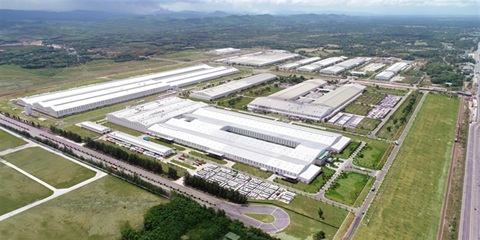
ĐÀ NẴNG GREEN-LIGHTS US$105 MILLION THAI DEVELOPMENT DEAL
The central city has approved an investment proposal by Thailand’s WHA Group to develop infrastructure for the 400ha WHA Đà Nẵng Industrial Park project on two communes of Thăng Bình and Đồng Dương, with an investment of more than VNĐ2.7 trillion (US$105 million). The city said it approved WHA Industrial Development International's status as an investor in the project, which is expected to take place between 2027 and 2034.
VIETNAM ECONOMY INVESTMENT
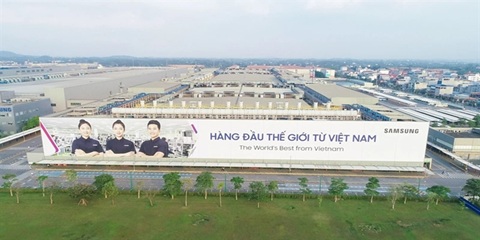
MOBILE PHONE EXPORTS RISE 20% TO $51.8 BILLION IN FIRST NINE MONTHS
Exports of mobile phones and components rose 20 per cent year-on-year to nearly US$51.8 billion in the first nine months of 2026, with China, the US and Republic of Korea accounting for more than half of the total. Shipments to the three markets reached a combined $26.18 billion, or 50.6 per cent of total exports of the product group during the period, according to data from the Vietnam Department of Customs under the Ministry of Finance.
INFRASTRUCTURE / CONSTRUCTION / LOGISTIC / PORT
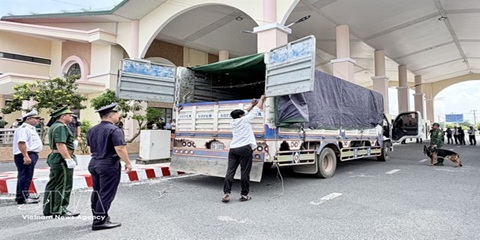
VIỆT NAM-CAMBODIA TRADE GATHERS PACE TOWARDS $20 BILLION TARGET
Trade between Việt Nam and Cambodia continues to grow, remaining a bright spot and a key pillar of bilateral cooperation as the two countries aim to raise two-way trade to US$20 billion in the coming years. After setting a record of more than $11.3 billion last year, bilateral trade reached about $8.7 billion in the first eight months of this year, up 8.3 per cent year on year.
VIETNAM ECONOMY INVESTMENT
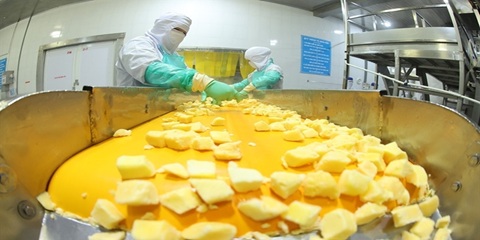
FRUIT AND VEGETABLE EXPORTS POISED TO HIT $10 BILLION IN 2026
Fruit and vegetable exports are on track to reach nearly US$10 billion in 2026, after rising 19.9 per cent year on year to nearly US$7.4 billion in the first nine months, driven by strong seasonal demand and abundant tropical fruit supplies. The Ministry of Agriculture and Environment said the growth reflected stronger international demand for fresh produce and processed agricultural products.
Events Sponsors






















