Want to be in the loop?
subscribe to
our notification
Business News
VIETNAM'S NEW POSITION IN ATTRACTING FDI
Despite two years of struggling with the COVID-19 pandemic, Vietnam's international trade activities still set a new record by taking advantage of great opportunities from free trade agreements such as the Comprehensive and Progressive Agreement for Trans-Pacific Partnership (CPTPP) and the EU–Vietnam Free Trade Agreement (EVFTA).
After trade opportunities, Vietnam will see opportunities to attract foreign investment and promote the growth of foreign investment capital into the country.
Expectations of a breakthrough
From the beginning of 2022, foreign direct investment (FDI) attraction activities have been taking place quite actively in 30 provinces and cities across the country, according to the Foreign Investment Agency. Many FDI projects continue to expand in scale, entering the stage of stable operation in Vietnam.
FDI capital into Vietnam reached more than 2.1 billion USD in January 2022, up 4.2 percent over the same period last year. In which, supplemented capital and capital contribution and share purchase by foreign investors in Vietnam increased sharply. As many as 71 FDI projects registered to adjust capital with total supplemented capital of over 1.27 billion USD, up 54.3 percent in the number of projects and up nearly 2.7 times in capital compared to the same period last year.
Investors also made 206 turns of capital contribution and shares purchase at Vietnamese enterprises in January, with total contributed capital of 443.5 million USD, up 2 times over the same period last year. Although the total registered capital of new projects decreased sharply (over 70 percent) due to the absence of billion-dollar projects, the number of projects granted investment certificates rose 2.2 times over the same period in 2021.
A series of FDI projects increased capital and expanded scale in the first days of the new year. A Chinese invested project that manufactures electronic products, network equipment and multimedia products raised its investment capital by 260 million USD in Nghe An Province, the GE Vietnam commercial and service project by the Republic of Korea investor expanded their investment capital by 216.9 million USD in Bac Ninh Province, and an electronic component factory by the Republic of Korea investor increased capital by 163 million USD in Phu Tho Province.
Prof., Dr. Nguyen Mai, chairman of the Vietnam Association of Foreign Investment Enterprises (Vafie) told Nhan Dan Newspaper that Vietnam could attract about 40 billion USD in registered FDI capital in 2022 and 22 billion USD in disbursed capital, as per the target set out in the Politburo’s Resolution 50. These figures are based on the forecasts of domestic and foreign research organisations as well as the improvements to the investment and business environment of Vietnam, particularly positive movements in attracting FDI.
Accordingly, the United Nations Conference on Trade and Development (UNCTAD) forecast that the global FDI inflows could increase to 1.2 trillion USD in 2022 and return to pre-pandemic levels by 2023. UNCTAD's own report on ASEAN announced at the end of 2021 also produced optimistic forecasts, in which Vietnam remains a successful FDI attraction country and a promising destination for foreign investors.
Moreover, the recent surveys by the American Chamber of Commerce in Vietnam (Amcham) and the European Chamber of Commerce in Vietnam (Eurocham) also showed that 60-65% of their member enterprises intend to expand their operations in Vietnam in 2022.
Renewing the way of investment promotion
Vietnam's position in attracting FDI is now different. With the orientation of attracting new-generation FDI towards high-tech FDI projects with spillover effects on socio-economic development, many localities have said no to small and outdated technology projects in recent years.
There are many textiles and footwear projects with investors who, if given “nods” by localities, are ready to implement their projects very quickly, but they have not been selected because they fail to meet the new requirements of FDI attraction.
Vietnam has so far signed and implemented more than 10 free trade agreements (FTAs) with many countries and regions around the world, helping Vietnam to continuously achieve new records in terms of import and export and enter the list of Top 20 leading economies in terms of international trade.
Prof., Dr. Nguyen Mai expressed regret that the investment trend from the US and European markets into Vietnam is not as strong as the trade flow. “The main reason is that Vietnamese businesses are just interested in trade and have yet to take advantage of opportunities to attract investment from these markets. But there is also an objective fact that trade always precedes investment. Following the expansion of trade flow under FTAs, there will hopefully be a strong international investment flow with high-quality capital in the future,” the expert said.
However, in the context of limited capital supply and the heavy impact of the COVID-19 pandemic, countries have taken advantage of attracting external resources to maintain and recover their economies. Therefore, competition in FDI attraction is increasingly fierce among developing countries with similar markets, development levels, technology and labour.
Minister of Planning and Investment Nguyen Chi Dung said that the Ministry has recently held many talks with senior leaders of corporations and multinational companies to discuss investment plans and remove difficulties for investors in order to maintain Vietnam’s attractiveness in the eyes of investors.
Source: VCCI
Related News

CHARITY / EXHIBITION / OTHER EVENTS
INVESTMENT OPPORTUNITIES IN CA MAU PROVINCE: 96 PROJECTS AND 20 STRATEGIC PROJECTS
We are pleased to share with you information on investment projects currently seeking investors in Ca Mau Province. Should your esteemed company or association be interested, we kindly invite you to review the project information and complete the registration form via the links provided. The Ho Chi Minh City Investment and Trade Promotion Centre (ITPC) will consolidate the expressions of interest and facilitate connections with the leadership of Ca Mau Province at a meeting tentatively scheduled for 13 November 2026 in Ho Chi Minh City.

MEMBER CORNER / PROMOTIONS
BẰNG KIỀU LIVESHOW - A SYMPHONY OF LOVE UNDER THE GOLDEN GLOW
A masterclass in live music that takes the audience on a soulful journey through immortal love songs, guided by the peerless artistry and emotive storytelling of renowned singer Bằng Kiều. The highlight of the night is his seamless musical chemistry with special guest Triệu Hồng Ngọc, promising passionate and deeply resonant duets inside the magnificent Grand Ballroom.
INFRASTRUCTURE / CONSTRUCTION / LOGISTIC / PORT
ĐÀ NẴNG GREEN-LIGHTS US$105 MILLION THAI DEVELOPMENT DEAL
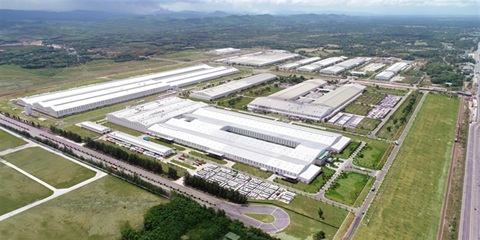
The central city has approved an investment proposal by Thailand’s WHA Group to develop infrastructure for the 400ha WHA Đà Nẵng Industrial Park project on two communes of Thăng Bình and Đồng Dương, with an investment of more than VNĐ2.7 trillion (US$105 million). The city said it approved WHA Industrial Development International's status as an investor in the project, which is expected to take place between 2027 and 2034.
VIETNAM ECONOMY INVESTMENT
MOBILE PHONE EXPORTS RISE 20% TO $51.8 BILLION IN FIRST NINE MONTHS
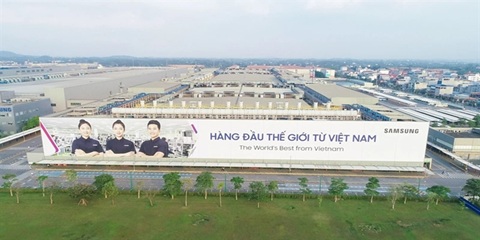
Exports of mobile phones and components rose 20 per cent year-on-year to nearly US$51.8 billion in the first nine months of 2026, with China, the US and Republic of Korea accounting for more than half of the total. Shipments to the three markets reached a combined $26.18 billion, or 50.6 per cent of total exports of the product group during the period, according to data from the Vietnam Department of Customs under the Ministry of Finance.
INFRASTRUCTURE / CONSTRUCTION / LOGISTIC / PORT
VIỆT NAM-CAMBODIA TRADE GATHERS PACE TOWARDS $20 BILLION TARGET
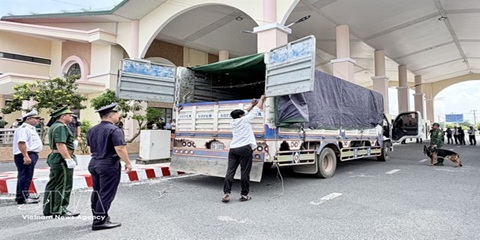
Trade between Việt Nam and Cambodia continues to grow, remaining a bright spot and a key pillar of bilateral cooperation as the two countries aim to raise two-way trade to US$20 billion in the coming years. After setting a record of more than $11.3 billion last year, bilateral trade reached about $8.7 billion in the first eight months of this year, up 8.3 per cent year on year.
VIETNAM ECONOMY INVESTMENT
FRUIT AND VEGETABLE EXPORTS POISED TO HIT $10 BILLION IN 2026
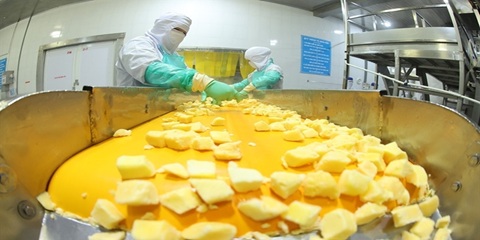
Fruit and vegetable exports are on track to reach nearly US$10 billion in 2026, after rising 19.9 per cent year on year to nearly US$7.4 billion in the first nine months, driven by strong seasonal demand and abundant tropical fruit supplies. The Ministry of Agriculture and Environment said the growth reflected stronger international demand for fresh produce and processed agricultural products.
Events Sponsors






















