Want to be in the loop?
subscribe to
our notification
Business News
VIETNAM’S PASSION FRUIT EXPORTS HIT RECORD HIGH OF OVER US$202 MILLION
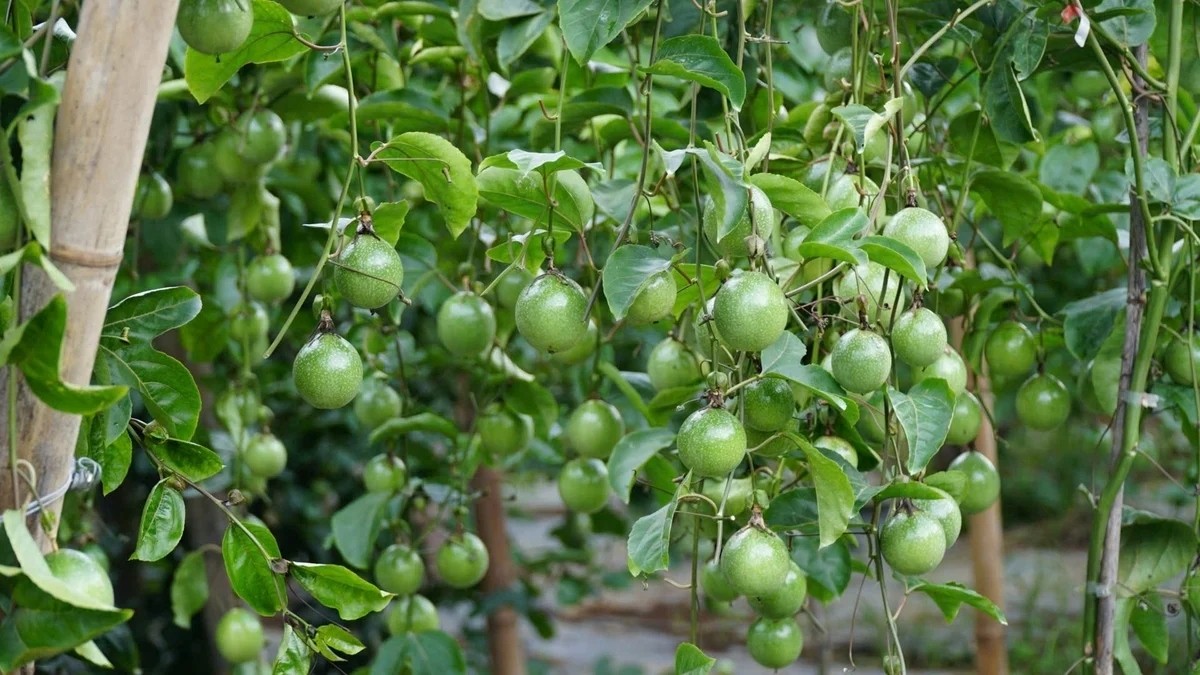
The Central Highlands is currently Vietnam’s main passion fruit growing hub - PHOTO: VGP
HCMC – Vietnam’s passion fruit exports have surged to a record level, exceeding US$202 million, marking a sharp rise for a crop that was once marginal in the country’s agricultural portfolio.
According to the Department of Crop Production and Plant Protection under the Ministry of Agriculture and Environment, Vietnam’s passion fruit exports have expanded more than tenfold over the past decade, climbing from around US$20 million to US$222.5 million. By October this year, export turnover had already surpassed US$202 million, Vietnam News Agency reported.
The Central Highlands has emerged as the country’s main production hub, accounting for 86.4% of planted area and 92.5% of output. Northern provinces make up about 12.5% of total acreage. Authorities have approved 43 passion fruit varieties to support rising production and export demand.
Officials said passion fruit benefits from favorable terrain, soil and climate conditions in Vietnam. In the Central Highlands and several other regions, the crop has a short growing cycle of four to five months and delivers high yields. Market demand remains strong, with processed products and fresh fruit accounting for more than 80% of consumption.
However, the sector faces challenges. These include limited availability of disease-free seedlings, fragmented small-scale production, and incomplete adoption of advanced farming practices. Weak supply chain linkages, underdeveloped storage and deep-processing capacity, and unstable output also pose risks, as international quarantine and technical requirements become stricter.
Under the national plan for developing key fruit crops for 2025–2030, passion fruit is targeted as a sustainable export-oriented commodity. The plan aims to maintain 12,000–15,000 hectares of cultivation, with output of 250,000–300,000 tons. Key growing areas include Lam Dong, Gia Lai, Dak Lak, Quang Tri, Nghe An and Son La.
To meet these targets, local authorities are urged to review planting areas, develop concentrated production zones linked with infrastructure and processing, and curb unplanned expansion. The plan also calls for stronger cooperation between farmers, cooperatives and enterprises, contract farming, compliance with safety standards, and improved traceability.
Removing quarantine barriers and expanding market access will be critical to strengthening the global position of Vietnamese passion fruit, officials said.
Source: The Saigon Times
Related News

INFRASTRUCTURE / CONSTRUCTION / LOGISTIC / PORT
VIỆT NAM-CAMBODIA TRADE GATHERS PACE TOWARDS $20 BILLION TARGET
Trade between Việt Nam and Cambodia continues to grow, remaining a bright spot and a key pillar of bilateral cooperation as the two countries aim to raise two-way trade to US$20 billion in the coming years. After setting a record of more than $11.3 billion last year, bilateral trade reached about $8.7 billion in the first eight months of this year, up 8.3 per cent year on year.
TECHNOLOGY
AI BEGINNING TO RESHAPE RECRUITMENT CRITERIA
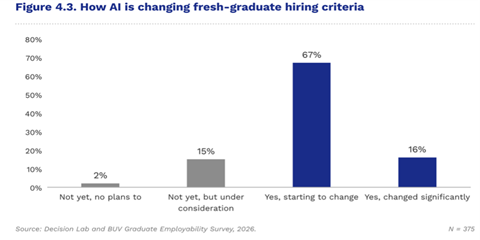
Digital literacy is the only capability area in which fresh graduates meet employers’ expectations, according to a new report. Yet, it is also the standard rising fastest, as businesses increasingly expect new hires to use AI effectively in the workplace. Some 83 per cent of employers say AI has changed, or is beginning to change, their hiring criteria, while 94 per cent report higher expectations for digital and AI capabilities than they had two to three years ago.

INFRASTRUCTURE / CONSTRUCTION / LOGISTIC / PORT
ĐÀ NẴNG GREEN-LIGHTS US$105 MILLION THAI DEVELOPMENT DEAL
The central city has approved an investment proposal by Thailand’s WHA Group to develop infrastructure for the 400ha WHA Đà Nẵng Industrial Park project on two communes of Thăng Bình and Đồng Dương, with an investment of more than VNĐ2.7 trillion (US$105 million). The city said it approved WHA Industrial Development International's status as an investor in the project, which is expected to take place between 2027 and 2034.

VIETNAM ECONOMY INVESTMENT
MOBILE PHONE EXPORTS RISE 20% TO $51.8 BILLION IN FIRST NINE MONTHS
Exports of mobile phones and components rose 20 per cent year-on-year to nearly US$51.8 billion in the first nine months of 2026, with China, the US and Republic of Korea accounting for more than half of the total. Shipments to the three markets reached a combined $26.18 billion, or 50.6 per cent of total exports of the product group during the period, according to data from the Vietnam Department of Customs under the Ministry of Finance.

VIETNAM ECONOMY INVESTMENT
FRUIT AND VEGETABLE EXPORTS POISED TO HIT $10 BILLION IN 2026
Fruit and vegetable exports are on track to reach nearly US$10 billion in 2026, after rising 19.9 per cent year on year to nearly US$7.4 billion in the first nine months, driven by strong seasonal demand and abundant tropical fruit supplies. The Ministry of Agriculture and Environment said the growth reflected stronger international demand for fresh produce and processed agricultural products.
GARMENT / TEXTILE
TEXTILE EXPORTS FACE DUAL CHALLENGES OF SUSTAINING ORDERS AND BOOSTING EFFICIENCY AMID GROWING COMPETITION
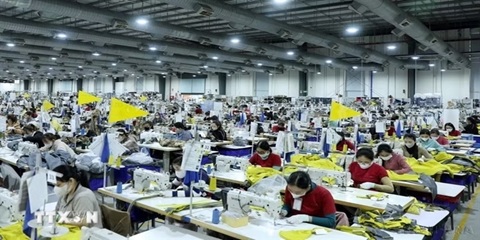
Data shows that the textile and garment sector maintained its growth momentum in the first nine months of this year. The industry's total export turnover reached an estimated US$35.721 billion in the first nine months of this year, up 3.3 per cent year-on-year. Despite posting encouraging export figures, Vietnamese textile and garment enterprises continue to navigate unpredictable market variables.
Events Sponsors






















