Want to be in the loop?
subscribe to
our notification
Business News
VIETNAM'S SEAFOOD EXPORTS APPROACH $5.8 BILLION IN FIRST HALF OF 2026
Vietnam's seafood exports reached nearly $5.8 billion in the first half of 2026, up 12.8 per cent on-year, driven by stronger demand, market diversification, and improved product restructuring.
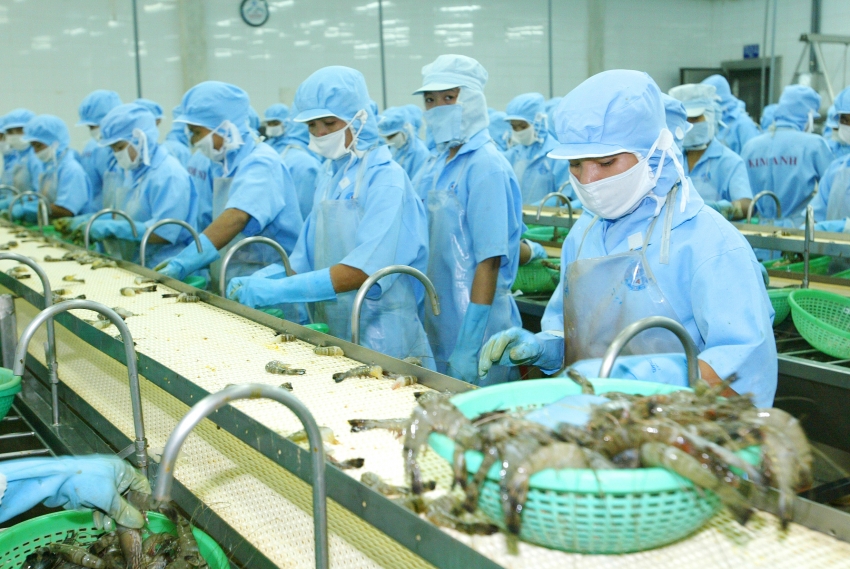
Photo: Le Toan
According to the Vietnam Association of Seafood Exporters and Producers (VASEP), seafood exports generated nearly $1.1 billion in June alone, marking a 21 per cent increase on-year and extending the sector's solid growth momentum. The figures were released by VASEP on June 30 on its website.
The association said the first-half performance reflected recovering global demand and Vietnamese exporters' ability to diversify markets, optimise product portfolios, and capitalise on regions offering geographical and cost advantages.
Shrimp remained the sector's largest export earner. June exports rose 20.7 per cent on-year to $445.9 million, bringing first-half turnover to $2.3 billion, up 13.6 per cent and accounting for more than 40 per cent of total seafood exports.
Growth was mainly supported by robust demand from China and Hong Kong, particularly for black tiger shrimp, lobster, and frozen shrimp. However, exporters continued to face stiff competition in the US market from suppliers in Ecuador, Indonesia, and India, while anti-dumping and countervailing duties, along with stricter traceability requirements, increased compliance costs.
Basa fish remained the second-largest export category. Exports reached $209.1 million in June, up 7.7 per cent, while first-half shipments climbed 12.1 per cent to $1.1 billion, representing 19.4 per cent of the industry's total export value.
VASEP said basa fish continued to benefit from competitive pricing, stable supply, and broad consumer appeal. Expanding value-added, convenience, and smaller-packaged products would be key to sustaining future growth.
Exports of other fish species, mainly marine fish and selected freshwater species, also posted solid results. June exports increased 19.8 per cent to $198.8 million, while first-half turnover reached around $1.1 billion, up 12 per cent. Nevertheless, the segment continued to face challenges related to raw material supply, legal catch certification, traceability, and anti-illegal fishing regulations.
Tuna exports showed mixed performance. June shipments surged 28 per cent to $85.9 million, but first-half exports edged down 2 per cent on-year to $452.7 million, indicating that the recent recovery had yet to offset weaker sales earlier in the year.
Meanwhile, cephalopods and crustaceans remained bright spots. Squid and octopus exports rose 18.8 per cent to $380.2 million in the first six months, while crab and other crustacean exports climbed 26.2 per cent to $206.2 million. Shellfish exports increased 33.1 per cent to $155.3 million, and other molluscs, although from a smaller base, surged 84.4 per cent.
China and Hong Kong remained Vietnam's strongest growth market. June exports to the region increased 32.2 per cent to $256.6 million, while first-half turnover reached $1.5 billion, up 37.9 per cent and accounting for nearly 26 per cent of total seafood exports.
Exports to the US rebounded strongly in June, rising 48.3 per cent to $195.3 million. However, first-half exports totalled $897.9 million, remaining broadly unchanged from a year earlier. VASEP attributed the recovery mainly to short-term orders, while consumer demand remained fragile amid high inventories, price competition, and ongoing tariff and technical barriers.
Japan generated $787.5 million in seafood imports from Vietnam in the first half, up just 0.7 per cent, as weak consumer spending and a depreciating yen constrained demand. Exports to the EU slipped 0.8 per cent to $536.7 million, weighed down by the ongoing European Commission yellow card warning on illegal, unreported, and unregulated fishing and stricter catch certification requirements. Shipments to the Middle East edged down 0.1 per cent to $166.6 million.
Other markets maintained healthy growth. Exports to South Korea increased 9 per cent to $419.4 million, ASEAN rose 15.8 per cent to $380.2 million, and other markets expanded 17.1 per cent to around $1.1 billion, highlighting the effectiveness of Vietnam's market diversification strategy.
Despite the positive outlook, VASEP warned that logistics costs would pose a major challenge in the second half of the year. As a sector heavily dependent on refrigerated container shipping, seafood exporters remain vulnerable to rising freight rates, fuel surcharges, insurance costs, container shortages, and port congestion.
International container freight rates have approached their highest levels in nearly two years, particularly on routes to the US and EU, as importers accelerate shipments ahead of potential new tariff measures.
VASEP said the first-half result provided a solid foundation for achieving double-digit export growth in 2026. However, sustaining momentum will require exporters to strengthen their presence in high-growth markets such as China, ASEAN, and South Korea, while improving compliance in the US, EU, and Japan, controlling logistics costs, and expanding higher value-added processed products.
Source: VIR
Related News

INFRASTRUCTURE / CONSTRUCTION / LOGISTIC / PORT
VIỆT NAM-CAMBODIA TRADE GATHERS PACE TOWARDS $20 BILLION TARGET
Trade between Việt Nam and Cambodia continues to grow, remaining a bright spot and a key pillar of bilateral cooperation as the two countries aim to raise two-way trade to US$20 billion in the coming years. After setting a record of more than $11.3 billion last year, bilateral trade reached about $8.7 billion in the first eight months of this year, up 8.3 per cent year on year.
TECHNOLOGY
AI BEGINNING TO RESHAPE RECRUITMENT CRITERIA
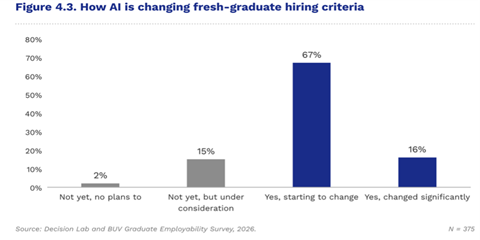
Digital literacy is the only capability area in which fresh graduates meet employers’ expectations, according to a new report. Yet, it is also the standard rising fastest, as businesses increasingly expect new hires to use AI effectively in the workplace. Some 83 per cent of employers say AI has changed, or is beginning to change, their hiring criteria, while 94 per cent report higher expectations for digital and AI capabilities than they had two to three years ago.

INFRASTRUCTURE / CONSTRUCTION / LOGISTIC / PORT
ĐÀ NẴNG GREEN-LIGHTS US$105 MILLION THAI DEVELOPMENT DEAL
The central city has approved an investment proposal by Thailand’s WHA Group to develop infrastructure for the 400ha WHA Đà Nẵng Industrial Park project on two communes of Thăng Bình and Đồng Dương, with an investment of more than VNĐ2.7 trillion (US$105 million). The city said it approved WHA Industrial Development International's status as an investor in the project, which is expected to take place between 2027 and 2034.

VIETNAM ECONOMY INVESTMENT
MOBILE PHONE EXPORTS RISE 20% TO $51.8 BILLION IN FIRST NINE MONTHS
Exports of mobile phones and components rose 20 per cent year-on-year to nearly US$51.8 billion in the first nine months of 2026, with China, the US and Republic of Korea accounting for more than half of the total. Shipments to the three markets reached a combined $26.18 billion, or 50.6 per cent of total exports of the product group during the period, according to data from the Vietnam Department of Customs under the Ministry of Finance.

VIETNAM ECONOMY INVESTMENT
FRUIT AND VEGETABLE EXPORTS POISED TO HIT $10 BILLION IN 2026
Fruit and vegetable exports are on track to reach nearly US$10 billion in 2026, after rising 19.9 per cent year on year to nearly US$7.4 billion in the first nine months, driven by strong seasonal demand and abundant tropical fruit supplies. The Ministry of Agriculture and Environment said the growth reflected stronger international demand for fresh produce and processed agricultural products.
GARMENT / TEXTILE
TEXTILE EXPORTS FACE DUAL CHALLENGES OF SUSTAINING ORDERS AND BOOSTING EFFICIENCY AMID GROWING COMPETITION
Data shows that the textile and garment sector maintained its growth momentum in the first nine months of this year. The industry's total export turnover reached an estimated US$35.721 billion in the first nine months of this year, up 3.3 per cent year-on-year. Despite posting encouraging export figures, Vietnamese textile and garment enterprises continue to navigate unpredictable market variables.
Events Sponsors






















