Want to be in the loop?
subscribe to
our notification
Business News
VIETNAM’S SHRIMP EXPORTS IN AUGUST 2025: SUSTAINING GROWTH MOMENTUM, PREPARING FOR NEW CHALLENGES
In August 2025, Vietnam’s shrimp exports reached USD 479 million, up nearly 19% compared to the same period in 2024. Cumulatively over the first 8 months, export turnover hit USD 2.97 billion, an increase of 23%, maintaining stable growth since the beginning of the year.
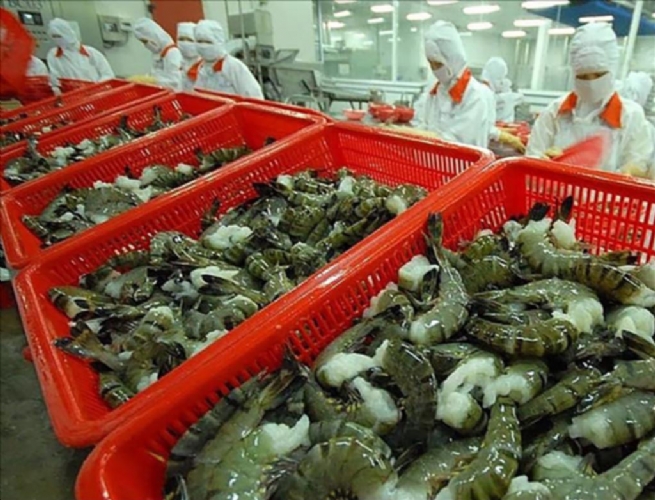
In terms of product structure, whiteleg shrimp continued to dominate with over 64% market share; black tiger shrimp recorded slight growth, while the “other shrimp” category stood out with triple-digit growth, driven by strong demand for lobsters.
Domestic raw shrimp prices remained high compared to competing suppliers, despite a slight adjustment in early September, reflecting that supply is still relatively tight.
China and Hong Kong markets continued to shine with a 62% growth in August, bringing the 8-month export value to USD 836 million, up 75% and accounting for nearly 30% of the country’s total shrimp exports. Demand focused on live products and premium segments such as lobsters and large black tiger shrimp, helping Vietnamese companies leverage unique advantages over Ecuador and India. However, rising import inventories in China and falling local selling prices indicate potential short-term adjustments.
In the US market, shrimp exports in August reached USD 92.6 million, slightly up 1.4% year-on-year, lifting the 8-month value to nearly USD 500 million. This reaffirms the US as a key destination for Vietnamese shrimp, though evolving trade policies pose significant challenges. The preliminary results of POR19 imposed much higher anti-dumping duties than before, along with countervailing and compensatory duties, which may considerably impact competitiveness. The shrimp industry, associations, and authorities are actively working to safeguard legitimate interests. While awaiting the final ruling, exporters are advised to exercise caution in signing new contracts and proactively diversify markets to ease dependency pressures.
The EU market also sustained positive momentum, with exports in August reaching USD 66.9 million, up 19% year-on-year. Cumulatively, exports to the EU hit nearly USD 376 million, up 17%. Germany, Belgium, and France remained the key drivers, while the Netherlands primarily served as a transit hub. With annual demand forecast to hit record levels, the EU remains a crucial market for Vietnamese shrimp, especially for deeply processed products with sustainability, transparency, and traceability certifications.
The CPTPP bloc posted a strong performance, with August exports exceeding USD 130 million, up 40%. Over the first 8 months, exports to CPTPP markets reached USD 829 million, up 36%. Japan and Australia were the main growth engines, driven by stable demand for convenient, high-quality products.
In addition, markets such as South Korea and Taiwan maintained double-digit growth during the 8-month period, while Russia and Canada showed signs of stagnation.
Looking ahead, China and the EU are expected to sustain robust growth in the remaining months of the year, while the US requires close monitoring due to tariff developments. Despite uncertainties, growth opportunities remain, supported by improving global demand, particularly during the year-end peak season.
In this diversified market landscape, Vietnamese shrimp exporters need greater flexibility in strategy. Instead of over-relying on a single destination, they should actively tap into CPTPP, EU, and China simultaneously to balance risks. At the same time, upgrading products toward value-added lines, coupled with certifications such as ASC, organic, and sustainability, will help enhance competitiveness in segments less vulnerable to price pressures. Strengthening linkages with farming areas to stabilize supply, control quality, and manage costs will also be key success factors.
Source: VCCI
Related News

INFRASTRUCTURE / CONSTRUCTION / LOGISTIC / PORT
VIỆT NAM-CAMBODIA TRADE GATHERS PACE TOWARDS $20 BILLION TARGET
Trade between Việt Nam and Cambodia continues to grow, remaining a bright spot and a key pillar of bilateral cooperation as the two countries aim to raise two-way trade to US$20 billion in the coming years. After setting a record of more than $11.3 billion last year, bilateral trade reached about $8.7 billion in the first eight months of this year, up 8.3 per cent year on year.
TECHNOLOGY
AI BEGINNING TO RESHAPE RECRUITMENT CRITERIA
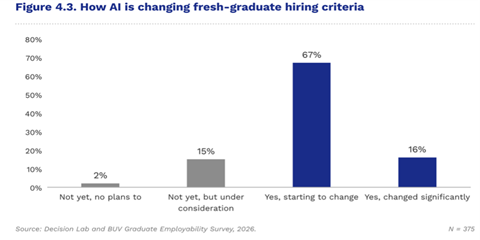
Digital literacy is the only capability area in which fresh graduates meet employers’ expectations, according to a new report. Yet, it is also the standard rising fastest, as businesses increasingly expect new hires to use AI effectively in the workplace. Some 83 per cent of employers say AI has changed, or is beginning to change, their hiring criteria, while 94 per cent report higher expectations for digital and AI capabilities than they had two to three years ago.

INFRASTRUCTURE / CONSTRUCTION / LOGISTIC / PORT
ĐÀ NẴNG GREEN-LIGHTS US$105 MILLION THAI DEVELOPMENT DEAL
The central city has approved an investment proposal by Thailand’s WHA Group to develop infrastructure for the 400ha WHA Đà Nẵng Industrial Park project on two communes of Thăng Bình and Đồng Dương, with an investment of more than VNĐ2.7 trillion (US$105 million). The city said it approved WHA Industrial Development International's status as an investor in the project, which is expected to take place between 2027 and 2034.

VIETNAM ECONOMY INVESTMENT
MOBILE PHONE EXPORTS RISE 20% TO $51.8 BILLION IN FIRST NINE MONTHS
Exports of mobile phones and components rose 20 per cent year-on-year to nearly US$51.8 billion in the first nine months of 2026, with China, the US and Republic of Korea accounting for more than half of the total. Shipments to the three markets reached a combined $26.18 billion, or 50.6 per cent of total exports of the product group during the period, according to data from the Vietnam Department of Customs under the Ministry of Finance.

VIETNAM ECONOMY INVESTMENT
FRUIT AND VEGETABLE EXPORTS POISED TO HIT $10 BILLION IN 2026
Fruit and vegetable exports are on track to reach nearly US$10 billion in 2026, after rising 19.9 per cent year on year to nearly US$7.4 billion in the first nine months, driven by strong seasonal demand and abundant tropical fruit supplies. The Ministry of Agriculture and Environment said the growth reflected stronger international demand for fresh produce and processed agricultural products.
GARMENT / TEXTILE
TEXTILE EXPORTS FACE DUAL CHALLENGES OF SUSTAINING ORDERS AND BOOSTING EFFICIENCY AMID GROWING COMPETITION
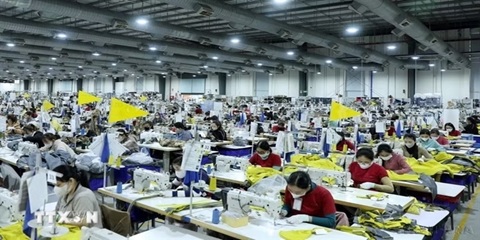
Data shows that the textile and garment sector maintained its growth momentum in the first nine months of this year. The industry's total export turnover reached an estimated US$35.721 billion in the first nine months of this year, up 3.3 per cent year-on-year. Despite posting encouraging export figures, Vietnamese textile and garment enterprises continue to navigate unpredictable market variables.
Events Sponsors






















