Want to be in the loop?
subscribe to
our notification
Business News
VIETNAM’S TET TOURISM REVENUE SURGES ON STRONG VISITOR GROWTH

Foreign tourists are seen at a tourism site in Quang Ninh Province – PHOTO: DULICH.QUANGNINH.GOV.VN
HCMC – Tourism revenue during the 2026 Lunar New Year holiday (Tet) has amounted to trillions of Vietnam dong in major tourist hotspots, with visitor numbers and earnings rising from a year earlier, according to data from provincial authorities.
Data compiled by local departments showed continued recovery momentum, with gains in both international arrivals and short-stay travel demand.
In HCMC, about 4.32 million visitors have been recorded during the nine-day holiday from February 14 to 22, up 35% year-on-year. Tourism revenue has expanded 42.9% to an estimated VND12.15 trillion. Domestic travelers accounted for the majority, focusing on sightseeing, shopping and entertainment in central areas.
Hanoi City has welcomed more than 1.34 million visitors, up 36.3% from the same period in 2025. Tourism revenue has increased 40.2% to around VND4.87 trillion. International arrivals have grown 55% to 217,000, while domestic visitors have edged up 33.2% to about 1.13 million. The city offered free admissions to 17 historical sites during the first three days of Tet.
In Danang City, total arrivals have grown 27% year-on-year to 1.1 million. International visitors account for more than 510,000, while domestic travelers total around 590,000. Tourism revenue is estimated at VND3.96 trillion. Average hotel occupancy is 65–70%, with four- and five-star hotels at about 85%.
An Giang Province has reported more than 1.7 million visitors during the nine-day break from the 26th of the last lunar month to the fifth day of Tet, up 37% year-on-year. International arrivals total nearly 100,000. Tourism revenue is estimated at VND2.62 trillion. Phu Quoc Island has seen nearly 366,000 visitors coming, including over 92,000 from abroad.
Hue City saw around 483,948 visitors arriving from the 27th of the 12th lunar month to the fifth day of Tet. Tourism revenue was put at about VND1.04 trillion. Overnight stays totaled 105,694, with average hotel occupancy at roughly 80%.
Quang Ninh Province received about 1.128 million visitors over eight days, up 16% year-on-year. Halong Bay welcomed nearly 80,000 visitors. Yen Tu recorded around 171,000 visitors, 2.2 times higher than a year earlier. An estimated 35,000 people entered through the Mong Cai international border gate.
In Ninh Binh Province, 488,724 visitors were recorded on February 20 alone, including more than 72,000 international arrivals. Total foreign visitors reached over 301,000 during the seven-day holiday. The provincial Department of Tourism linked the increase to promotions on television and digital platforms. Since Thung Ui, part of the Bai Dinh Pagoda tourism complex, was opened on the first day of Tet, it has attracted large crowds of visitors.
In Lao Cai Province, more than 250,000 visitors arrived during four peak days, from the 29th of the last lunar month to the third day of Tet, generating an estimated VND700 billion in revenue. Sapa attracted about 71,600 visitors, including 13,000 international travelers, with revenue of around VND459 billion. Hotel occupancy in Sapa was 90–95%, compared with 70–80% provincewide.
Data from local authorities show higher visitor numbers across major tourism centers and urban destinations during the peak holiday period. Promotional programs, new tourism products and digital marketing campaigns were cited as factors supporting the increase.
Source: The Saigon Times
Related News

INFRASTRUCTURE / CONSTRUCTION / LOGISTIC / PORT
VIỆT NAM-CAMBODIA TRADE GATHERS PACE TOWARDS $20 BILLION TARGET
Trade between Việt Nam and Cambodia continues to grow, remaining a bright spot and a key pillar of bilateral cooperation as the two countries aim to raise two-way trade to US$20 billion in the coming years. After setting a record of more than $11.3 billion last year, bilateral trade reached about $8.7 billion in the first eight months of this year, up 8.3 per cent year on year.
TECHNOLOGY
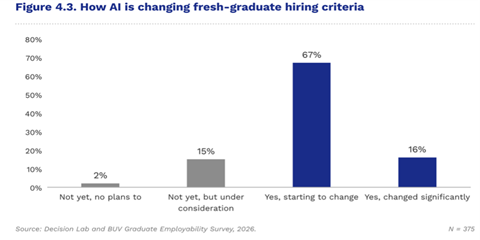
AI BEGINNING TO RESHAPE RECRUITMENT CRITERIA
Digital literacy is the only capability area in which fresh graduates meet employers’ expectations, according to a new report. Yet, it is also the standard rising fastest, as businesses increasingly expect new hires to use AI effectively in the workplace. Some 83 per cent of employers say AI has changed, or is beginning to change, their hiring criteria, while 94 per cent report higher expectations for digital and AI capabilities than they had two to three years ago.

INFRASTRUCTURE / CONSTRUCTION / LOGISTIC / PORT
ĐÀ NẴNG GREEN-LIGHTS US$105 MILLION THAI DEVELOPMENT DEAL
The central city has approved an investment proposal by Thailand’s WHA Group to develop infrastructure for the 400ha WHA Đà Nẵng Industrial Park project on two communes of Thăng Bình and Đồng Dương, with an investment of more than VNĐ2.7 trillion (US$105 million). The city said it approved WHA Industrial Development International's status as an investor in the project, which is expected to take place between 2027 and 2034.

VIETNAM ECONOMY INVESTMENT
MOBILE PHONE EXPORTS RISE 20% TO $51.8 BILLION IN FIRST NINE MONTHS
Exports of mobile phones and components rose 20 per cent year-on-year to nearly US$51.8 billion in the first nine months of 2026, with China, the US and Republic of Korea accounting for more than half of the total. Shipments to the three markets reached a combined $26.18 billion, or 50.6 per cent of total exports of the product group during the period, according to data from the Vietnam Department of Customs under the Ministry of Finance.

VIETNAM ECONOMY INVESTMENT
FRUIT AND VEGETABLE EXPORTS POISED TO HIT $10 BILLION IN 2026
Fruit and vegetable exports are on track to reach nearly US$10 billion in 2026, after rising 19.9 per cent year on year to nearly US$7.4 billion in the first nine months, driven by strong seasonal demand and abundant tropical fruit supplies. The Ministry of Agriculture and Environment said the growth reflected stronger international demand for fresh produce and processed agricultural products.
GARMENT / TEXTILE
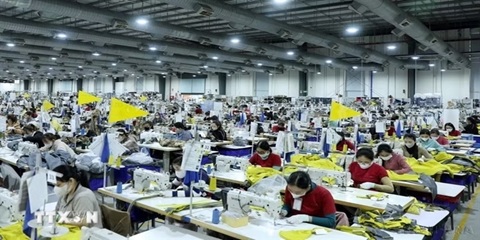
TEXTILE EXPORTS FACE DUAL CHALLENGES OF SUSTAINING ORDERS AND BOOSTING EFFICIENCY AMID GROWING COMPETITION
Data shows that the textile and garment sector maintained its growth momentum in the first nine months of this year. The industry's total export turnover reached an estimated US$35.721 billion in the first nine months of this year, up 3.3 per cent year-on-year. Despite posting encouraging export figures, Vietnamese textile and garment enterprises continue to navigate unpredictable market variables.
Events Sponsors






















