Want to be in the loop?
subscribe to
our notification
Business News
VIETNAM SHIFTING TO A STRONGER FDI ECOSYSTEM
Vietnam is moving towards a new approach to foreign investment, with the focus shifting from attracting capital and individual projects to developing a foreign-invested economic sector that is more deeply integrated with the domestic economy.
At a seminar at the headquarters of Vietnam Government Portal, Bui Thu Thuy, deputy director general of the Foreign Investment Agency (FIA), said Resolution No.10-NQ/TW represents several major shifts in development thinking.
The resolution, issued in June, outlines Vietnam's updated strategy for developing the foreign-invested economic sector, placing greater emphasis on the quality and effectiveness of capital flows, their contribution to domestic businesses, and their ability to generate technology, knowledge, and productivity gains across the economy.
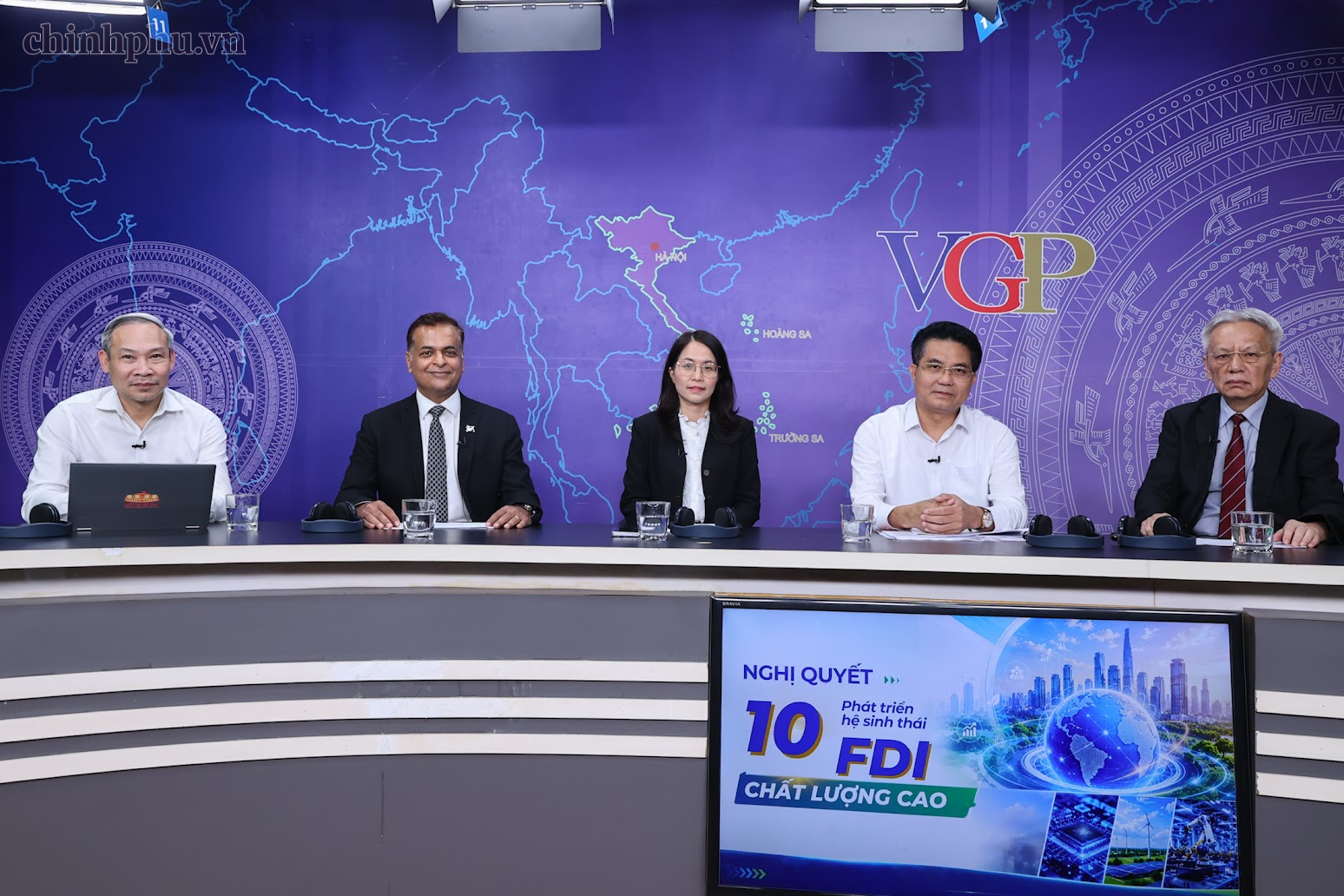
Photo: chinhphu.vn
“What matters more now is how investment capital creates spillover effects in the domestic economy, what results it brings to domestic businesses and how it contributes to the economy as a whole,” Thuy said. "Incentives in the new period, for example, need to be linked to measurable outcomes and the actual contribution of investment projects to the economy."
Such contributions could include technology transfer, the use of advanced technologies, links with domestic businesses and the development of local capabilities. The approach is designed to prevent a situation in which foreign capital enters Vietnam but operates largely in isolation from domestic enterprises. Thuy described the challenge as avoiding the emergence of “two economies within one economy”, a foreign direct investment (FDI) sector and a domestic sector developing separately with limited interaction.
Other major shifts outlined by Thuy included building an integrated ecosystem connected with international capital flows; moving from simply managing investment towards creating a full investment and business environment; and addressing competition among localities that can result in a “race to the bottom” in investment attraction.
"Instead, capital flows need to be coordinated at the national level and directed towards sectors and regions where investment is genuinely needed, helping ensure more balanced development," Thuy said.
New ecosystem
Phan Duc Hieu, standing member of the National Assembly’s Economic and Financial Committee, said Resolution 10 introduces important new elements.
“The approach is more systematic, while the thinking has become deeper and more practical,” Hieu said. "The resolution places emphasis on developing an ecosystem capable of supporting FDI throughout the entire life cycle of a project. It needs to encompass the living and working environment, human resources, hard and soft infrastructure, and the wider conditions required for businesses to operate effectively."
At the same time, he identified a fundamental condition for improving the quality of FDI: Vietnam’s ability to absorb it. “The most important factor in improving the quality of FDI is to strengthen the economy’s absorptive capacity. Good FDI will not automatically generate spillovers if the economy lacks the capacity to absorb them,” Hieu said.
This places domestic enterprises at the centre of the new FDI strategy. Vietnamese companies need stronger technological, managerial, and financial capabilities so that they are ready to become suppliers and partners of multinational corporations.
The experience of Nestlé Vietnam illustrates how such links can develop. Binu Jacob, CEO of Nestlé Vietnam, said the traditional concept of investing in a country purely to generate profits is increasingly outdated.
"High-quality FDI comes with a long-term commitment and should create value across the wider ecosystem, including government, communities and domestic businesses," he said.
He cited Nestlé’s cooperation with Tuan Manh Logistics, a Vietnamese logistics company established in 2005 by a group of former transport university students. When Nestlé opened its Bong Sen factory in Hung Yen, it worked with local companies in packaging, distribution and logistics. Tuan Manh was among the domestic partners that grew alongside the foreign-invested company.
Between 2013 and 2025, Tuan Manh increased its truck fleet 10-fold. Working with Nestlé also helped the company strengthen its safety standards and compliance practices, areas that are critical in selecting logistics partners for foreign-invested businesses.
“They learned safety rules from us, which are one of the most important factors for an foreign-invested company,” Jacob said. The company subsequently developed a stronger culture of safe driving and expanded its customer base to other FDI businesses.
Technology and operational practices also changed the company’s business model. Tuan Manh adopted automated pallet loading and moved from its traditional role as a North-South long-haul transport company toward specialised distribution logistics. Today, it is one of Nestlé’s key transport partners, serving around 60 per cent of Nestlé’s customers in northern Vietnam.
"This demonstrates how FDI-domestic links can generate mutual benefits when foreign-invested companies are committed to developing local partners. This is a win-win story,” he said, describing the relationship as part of Nestlé’s long-term commitment to the province and Vietnam.
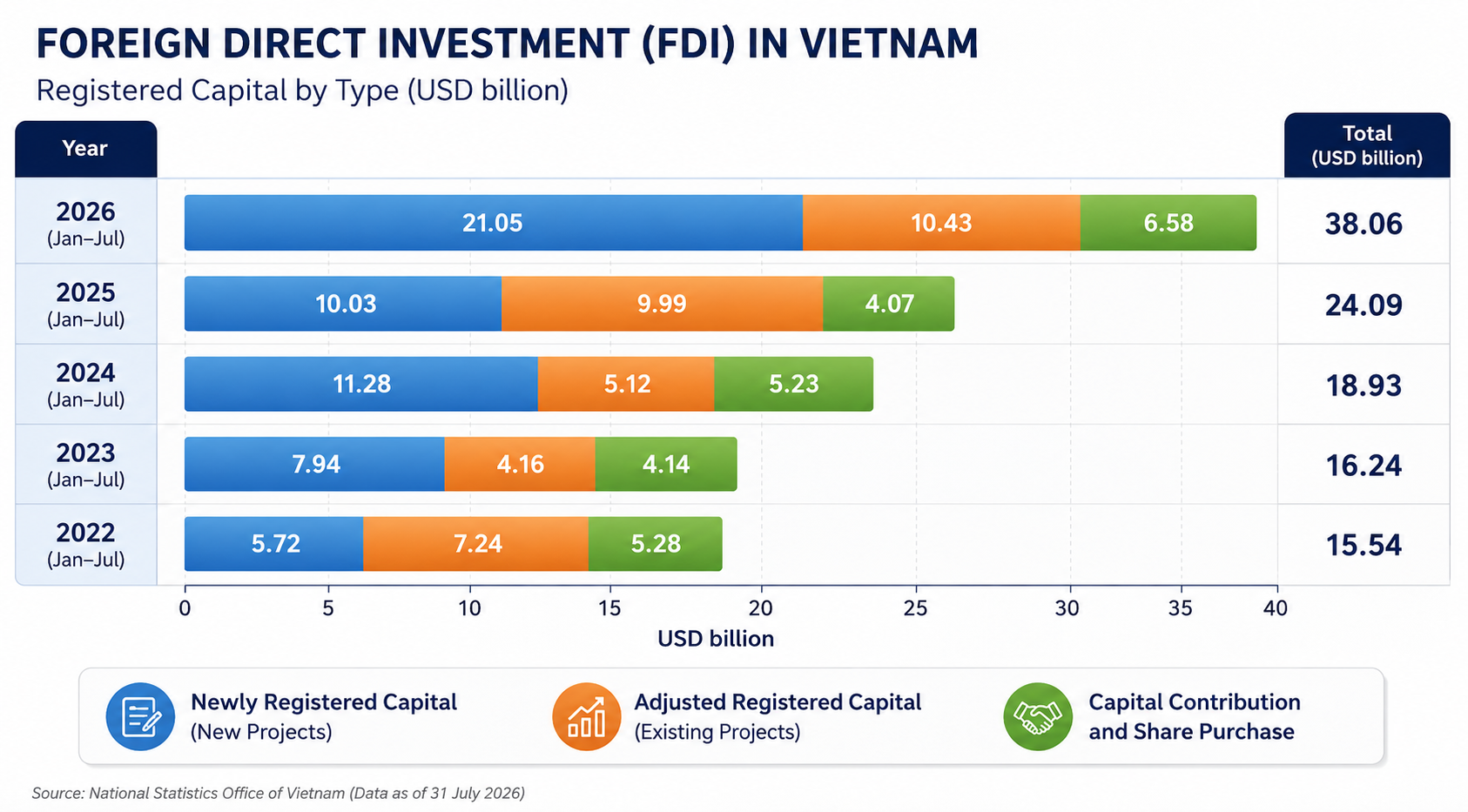
Vietnam's registered FDI jumps 58 per cent to $38 billion in first seven months. Photo: National Statistics Office
A two-way commitment
The Ministry of Finance is preparing to institutionalise the new policy thinking through amendments to the Investment Law and other related measures, according to Thuy of the FIA. The proposed measures include tax incentives, direct budget support, and incentives for costs incurred by foreign-led companies in areas such as research and development and training for domestic businesses.
"One proposed mechanism would encourage foreign-invested companies to train Vietnamese suppliers within their own supply chains. The state could reimburse part of the training costs or allow such expenses to qualify for tax deductions," she said. "For example, 30-50 per cent of the training cost may be reimbursed, allow the expense to be included in tax incentives, or apply other appropriate mechanisms to compensate the company for its investment in developing domestic suppliers,” she added.
Key goals and targets of Resolution 10 are to make Vietnam a top ASEAN business and investment destination by 2030; attract between $200-300 billion in registered FDI for the 2026-2030 period; and prioritise high-tech manufacturing, digital economy, green industries, and semiconductors.
Major policy shifts are to move from traditional input-based incentives to performance-based support that rewards research, development, and tech absorption; enhance domestic supplier capabilities so that local firms can integrate deeper into global supply chains; and support local Vietnamese businesses in joint ventures, mergers, and acquisitions with foreign enterprises.
Source: VIR
Related News

BANKING / FINANCE / INSURANCE / TAX
REMITTANCES TO HCM CITY RISE NEARLY 40% IN Q3
Remittances to HCM City reached more than US$2.83 billion in the third quarter of this year, up 39.5 per cent from the previous quarter and 3.6 per cent year-on-year. This was the first quarter showing positive annual growth this year, helping narrow the decline in remittance inflows over the first nine months. According to the State Bank of Vietnam (SBV)’s Regional Branch 2, remittances transferred to HCM City through credit institutions and economic organisations totalled $2.835 billion in Q3, an increase of more than $802 million from the previous quarter.
TECHNOLOGY
TECH SECTOR GROWTH OPENS UP OPPORTUNITIES FOR VIỆT NAM TO GO GLOBAL
The growth of the electronics, semiconductor and high-tech sectors worldwide is opening up a variety of opportunities for Vietnamese enterprises to integrate more deeply into the global supply chain. However, to become suppliers for these corporations, domestic enterprises must meet rigorous standards regarding quality, technology, productivity and order fulfilment capabilities.
VIETNAM ECONOMY INVESTMENT
FOREIGN INVESTORS SEEKING A SYNCHRONISED MANUFACTURING ECOSYSTEM
Instead of focusing only on land costs and incentives as usual, foreign investors are seeking a synchronised manufacturing ecosystem, from stable power supply and logistics to shared infrastructure and the convenience of completing residence procedures for experts to serve their long-term investment in the country.
MEMBER CORNER / PROMOTIONS
SENTRYSAFE FHW40200 – PROTECT YOUR VALUABLES, ENJOY PEACE OF MIND!
Looking for a reliable solution to protect your important documents, cash, and valuables from fire and water damage? Genuine SENTRYSAFE - Reliable protection for your valuables and peace of mind! Contact Sen Wai Vietnam for more information and personalized product recommendations.
PROPERTY / INDUSTRIAL ZONE
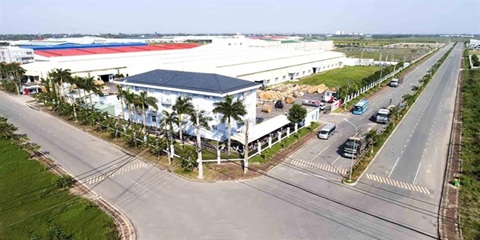
HCM CITY ATTRACTS US$5.7 BILLION INTO EXPORT PROCESSING AND INDUSTRIAL ZONES
HCM City attracted US$5.7 billion in domestic and foreign investment into its export processing and industrial zones during the first nine months of 2026. The figure exceeded the city's full-year target by 31 per cent, highlighting strong momentum in high-quality industrial investment under Resolution No.10-NQ/TW. Total investment reached 131 per cent of the 2026 target of $4.25 billion and represented a 29 per cent increase compared with the same period in 2025, according to the city's Export Processing and Industrial Zones Authority (HEPZA).
INFRASTRUCTURE / CONSTRUCTION / LOGISTIC / PORT
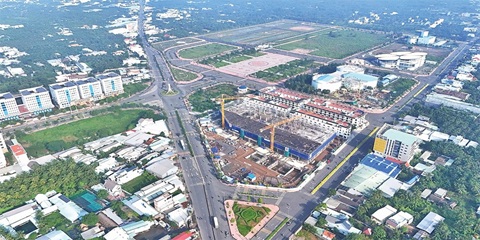
DONG THAP PROVINCE STEPS UP INDUSTRIAL EXPANSION AND INFRASTRUCTURE CONNECTIVITY
Accelerating public investment, strengthening inter-regional connectivity, and expanding industrial land are helping Dong Thap efficiently bolster competitiveness and drive economic growth. Following the 2025 merger of the former Dong Thap and Tien Giang provinces, the expanded Dong Thap province in the Mekong Delta faces mounting pressure to accelerate infrastructure development and strengthen connectivity among local economic zones, urban areas, industrial parks (IPs), and production centres.
Events Sponsors






















