Want to be in the loop?
subscribe to
our notification
Business News
VIETNAM WANTS TO ACCELERATE PRIVATE-SECTOR GROWTH
Vietnam will need to boost private-sector growth, especially small and medium-sized enterprises (SMEs), according to the Party Central Committee's Conclusion 18 - PHOTO: LE VU
HCMC – Vietnam will need to boost private-sector growth, especially small and medium-sized enterprises (SMEs) while adopting appropriate policies and creating a transparent, enabling, and safe business environment to ensure domestic private firms have equal access to resources.
This is among the notable points highlighted in the conclusion of the second plenum of the 14th Party Central Committee regarding the socio-economic development plan, national financial strategy, public debt borrowing and repayment, and the medium-term public investment plan for 2026–2030, aligned with the goal of achieving “double-digit” growth.
According to Conclusion 18, recently signed by Party General Secretary To Lam, reforms of the state sector will continue, with a focus on aligning state-owned enterprise (SOE) governance with international standards, enhancing efficiency, and strengthening the leading role of SOEs in key sectors. Equitization and state capital divestment will be further accelerated, ensuring efficiency and preventing losses and wastefulness.
Priority will be given to developing large economic groups, corporations, and enterprises with regional and global competitiveness. Foreign investment will be selectively attracted, with a shift in FDI policies from tax incentives toward other forms of incentives, including ex-post and performance-based incentives. Greater emphasis will be placed on technology transfer, strengthening linkages between the FDI and domestic sectors, and promoting effective outbound investment.
Conclusion 18 says the country will have to work toward achieving an average annual GDP growth rate of at least 10%, maintaining macroeconomic stability, controlling inflation, and ensuring major economic balances, alongside improving overall living standards. By 2030, Vietnam aims to become a developing country with modern industry, upper-middle income, and rank among the world’s top 30 economies by GDP size.
The conclusion also outlines key tasks and solutions for socio-economic development in 2026–2030, including aligning thinking, awareness, aspirations, and actions, and reforming governance to achieve “double-digit” growth.
At the same time, efforts will focus on completing a synchronized, modern, and competitive institutional framework to drive growth breakthroughs, and urgently addressing institutional bottlenecks and policy constraints.
The conclusion emphasizes transitioning to a new growth model driven primarily by science and technology, innovation, and digital transformation. Economic restructuring will continue, revitalizing traditional growth drivers—investment, consumption, and exports—while fostering new industries, sectors, and economic models. Breakthroughs will be pursued across all economic sectors, alongside effective implementation of Politburo resolutions.
Priority will be given to developing the domestic capital market as a long-term funding channel, reducing reliance on the banking system. Measures will be implemented to improve the national credit rating and upgrade the stock market classification. Special and breakthrough mechanisms and policies will be introduced to enhance the effectiveness of international financial centers and free trade zones in attracting indirect investment flows and global investment funds.
The banking system and credit institutions will be modernized, with stronger efforts to address weak institutions and cross-ownership, improve credit quality and efficiency, and ensure system stability and safety.
Institutional, regulatory, and policy frameworks for science, technology, and innovation will be urgently improved to remove bottlenecks, with a focus on output-based management and controlled risk-taking. Priority areas include governance mechanisms, financial frameworks, investment policies, and mechanisms for public science and technology units. Enterprises will be encouraged to invest in and apply science and technology, particularly new, high, and strategic technologies. Investment in and effective utilization of science and technology infrastructure—especially digital infrastructure and big data—will be strengthened.
Synchronized and modern infrastructure development will be accelerated, alongside urbanization and regional connectivity. This includes prioritizing expressways, international gateway seaports, major airports, the North–South high-speed railway, international rail links, and urban rail systems. By 2030, over 5,000 kilometers of expressways are expected to be operational. Energy infrastructure will be expanded to meet high growth demand, ensure energy security, and include a balanced development of coal-fired power (with emissions control roadmaps), renewable energy, and new energy sources.
The plan also envisions the formation of strong growth poles, key economic regions, major urban centers, and next-generation special economic zones with regional and global competitiveness.
Source: The Saigon Times
Related News

INFRASTRUCTURE / CONSTRUCTION / LOGISTIC / PORT
VIỆT NAM-CAMBODIA TRADE GATHERS PACE TOWARDS $20 BILLION TARGET
Trade between Việt Nam and Cambodia continues to grow, remaining a bright spot and a key pillar of bilateral cooperation as the two countries aim to raise two-way trade to US$20 billion in the coming years. After setting a record of more than $11.3 billion last year, bilateral trade reached about $8.7 billion in the first eight months of this year, up 8.3 per cent year on year.
TECHNOLOGY
AI BEGINNING TO RESHAPE RECRUITMENT CRITERIA
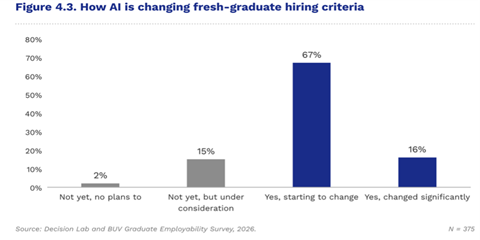
Digital literacy is the only capability area in which fresh graduates meet employers’ expectations, according to a new report. Yet, it is also the standard rising fastest, as businesses increasingly expect new hires to use AI effectively in the workplace. Some 83 per cent of employers say AI has changed, or is beginning to change, their hiring criteria, while 94 per cent report higher expectations for digital and AI capabilities than they had two to three years ago.

INFRASTRUCTURE / CONSTRUCTION / LOGISTIC / PORT
ĐÀ NẴNG GREEN-LIGHTS US$105 MILLION THAI DEVELOPMENT DEAL
The central city has approved an investment proposal by Thailand’s WHA Group to develop infrastructure for the 400ha WHA Đà Nẵng Industrial Park project on two communes of Thăng Bình and Đồng Dương, with an investment of more than VNĐ2.7 trillion (US$105 million). The city said it approved WHA Industrial Development International's status as an investor in the project, which is expected to take place between 2027 and 2034.

VIETNAM ECONOMY INVESTMENT
MOBILE PHONE EXPORTS RISE 20% TO $51.8 BILLION IN FIRST NINE MONTHS
Exports of mobile phones and components rose 20 per cent year-on-year to nearly US$51.8 billion in the first nine months of 2026, with China, the US and Republic of Korea accounting for more than half of the total. Shipments to the three markets reached a combined $26.18 billion, or 50.6 per cent of total exports of the product group during the period, according to data from the Vietnam Department of Customs under the Ministry of Finance.

VIETNAM ECONOMY INVESTMENT
FRUIT AND VEGETABLE EXPORTS POISED TO HIT $10 BILLION IN 2026
Fruit and vegetable exports are on track to reach nearly US$10 billion in 2026, after rising 19.9 per cent year on year to nearly US$7.4 billion in the first nine months, driven by strong seasonal demand and abundant tropical fruit supplies. The Ministry of Agriculture and Environment said the growth reflected stronger international demand for fresh produce and processed agricultural products.
GARMENT / TEXTILE
TEXTILE EXPORTS FACE DUAL CHALLENGES OF SUSTAINING ORDERS AND BOOSTING EFFICIENCY AMID GROWING COMPETITION
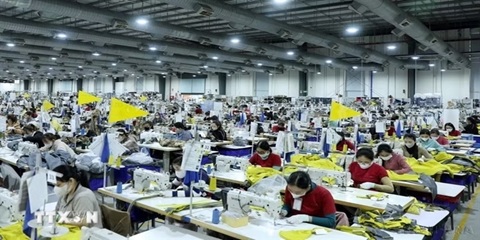
Data shows that the textile and garment sector maintained its growth momentum in the first nine months of this year. The industry's total export turnover reached an estimated US$35.721 billion in the first nine months of this year, up 3.3 per cent year-on-year. Despite posting encouraging export figures, Vietnamese textile and garment enterprises continue to navigate unpredictable market variables.
Events Sponsors






















