Want to be in the loop?
subscribe to
our notification
Business News
VIETNAM WELL-PLACED TO REMAIN STRATEGIC M&A LEADER
A number of potential deals in the pipeline signifies bright prospects for Vietnam’s mergers and acquisitions landscape.
SCGJWD Logistics (SJWD), the logistics arm under Siam Cement Group (SCG), in early May announced that it is purchasing SCG International Vietnam Co., Ltd. (SCG Inter VN) for approximately $5.4 million.
The deal marks SJWD’s expansion in Vietnam’s fast-growing logistics industry. The company’s agreement to enter into the contract is set for this month. The expected closing date for the transaction is in June.
SCG Inter VN is a third-party logistics provider with over 10 years of experience in the logistics industry. It has established a network of service providers specialising in truck and container transport, offering logistics services across Vietnam and facilitating cross-border freight transport in Thailand, Cambodia, Laos, and China, as well as being an expert in warehouse management.
SCG Inter VN also offers logistics services for the Long Son Petrochemicals complex in Vietnam, which is operated by SCG Chemicals, the chemical arm of SCG.
“We expect to start recognising revenues from SCG Inter VN in the third quarter of 2024,” Eakaponng Tungsrisanguan, CFO of SJWD, told Bangkok Post.
Meanwhile, Japan’s Mitsubishi Materials Corporation Group (MMC Group) also reached a framework agreement with Masan High-Tech Materials to acquire H.C. Starck Holding (HCS).
MMC Group’s potential acquisition of HCS plays to its strengths in the mid-stream and down-stream tungsten value chain. The acquisition will provide MMC Group with access to HCS’ production hubs in Europe, North America and China as well as a comprehensive tungsten scrap recycling platform backed by proprietary intellectual property including 90 worldwide patents and another 53 patents in the application phase.
Meanwhile, the sale of HCS to MMC Group will help Masan High-Tech to focus on optimising its domestic operations. This agreement marks the next step in both parties’ business cooperation.
Vo Ha Duyen, chairperson of law firm VILAF, told VIR that challenges in the financial markets are likely to persist across certain domestic sectors in 2024 as investors grapple with the evolving global and domestic political and regulatory landscapes.
Despite this, the country will likely remain a key growth leader in Southeast Asia, largely thanks to the effective free trade agreements boosting its export industries.
“For 2024 and 2025, Vietnam is probably expected to experience robust merger and acquisition (M&A) activity in healthcare, financial services, and digital infrastructure. This growth is likely driven by an ageing population, heightened health awareness, and technological advancements such as fintech and digital banking,” Duyen said.
Additionally, the recent relaxation of foreign ownership restrictions in data centres and telecom services will further stimulate this trend. From an external perspective, the US Federal Trade Commission’s increased scrutiny of M&A transactions in the US may redirect more investors towards Asia, including Vietnam, Duyen added.
The energy sector likely also holds potential for M&A activities in Asia. However, Vietnam would need to accelerate the development of its legal framework surrounding energy investments to fully capitalise on this opportunity and rejuvenate investment flows within the sector, she added.
According to data by the General Statistics Office, foreign investors injected $929.6 million into 902 capital contribution and share purchase deals in January-April. For the form of capital contribution and share purchase by foreign investors, capital invested in transportation and warehousing activities reached $277.2 million, accounting for 29.8 per cent of the value of capital contribution.
The figure for sci-tech and professional activities stood at $228.7 million, accounting for 24.6 per cent. The remaining industry has $423.7 million, making up for 45.6 per cent.
Masataka "Sam" Yoshida, head of the Cross-border Division of RECOF Corporation, is also upbeat about the outlook of Vietnam’s M&A market. The company forecasts a stable but stronger growth of Japanese investments not only in the number of transactions but also in the transaction size, backed up with the increase in valuation of Vietnamese companies which have added value in their financial performances.
“The presence of Japanese investors may bring a new dimension of competition to the Vietnamese market, not just for local companies but also for foreign investors from Thailand, South Korea, and Singapore,” Yoshida said.
The strategic, long-term investment approach of Japanese firms, coupled with their technology and operational efficiency, sets a high benchmark for value creation and sustainable growth, he added.
“This not only challenges existing players to elevate their game to higher levels but also offers Vietnamese companies opportunities for technological and managerial enhancement.”
Source: VIR
Related News

CHARITY / EXHIBITION / OTHER EVENTS
INVESTMENT OPPORTUNITIES IN CA MAU PROVINCE: 96 PROJECTS AND 20 STRATEGIC PROJECTS
We are pleased to share with you information on investment projects currently seeking investors in Ca Mau Province. Should your esteemed company or association be interested, we kindly invite you to review the project information and complete the registration form via the links provided. The Ho Chi Minh City Investment and Trade Promotion Centre (ITPC) will consolidate the expressions of interest and facilitate connections with the leadership of Ca Mau Province at a meeting tentatively scheduled for 13 November 2026 in Ho Chi Minh City.

MEMBER CORNER / PROMOTIONS
BẰNG KIỀU LIVESHOW - A SYMPHONY OF LOVE UNDER THE GOLDEN GLOW
A masterclass in live music that takes the audience on a soulful journey through immortal love songs, guided by the peerless artistry and emotive storytelling of renowned singer Bằng Kiều. The highlight of the night is his seamless musical chemistry with special guest Triệu Hồng Ngọc, promising passionate and deeply resonant duets inside the magnificent Grand Ballroom.
INFRASTRUCTURE / CONSTRUCTION / LOGISTIC / PORT
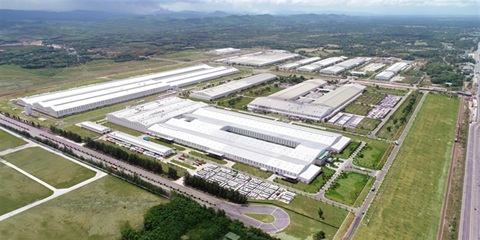
ĐÀ NẴNG GREEN-LIGHTS US$105 MILLION THAI DEVELOPMENT DEAL
The central city has approved an investment proposal by Thailand’s WHA Group to develop infrastructure for the 400ha WHA Đà Nẵng Industrial Park project on two communes of Thăng Bình and Đồng Dương, with an investment of more than VNĐ2.7 trillion (US$105 million). The city said it approved WHA Industrial Development International's status as an investor in the project, which is expected to take place between 2027 and 2034.
VIETNAM ECONOMY INVESTMENT
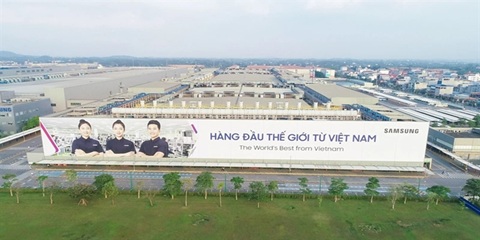
MOBILE PHONE EXPORTS RISE 20% TO $51.8 BILLION IN FIRST NINE MONTHS
Exports of mobile phones and components rose 20 per cent year-on-year to nearly US$51.8 billion in the first nine months of 2026, with China, the US and Republic of Korea accounting for more than half of the total. Shipments to the three markets reached a combined $26.18 billion, or 50.6 per cent of total exports of the product group during the period, according to data from the Vietnam Department of Customs under the Ministry of Finance.
INFRASTRUCTURE / CONSTRUCTION / LOGISTIC / PORT
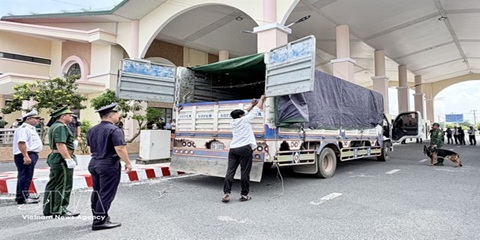
VIỆT NAM-CAMBODIA TRADE GATHERS PACE TOWARDS $20 BILLION TARGET
Trade between Việt Nam and Cambodia continues to grow, remaining a bright spot and a key pillar of bilateral cooperation as the two countries aim to raise two-way trade to US$20 billion in the coming years. After setting a record of more than $11.3 billion last year, bilateral trade reached about $8.7 billion in the first eight months of this year, up 8.3 per cent year on year.
VIETNAM ECONOMY INVESTMENT
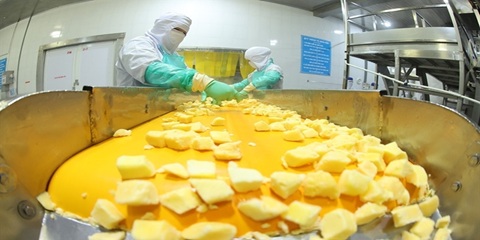
FRUIT AND VEGETABLE EXPORTS POISED TO HIT $10 BILLION IN 2026
Fruit and vegetable exports are on track to reach nearly US$10 billion in 2026, after rising 19.9 per cent year on year to nearly US$7.4 billion in the first nine months, driven by strong seasonal demand and abundant tropical fruit supplies. The Ministry of Agriculture and Environment said the growth reflected stronger international demand for fresh produce and processed agricultural products.
Events Sponsors






















