Want to be in the loop?
subscribe to
our notification
Business News
VIETNAMESE PRODUCTS HAVE ROOM FOR GROWTH IN THE JAPANESE MARKET
As Viet Nam's exports account for only 2.7 per cent of total import demand in Japan, authorities from the Ministry of Industry and Trade (MoIT) see room for growth in the market.
Nguyễn Duy Kiên, from the Department of Markets for Asia and Africa, MoIT said although Việt Nam's exports increased sharply in recent years, they still accounted for a very small proportion of Japan's total imports, adding Japan is the country's third-largest export market, after China and the US.
Kiên mentioned textiles as a promising product in the market, saying with total imports in the sector of US$28 billion in 2019, Việt Nam's textile and garment accounted for 13.2 per cent while Chinese products accounted for 55 per cent and Bangladesh, Indonesia, Thailand, Cambodia and Italy shared most of the rest.
In Japan’s import of leather and footwear products which was worth $5.3 billion in 2019, Việt Nam accounted for 18.5 per cent while the biggest competitors were China, Indonesia, Italy and Cambodia. In the import market for handicraft products worth $200 million in 2019, Vietnamese products accounted for 8 per cent, ranking second after China with 55 per cent.
According to Kiên’s department, Japan imports $3.5 billion of plywood, wood flooring each year while Việt Nam only provides 3 per cent and 0.01 per cent respectively, adding: “There is a huge potential for exports of the products.”
Bananas, shrimp, crab and squid also have great opportunities to export to the North Asian country.
“Japan needs $1 billion of bananas per year, while Việt Nam only exports $3 million there per year. Ninety per cent of imported bananas from Japan are now supplied by the Philippines," Kiên said.
He added Việt Nam's market shares of shrimp, crab and squid imports were also modest, accounting for 7.5 per cent to 20 per cent, adding: “Việt Nam still has a lot of room to promote exports to the Japanese market.”
Kiên said for all of the above-mentioned products, Việt Nam was entitled to 0 per cent import tax when entering Japan while other competitors in ASEAN, South Korea, and India were all subject to higher taxes.
Kiên said China faced higher import taxes in Japan, noting: "It is a big advantage for Vietnamese goods to compete with countries in the ASEAN region, China, and South Korea if we continue to exploit the Japanese market."
Đỗ Quốc Hưng, deputy director-general of the Asia Africa Market Department under the MoIT, said to take advantage, Vietnamese businesses needed to regularly update information about changes in consumption trends and the Japanese market as in the current context of US-China trade tension, the prolonged pandemic and the development of protectionism in some countries, Japan had tightened the implementation of import regulations.
"Japan is a leading developed economy with high income, in addition to product quality requirements, the market is increasingly paying more attention to environmental friendliness, safety, rich and diverse designs of the products," he said.
Tạ Đức Minh, Viet Nam Trade Counsellor in Japan, noted that to export stably with added value, Vietnamese enterprises needed to make efforts to penetrate and exploit the distribution system in Japan.
Minh said though the retail systems in Japan had strict requirements and most of Việt Nam's exports were made through intermediaries, Vietnamese enterprises should try to directly work with them to enhance the value and brand of their products.
Minh suggested enterprises that want to tap the Japanese market should first participate in fairs and exhibitions in Japan where they can find new partners, as well as learn about consumer trends.
Source: VNS
Related News

CHARITY / EXHIBITION / OTHER EVENTS
INVESTMENT OPPORTUNITIES IN CA MAU PROVINCE: 96 PROJECTS AND 20 STRATEGIC PROJECTS
We are pleased to share with you information on investment projects currently seeking investors in Ca Mau Province. Should your esteemed company or association be interested, we kindly invite you to review the project information and complete the registration form via the links provided. The Ho Chi Minh City Investment and Trade Promotion Centre (ITPC) will consolidate the expressions of interest and facilitate connections with the leadership of Ca Mau Province at a meeting tentatively scheduled for 13 November 2026 in Ho Chi Minh City.

MEMBER CORNER / PROMOTIONS
BẰNG KIỀU LIVESHOW - A SYMPHONY OF LOVE UNDER THE GOLDEN GLOW
A masterclass in live music that takes the audience on a soulful journey through immortal love songs, guided by the peerless artistry and emotive storytelling of renowned singer Bằng Kiều. The highlight of the night is his seamless musical chemistry with special guest Triệu Hồng Ngọc, promising passionate and deeply resonant duets inside the magnificent Grand Ballroom.
INFRASTRUCTURE / CONSTRUCTION / LOGISTIC / PORT
ĐÀ NẴNG GREEN-LIGHTS US$105 MILLION THAI DEVELOPMENT DEAL
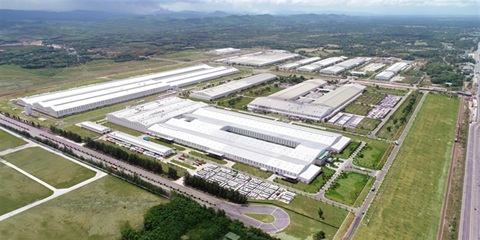
The central city has approved an investment proposal by Thailand’s WHA Group to develop infrastructure for the 400ha WHA Đà Nẵng Industrial Park project on two communes of Thăng Bình and Đồng Dương, with an investment of more than VNĐ2.7 trillion (US$105 million). The city said it approved WHA Industrial Development International's status as an investor in the project, which is expected to take place between 2027 and 2034.
VIETNAM ECONOMY INVESTMENT
MOBILE PHONE EXPORTS RISE 20% TO $51.8 BILLION IN FIRST NINE MONTHS
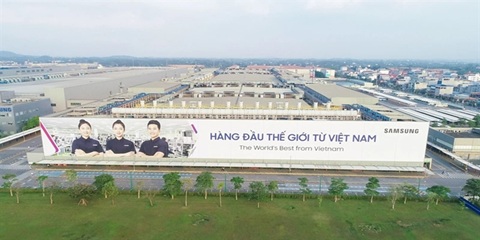
Exports of mobile phones and components rose 20 per cent year-on-year to nearly US$51.8 billion in the first nine months of 2026, with China, the US and Republic of Korea accounting for more than half of the total. Shipments to the three markets reached a combined $26.18 billion, or 50.6 per cent of total exports of the product group during the period, according to data from the Vietnam Department of Customs under the Ministry of Finance.

INFRASTRUCTURE / CONSTRUCTION / LOGISTIC / PORT
VIỆT NAM-CAMBODIA TRADE GATHERS PACE TOWARDS $20 BILLION TARGET
Trade between Việt Nam and Cambodia continues to grow, remaining a bright spot and a key pillar of bilateral cooperation as the two countries aim to raise two-way trade to US$20 billion in the coming years. After setting a record of more than $11.3 billion last year, bilateral trade reached about $8.7 billion in the first eight months of this year, up 8.3 per cent year on year.
VIETNAM ECONOMY INVESTMENT
FRUIT AND VEGETABLE EXPORTS POISED TO HIT $10 BILLION IN 2026
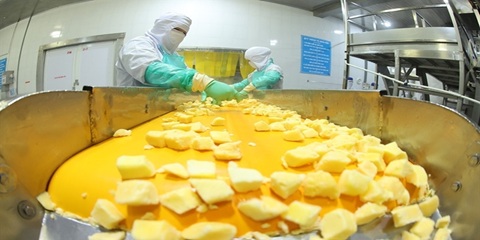
Fruit and vegetable exports are on track to reach nearly US$10 billion in 2026, after rising 19.9 per cent year on year to nearly US$7.4 billion in the first nine months, driven by strong seasonal demand and abundant tropical fruit supplies. The Ministry of Agriculture and Environment said the growth reflected stronger international demand for fresh produce and processed agricultural products.
Events Sponsors






















