Want to be in the loop?
subscribe to
our notification
Business News
VĨNH LONG’S EXPORTS RISE OVER 18 PER CENT AMID STRONG INDUSTRIAL RECOVERY
The southern province of Vĩnh Long has recorded a strong recovery in export activities this year.
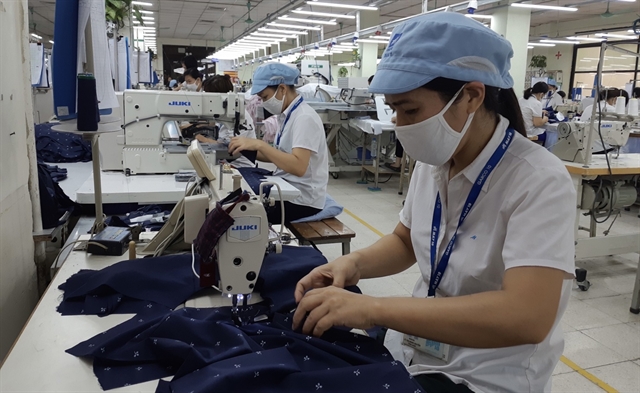
Vĩnh Long Province’s export and tourism sectors posted double-digit growth in the first nine months of 2025. Photo baomoi.com
VĨNH LONG — The southern province of Vĩnh Long has recorded a strong recovery in export activities this year.
In the first nine months of 2025, its export turnover reached US$2.7 billion (around VNĐ68.5 trillion), marking an 18.36 per cent increase year-on-year and fulfilling 76.54 per cent of the annual plan.
According to the provincial People’s Committee, the figures reflect a strong rebound of production and business activities following global market fluctuations.
The foreign-invested sector continues to play a leading role, contributing 71.08 per cent of the total export value, while domestic enterprises account for 28.92 per cent.
Vĩnh Long’s key export destinations include the US, Japan, China and the European Union.
The province’s processed and manufactured goods have shown robust growth, particularly in garments, footwear, seafood, and agricultural products such as canned straw mushrooms, canned pineapples, coconut milk and coconut water.
In addition, exports of chemical products, machinery, spare parts and transport equipment have also increased significantly, helping to boost overall value.
Despite these positive outcomes, local exporters are facing mounting challenges in maintaining growth.
The US has imposed higher import tariffs on certain products, increasing costs and reducing the competitiveness of Vietnamese exporters.
The European Union has continued to tighten food safety and traceability standards, forcing local businesses to make further improvements in quality control.
Meanwhile, China has intensified quarantine checks on agricultural products, causing delays in customs clearance, while the Philippines’ recent decision to suspend rice imports for 60 days has added uncertainty to the region’s export markets.
Alongside export growth, the province’s industrial sector has maintained a steady upward trend, serving as a major engine of economic development.
Total industrial production value in the first nine months rose by 9.5 per cent year-on-year. The mining industry increased by 11 per cent, driven by sand exploitation for national key infrastructure projects.
The processing and manufacturing sector – the backbone of Vĩnh Long’s industry – expanded by 12 per cent, while the electricity and gas supply sector rose by 7 per cent, contributing to local energy security.
Since the beginning of this year, six new industrial projects have come into operation, making an important contribution to the province’s overall output.
At the same time, Vĩnh Long has completed 11 projects to support the application of modern machinery and advanced technologies, with a total funding of VNĐ3.8 billion ($150,000).
These initiatives are helping local firms improve productivity, enhance product quality and strengthen competitiveness in both domestic and international markets.
Electricity supply across the province has remained stable, with no power restrictions implemented during peak demand.
Commercial electricity output reached 3.75 billion kWh, an increase of 1.28 per cent from the same period last year, meeting 71.92 per cent of the annual plan.
To maintain the province’s positive momentum and achieve its industrial and export targets for 2025, chairman of the Vĩnh Long People’s Committee, Lữ Quang Ngời, has urged departments and localities to closely monitor price fluctuations in essential commodities to ensure market stability.
He also directed the Department of Industry and Trade to strengthen trade promotion programmes, expand domestic consumption through fairs and promotional campaigns, and support enterprises in market expansion.
The province is also accelerating the implementation of energy projects under Power Development Plan VIII and the provincial master plan.
It is preparing guidelines for selecting investors in renewable energy projects, particularly in wind and solar power, while urging faster progress in the construction of 110kV electricity networks.
In response to external risks, Vĩnh Long authorities are monitoring the impact of tariff changes from the US and the temporary suspension of rice imports by the Philippines, with a view to proposing timely support measures to central agencies when necessary.
The province also aims to strengthen supply–demand linkages, promote business-to-business connections, and encourage enterprises to adopt e-commerce platforms to enhance market access and export efficiency.
With a firm commitment to industrial development, trade facilitation and business support, Vĩnh Long is confident of meeting and possibly surpassing its 2025 economic targets, contributing to the overall recovery of the Mekong Delta’s economy. – VNS
Source: VNS
Related News
INFRASTRUCTURE / CONSTRUCTION / LOGISTIC / PORT
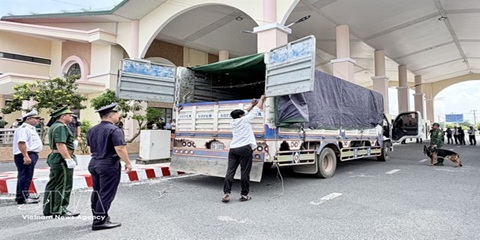
VIỆT NAM-CAMBODIA TRADE GATHERS PACE TOWARDS $20 BILLION TARGET
Trade between Việt Nam and Cambodia continues to grow, remaining a bright spot and a key pillar of bilateral cooperation as the two countries aim to raise two-way trade to US$20 billion in the coming years. After setting a record of more than $11.3 billion last year, bilateral trade reached about $8.7 billion in the first eight months of this year, up 8.3 per cent year on year.
TECHNOLOGY
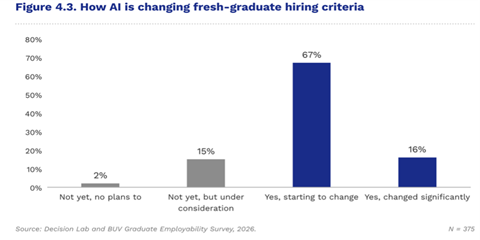
AI BEGINNING TO RESHAPE RECRUITMENT CRITERIA
Digital literacy is the only capability area in which fresh graduates meet employers’ expectations, according to a new report. Yet, it is also the standard rising fastest, as businesses increasingly expect new hires to use AI effectively in the workplace. Some 83 per cent of employers say AI has changed, or is beginning to change, their hiring criteria, while 94 per cent report higher expectations for digital and AI capabilities than they had two to three years ago.
INFRASTRUCTURE / CONSTRUCTION / LOGISTIC / PORT
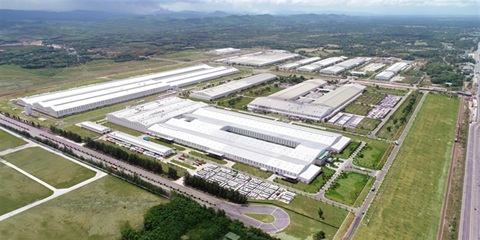
ĐÀ NẴNG GREEN-LIGHTS US$105 MILLION THAI DEVELOPMENT DEAL
The central city has approved an investment proposal by Thailand’s WHA Group to develop infrastructure for the 400ha WHA Đà Nẵng Industrial Park project on two communes of Thăng Bình and Đồng Dương, with an investment of more than VNĐ2.7 trillion (US$105 million). The city said it approved WHA Industrial Development International's status as an investor in the project, which is expected to take place between 2027 and 2034.
VIETNAM ECONOMY INVESTMENT
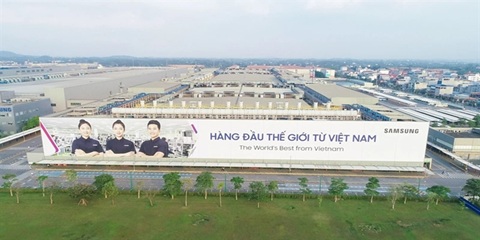
MOBILE PHONE EXPORTS RISE 20% TO $51.8 BILLION IN FIRST NINE MONTHS
Exports of mobile phones and components rose 20 per cent year-on-year to nearly US$51.8 billion in the first nine months of 2026, with China, the US and Republic of Korea accounting for more than half of the total. Shipments to the three markets reached a combined $26.18 billion, or 50.6 per cent of total exports of the product group during the period, according to data from the Vietnam Department of Customs under the Ministry of Finance.
VIETNAM ECONOMY INVESTMENT
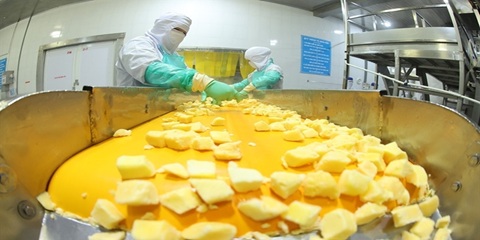
FRUIT AND VEGETABLE EXPORTS POISED TO HIT $10 BILLION IN 2026
Fruit and vegetable exports are on track to reach nearly US$10 billion in 2026, after rising 19.9 per cent year on year to nearly US$7.4 billion in the first nine months, driven by strong seasonal demand and abundant tropical fruit supplies. The Ministry of Agriculture and Environment said the growth reflected stronger international demand for fresh produce and processed agricultural products.
GARMENT / TEXTILE
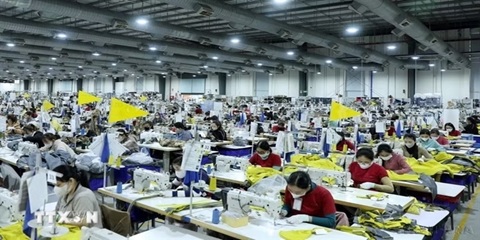
TEXTILE EXPORTS FACE DUAL CHALLENGES OF SUSTAINING ORDERS AND BOOSTING EFFICIENCY AMID GROWING COMPETITION
Data shows that the textile and garment sector maintained its growth momentum in the first nine months of this year. The industry's total export turnover reached an estimated US$35.721 billion in the first nine months of this year, up 3.3 per cent year-on-year. Despite posting encouraging export figures, Vietnamese textile and garment enterprises continue to navigate unpredictable market variables.
Events Sponsors






















