Want to be in the loop?
subscribe to
our notification
Business News
VISAS OPTIONS OPEN UP FOR OVERSEAS INVESTORS
Non-nationals with differing investment scales in Vietnam will be granted different visas in the country, making it more favourable for authorised agencies to apply incentives to certain initiatives.
After continuous debate and revisions, the National Assembly (NA) last week adopted the revised Law on Foreigners’ Entry into, Exit from, Transit through and Residence in Vietnam, which will take effect on July 1, 2020.
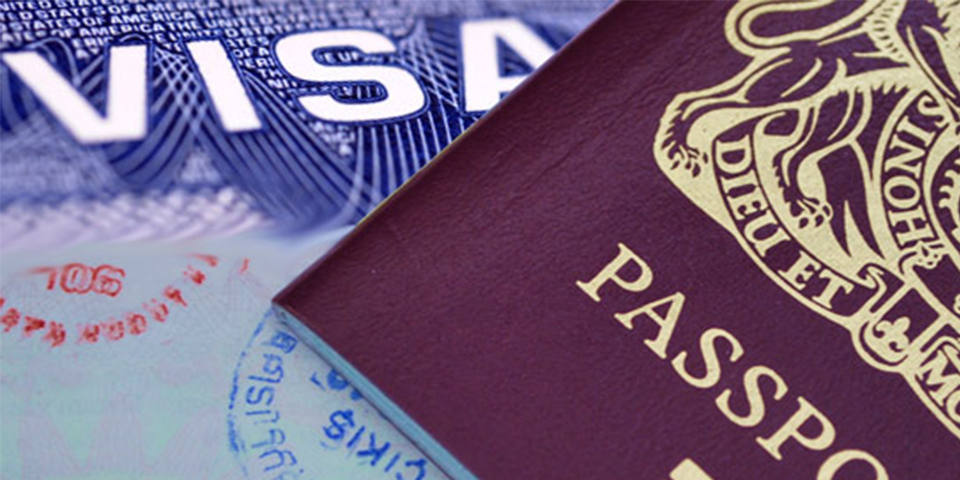
One of the most notable new highlights in the law is that foreign investors in Vietnam will be offered assorted visa types with different valid times based on their investment capital volumes (see box).
“The classification of investors based on their investment capital volume to offer them different visas is aimed to affirm the country’s eminent incentive policy in order to attract strategic investors, and large-scale investment projects in line with the Politburo’s Resolution No.50-NQ/TW dated August 20 on orientations to improve institutions and policies and enhance the quality and effectiveness of foreign investment through 2030,” stated a report on the new law last week delivered by the NA Standing Committee.
“At the same time, it will also help remove the existing situation that investors only fund a small amount of capital into Vietnam in order to take advantage of the current common regulations on granting a visa to investors, and then stay a long time in the country and cause economic, social, defence, and security consequences to Vietnam,” the report read.
Under the existing law, a common visa of “DT” is granted to “foreign investors and foreign lawyers practicing in Vietnam” within five years. This regulation has made it difficult for the authorised agencies to classify overseas investors, and have a legal foundation to offer incentives to lure strategic investors and major projects.
New visa types for foreign investors into Vietnam
+ DT1 - To be granted to foreign investors in Vietnam and representatives for foreign organisations investing in Vietnam, with total investment capital of VND100 billion ($4.35 million) upwards, or investing into sectors and professions with incentives and geographical areas with priorities determined by the government. This visa will be valid for 10 years.
+ DT2 - To be granted to overseas investors in Vietnam and representatives of such organisations investing in Vietnam, with total investment capital of between VND50 billion and VND100 billion ($2.17-$4.35 million), or investing into sectors and professions with encouragement determined by the government. This visa will be valid for five years.
+ DT3 - To be granted to foreign investors in Vietnam and representatives of international organisations investing in Vietnam, with total capital of between VND3 billion and VND50 billion ($130,500-$2.17 million). This visa will be valid for three years.
+ DT4 - To be granted to foreign investors in Vietnam and representatives for foreign organisations investing in Vietnam, with total capital of less than VND3 billion ($130,500). This visa will be valid for 12 months.
The new law also stipulated that foreigners who enter Vietnam to look for investment opportunities shall be granted different visas depending on their purposes in Vietnam, such as LV1, LV2, DN1, and DN2.
“For foreigners who seek to invest in Vietnam via capital acquisitions, they will not be granted a visa as a direct investor because, by nature, they only come to Vietnam to purchase assets in order to seek profits without participating in activities of enterprises,” the NA Standing Committee explained.
A DN1 visa shall be granted to “people who come to work with Vietnamese-based enterprises and organisations which have a legal status under Vietnamese law”, while a DN2 visa shall be granted to those “who enter Vietnam to offer services and establish a commercial presence, and perform other related activities under international treaties to which Vietnam is a member.”
Under the existing law, a common DN visa is to be granted “to people who come to work with Vietnamese-based enterprises.”
All of these new regulations are not against the existing Law on Investment.
Furthermore, under the new law, non-nationals wishing to enter Vietnam for medical treatment shall be granted a VR visa, which is also valid for those who come to visit their relatives or for other purposes.
According to the NA Standing Committee, the new law can have direct impacts on Vietnam’s implementation of foreign policies, economic co-operation, investment attraction, trade and tourism expansion, and ensuring social order.
NA vice chairman Do Ba Ty, in charge of national defence and security issues said, “The amendments to this law are necessary as they will help foreigners and investors remove difficulties, with simplified administrative procedures, and will also effectively help Vietnam fulfil its commitments to signed free trade agreements.”
Nguyen Lan Phuong - Partner, Baker McKenzie
visas options open up for overseas investors
Overseas individuals and representatives of corporate investors can be issued with DT visas for up to 10 years, depending on the level of investment capital that they tend to invest in Vietnam. This development will reduce the visa burden. However, it remains to be seen if the new regime could also help boost investment.
Investors' top priority are the possible returns on their investment, which are most likely to be generated in an efficient and transparent economy. So, the possibility to enter the country more often and stay longer is helpful but is not a deciding factor.
Also, Vietnam aims to attract multinationals, not individuals, so flexible visas targeted at them may not bear a large impact to long-term goals. Individual investors prefer to set up an investment vehicle offshore before entering Vietnam, which is easy to do. So I do not see how investors would be encouraged by the relaxed DT visas.
Marko Walde - Chief representative German Industry and Commerce Vietnam
visas options open up for overseas investors
We think that the aim of adopting the revised law on Foreigners’ Entry into, Exit from, Transit through, and Residence in Vietnam by the National Assembly is to create favourable investment conditions for foreigners.
Classifying four visa types for foreign investors into Vietnam appears sophisticated. More important, from a German investor’s perspective, Vietnam should further improve the transparency in public administration, to keep up with the rapid development of international trade, save time, and costs for businesses and investors.
Vietnam should also accelerate the implementation of its one-stop-shop mechanism, an evidence of its dedication to bring in a clearer and more transparent investment environment. More consistency, reliability, and simplified public administration, business and investment registration processes will boost investment and confidence of foreigners in Vietnam.
ADAM SITKOFF - Executive director American Chamber of Commerce in Hanoi
visas options open up for overseas investors
Having foreigners visit, invest, and work here has had a transformative role in the development of Vietnam. Americans have invested billions of US dollars here, creating good jobs, and helping the country become more productive, efficient, safe and cleaner.
Vietnam benefits when more people come and invest here. For that reason, it is important the government reduce administrative burdens and continue to help improve business conditions that strengthen the private sector and promote economic and social development here. We will continue to work on lowering barriers to trade, facilitating investment and travel, and helping Vietnam create a high-standard, transparent, and stable business environment.
Source: VIR
Related News

CHARITY / EXHIBITION / OTHER EVENTS
INVESTMENT OPPORTUNITIES IN CA MAU PROVINCE: 96 PROJECTS AND 20 STRATEGIC PROJECTS
We are pleased to share with you information on investment projects currently seeking investors in Ca Mau Province. Should your esteemed company or association be interested, we kindly invite you to review the project information and complete the registration form via the links provided. The Ho Chi Minh City Investment and Trade Promotion Centre (ITPC) will consolidate the expressions of interest and facilitate connections with the leadership of Ca Mau Province at a meeting tentatively scheduled for 13 November 2026 in Ho Chi Minh City.

MEMBER CORNER / PROMOTIONS
BẰNG KIỀU LIVESHOW - A SYMPHONY OF LOVE UNDER THE GOLDEN GLOW
A masterclass in live music that takes the audience on a soulful journey through immortal love songs, guided by the peerless artistry and emotive storytelling of renowned singer Bằng Kiều. The highlight of the night is his seamless musical chemistry with special guest Triệu Hồng Ngọc, promising passionate and deeply resonant duets inside the magnificent Grand Ballroom.
INFRASTRUCTURE / CONSTRUCTION / LOGISTIC / PORT
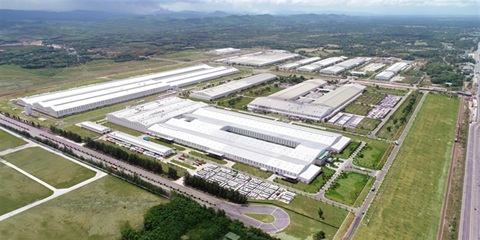
ĐÀ NẴNG GREEN-LIGHTS US$105 MILLION THAI DEVELOPMENT DEAL
The central city has approved an investment proposal by Thailand’s WHA Group to develop infrastructure for the 400ha WHA Đà Nẵng Industrial Park project on two communes of Thăng Bình and Đồng Dương, with an investment of more than VNĐ2.7 trillion (US$105 million). The city said it approved WHA Industrial Development International's status as an investor in the project, which is expected to take place between 2027 and 2034.
VIETNAM ECONOMY INVESTMENT
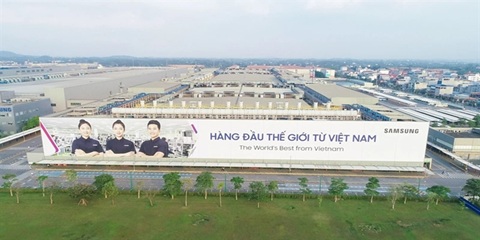
MOBILE PHONE EXPORTS RISE 20% TO $51.8 BILLION IN FIRST NINE MONTHS
Exports of mobile phones and components rose 20 per cent year-on-year to nearly US$51.8 billion in the first nine months of 2026, with China, the US and Republic of Korea accounting for more than half of the total. Shipments to the three markets reached a combined $26.18 billion, or 50.6 per cent of total exports of the product group during the period, according to data from the Vietnam Department of Customs under the Ministry of Finance.

INFRASTRUCTURE / CONSTRUCTION / LOGISTIC / PORT
VIỆT NAM-CAMBODIA TRADE GATHERS PACE TOWARDS $20 BILLION TARGET
Trade between Việt Nam and Cambodia continues to grow, remaining a bright spot and a key pillar of bilateral cooperation as the two countries aim to raise two-way trade to US$20 billion in the coming years. After setting a record of more than $11.3 billion last year, bilateral trade reached about $8.7 billion in the first eight months of this year, up 8.3 per cent year on year.

VIETNAM ECONOMY INVESTMENT
FRUIT AND VEGETABLE EXPORTS POISED TO HIT $10 BILLION IN 2026
Fruit and vegetable exports are on track to reach nearly US$10 billion in 2026, after rising 19.9 per cent year on year to nearly US$7.4 billion in the first nine months, driven by strong seasonal demand and abundant tropical fruit supplies. The Ministry of Agriculture and Environment said the growth reflected stronger international demand for fresh produce and processed agricultural products.
Events Sponsors






















