Want to be in the loop?
subscribe to
our notification
Business News
VN IMPORTS OVER US$3 BILLION IN MOBILE PHONES AND COMPONENTS IN Q1
Viet Nam's import of mobile phones and components reached over US$3 billion during the first quarter of 2024, according to data from the General Department of Vietnam Customs.
The first quarter of 2024 saw the Southeast Asian country import $3.079 billion worth of mobile phones and components, a 22.4 per cent increase compared to last year and the fifth largest import of the country. The numbers showed Việt Nam spent a total of $789.7 million importing mobile phones and components in April, a slight decrease of just one per cent compared to the previous month.
Top suppliers included mainland China, South Korea and Hong Kong (China).
Of which, mainland China contributed over $2.66 billion, a significant jump of 25 per cent compared to the same period last year, South Korea $134.5 million, a 21 per cent decrease year-on-year. During the period, Hong Kong recorded a significant growth of 275 per cent, or $25.3 million.
Other large suppliers included India, the UK, Taiwan (China), the US and Japan.
Meanwhile, Việt Nam exported $18.1 billion in mobile phones and components during the first quarter of the year, a 5 per cent increase year-on-year, accounting for the second largest export from the country, following computers, electronic products and components.
China was the Southeast Asian top exporter of mobile phones. Việt Nam has maintained a strong momentum to increase its global market share from just under 1 per cent in 2010 to over 12 per cent in 2022 with the US being the main growth driver. From 2018 to 2022, Việt Nam's market share of smartphone exports to the US doubled from 9 per cent to 18 per cent.
China continued to dominate the world's mobile phone industry, accounting for nearly half of the global market share despite large falls in demand and supply disruption during the pandemic. Hong Kong has leveraged its strategic location, trade infrastructure and business-friendly environment to become a crucial gateway for smartphone manufacturers, accounting for 9.6 per cent of the global market.
Singapore-based research firm Canalys estimated that 1.13 billion smartphones were shipped in 2023 and are expected to reach over 1.17 billion this year. Production was also expected to reach 1.25 billion units by 2027, with a compound annual growth rate (CAGR) of 2.6 per cent from 2023 to 2027.
In the domestic market, according to market research firm Statista, the Việt Nam market was projected to reach $4 billion this year with a compound annual growth rate of 1.45 per cent from 2024 to 2028.
In 2024, smartphone sales in the country have been forecast to reach 21.4 million units. Since the beginning of the year, several new phone models have been launched to positive reviews including the Samsung Galaxy S24 Series, Honor X9b 5G and Xiaomi Redmi 12 Series.
Source: VNS
Related News
VIETNAM ECONOMY INVESTMENT
VIETNAMESE COMPANIES OPTIMISTIC ON INTERNATIONAL GROWTH
Vietnamese businesses are among the most confident about the outlook for international trade, according to HSBC’s Global Trade Pulse Survey 2026, released on November 16. The survey captures the views of 10,000 senior business leaders across 26 markets on trade, tariffs, supply chains, and technology. Findings show that 94 per cent of Vietnamese businesses expect their international trade to grow over the next two years. Vietnam ranks joint top in the survey with the Philippines, compared with 86 per cent globally.
TECHNOLOGY
VIỆT NAM'S DIGITAL TECHNOLOGY INDUSTRY REVENUE SURGES 53% TO $254.6B
Việt Nam's digital technology industry generated an estimated US$254.6 billion in revenue in the first 10 months of 2026, up 53 per cent from a year earlier, while exports rose 46.2 per cent to $212 billion, the Ministry of Science and Technology said in its latest report. According to the report, hardware and electronics exports reached an estimated $30.681 billion in October, up 108 per cent from the same month last year.
CHARITY / EXHIBITION / OTHER EVENTS
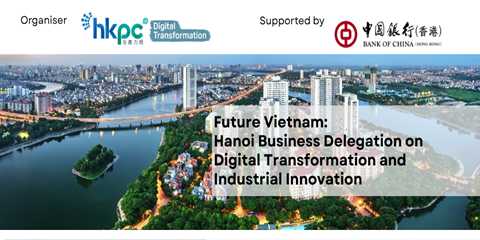
BOCHK ‧ HKPC FUTURE VIETNAM: HANOI BUSINESS DELEGATION ON DIGITAL TRANSFORMATION AND INDUSTRIAL INNOVATION
Interested in exploring Vietnam’s latest developments in digital transformation, technology adoption and industrial innovation? Organised by the Hong Kong Productivity Council (HKPC) and fully supported by Bank of China (Hong Kong) Limited, the "Future Vietnam: Hanoi Business Delegation on Digital Transformation and Industrial Innovation” will feature visits to leading high-tech enterprises across Vietnam and engage with local chambers of commerce, industry organisations and associations. Join us to expand your high-value business network and seize emerging opportunities in the ASEAN market!
GARMENT / TEXTILE
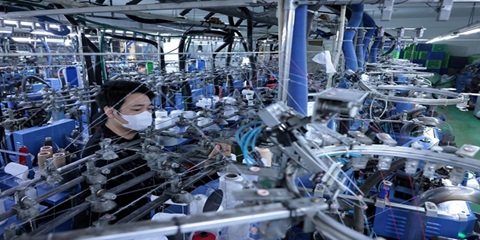
TEXTILE, GARMENT FIRMS REFORM TO MEET CPTPP ORIGIN RULES
Vietnamese textile and garment manufacturers are aggressively restructuring their supply chains and diversifying material sources to unlock untapped tariff benefits. To capitalise on the Comprehensive and Progressive Agreement for Trans-Pacific Partnership (CPTPP), companies are racing to align with the pact's strict "yarn-forward" rules — a task made difficult by a shortage of raw materials within the trade bloc.
TECHNOLOGY
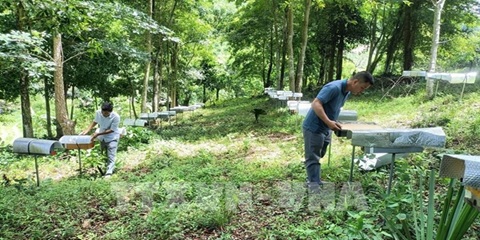
ĐÀ NẴNG SEEKS TO BUILD HIGH-TECH AGRICULTURE, INTEGRATED VALUE CHAINS
Đà Nẵng is seeking to transform its agricultural sector from a supplier of raw materials into a technology-driven, market-oriented economy, with investment opportunities spanning concentrated production areas, deep processing, logistics and agricultural product distribution. The city aims to shift from traditional agricultural production towards agricultural economic development, organising value chains and increasing the technological content and added value of products through closer links between production and processing.
INFRASTRUCTURE / CONSTRUCTION / LOGISTIC / PORT
HCM CITY ACCELERATES POWER INFRASTRUCTURE INVESTMENT TO ATTRACT HIGH-TECH CAPITAL
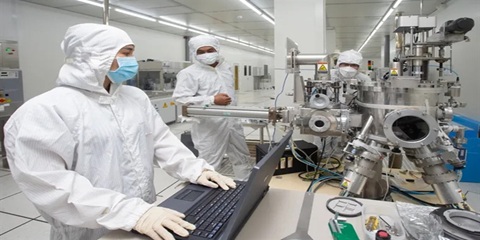
High-tech projects, particularly data centres, are not confined to SHTP but are also expanding into export processing zones and industrial parks across HCM City, driving up electricity demand. Proactively developing power infrastructure, diversifying energy supplies and expanding access to green energy are becoming essential for HCM City to maintain its competitive edge in attracting high-tech foreign direct investment (FDI).
Events Sponsors