Want to be in the loop?
subscribe to
our notification
Business News
WAREHOUSING SECTOR EMBRACES ADVANCED TECHNOLOGIES TO ENHANCE OPERATIONAL EFFICIENCY
The warehousing sector in Vietnam and globally is rapidly embracing advanced technologies to enhance operational efficiency and reduce costs amid growing demand from e-commerce and global trade.
According to the latest warehousing study released by Zebra Technologies Corporation on May 20, with the rise of e-commerce, globalisation of supply chains, and consumer expectations for faster deliveries, businesses are increasingly adopting smart warehousing solutions to optimise inventory management, reduce operational expenses, and improve customer satisfaction.
Many warehouses are transitioning from manual systems to smart warehouse management systems, incorporating automation, radio frequency identification solutions, and QR code scanning to streamline inventory tracking and order fulfilment.
The adoption of Industry 4.0 technologies such as the Internet of Things, AI, machine vision, and big data is also on the rise, enabling more accurate demand forecasting, real-time asset visibility, and optimised warehouse layouts.
Vietnam’s warehousing – potential and challenges
At last week’s media briefing, Christanto Suryadarma, sales vice president for Southeast Asia (SEA), South Korea, and Channel APJeC at Zebra Technologies, said that he sees very significant growth in Vietnam’s warehousing sector, and an increase in technology adoption.

Christanto Suryadarma, sales vice president for Southeast Asia (SEA), South Korea, and Channel APJeC at Zebra Technologies
The key reasons behind this growth are Vietnam’s location, a growing manufacturing sector, the booming e-commerce market, and strong economic performance. This economic momentum is supported by both global multinationals and local enterprises that are modernising their business operations and expanding their infrastructure, including warehousing.
He added, “For digital transformation in the warehouse sector, the majority of warehouses in Vietnam depend on the vision from leaders, and then an interest in applying technology to make operations more efficient and more effective, and also how they will address the challenges facing the sector.”
Like those globally, frontline workers in Vietnam are often swarmed with tasks, which include things they do not enjoy doing in warehouses, that can, and should be, automated today.
Suryadarma shared, “As Vietnam embraces intelligent automation and accelerates into a smarter future that drives warehousing longevity, it is critical for local warehouse leaders to actively digitise, automate, and elevate intelligence to transform their staff into connected frontline workers to enhance their operations.”
According to Vivien Tay, Asia-Pacific vertical solutions lead for transport and logistics, warehouse and healthcare at Zebra Technologies, it is a clear sign to bolster warehousing solutions, when associates across the globe and in Vietnam are calling out how their lives would be better if their employers thoughtfully integrated more automation into their workflows.
“Automating material movement, data collection, and information management is a win-win outcome for all. As it makes busy warehouses safer, teams can more effectively meet service-level agreements (SLAs) and maintain a steady, reliable flow of quality goods to the market, increasing both customer satisfaction and worker engagement,”she added.
However, there are barriers that still exist in preventing Vietnamese warehouse businesses from fully transitioning to digital operations. According to Suryadarma, the first and biggest one is understanding.
“Specifically, it is about the level of awareness around the benefits and the costs, especially from warehouse business leaders. This understanding is needed both at the executive level and the operational level. Everyone needs to share a common vision that digitising warehouse operations will lead to faster processes and increased output,” he explained.
The second key barrier is a lack of vision of the long-term benefits of digitalisation. Often, businesses focus too much on the cost of the technology, rather than the value it brings. Some business owners are afraid to invest because they think the technology will be too expensive.
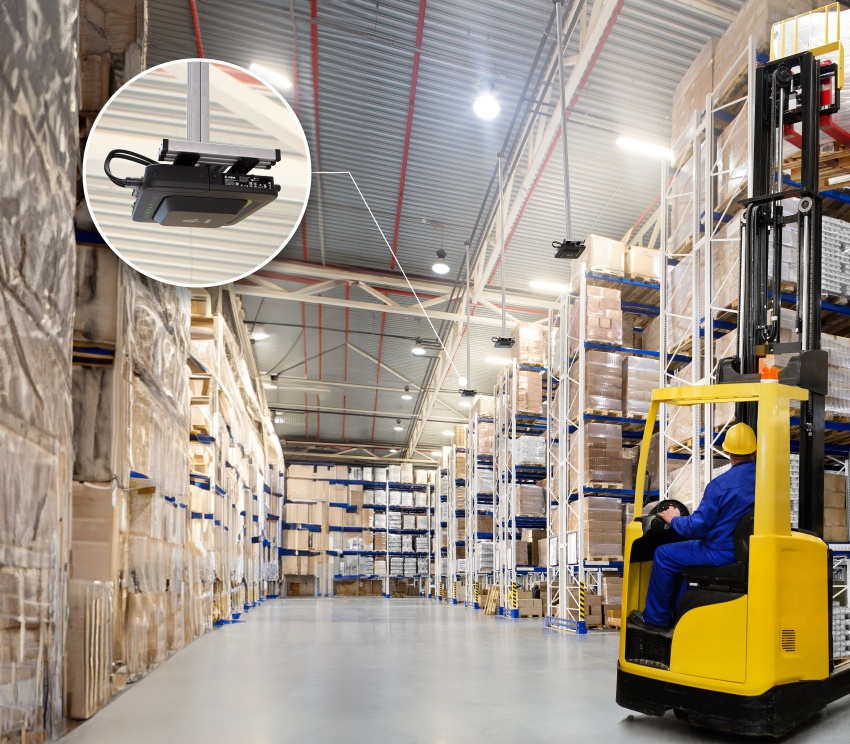
Photo: Zebra Technologies
He cited the case of Dunex in Indonesia as an example. Initially, the company did not use many handheld or mobile computing devices, but now they use Zebra solutions, they’re running much more digitally and efficiently.
According to Vivien Tay, warehousing today is no longer just about storage or serving as a distribution centre. It is now a critical part of the supply chain across all industries, one that must continuously adapt to rising consumer demands and shifting business priorities.
Notably, 70 per cent of 10 decision-makers feel significant pressure to modernise. Additionally, 64 per cent plan to increase their funding for modernisation over the next five years. Technology continues to play an essential role. While the concerns highlighted here are not entirely new and some improvements have been noted since previous studies, they remain top of mind for decision-makers.
Global trends
According to the study, 63 per cent of global warehouse leaders plan to implement both AI software (63 per cent in Asia-Pacific) and augmented reality (65 per cent in Asia-Pacific) within five years. In addition, 64 per cent those surveyed globally plan to increase spending on warehouse modernisation in the next five years, with Asia-Pacific leaders at 63 per cent. Meanwhile, 63 per cent plan to accelerate their modernisation timelines by 2029, similar to 64 per cent in the region.
From an industry perspective, Interact Analysis projects global warehouse square footage will increase by 27 per cent to 42 billion square feet in 2030 from 33 billion square feet in 2023. Warehouse labour spending is also expected to show long-term expansion, projected at a compound annual growth rate of 7 per cent through 2030.
As this expansion continues and daily order volumes increase, feedback shared by global frontline workers as part of Zebra’s study suggests that warehouse leaders will need to move a bit faster to expand workforce capacity: 85 per cent of associates globally (88 per cent in Asia-Pacific) report that if employers do not invest in technology to improve warehouse operations, they will not meet business objectives, and 74 per cent of associates globally (77 per cent in the region) are concerned they are spending too much time on tasks that could be automated.
Even warehouse leaders admit they find it challenging to maintain the fill rates and prepare orders outlined in their SLAs, with order accuracy and outbound processes cited as the top two operational challenges in the Zebra study. Increased e-commerce activity is also making faster delivery to the end-customer a top challenge for warehouse teams, even as technology use is on the rise.
Given the disparity between customers’ growing expectations and warehouse operators’ limited hiring capacity, warehouse associates say it’s important that collaborative robots, ergonomic mobile devices, communications applications, and task management tools are used to help solve workplace issues.
More than 90 per cent of associates also believe the increased availability of automation and mobile technologies would help attract and retain more warehouse associates, especially given they personally feel more valued by their employers when provided with tools and automation designed to help them.
Source: VIR
Related News

CHARITY / EXHIBITION / OTHER EVENTS
INVESTMENT OPPORTUNITIES IN CA MAU PROVINCE: 96 PROJECTS AND 20 STRATEGIC PROJECTS
We are pleased to share with you information on investment projects currently seeking investors in Ca Mau Province. Should your esteemed company or association be interested, we kindly invite you to review the project information and complete the registration form via the links provided. The Ho Chi Minh City Investment and Trade Promotion Centre (ITPC) will consolidate the expressions of interest and facilitate connections with the leadership of Ca Mau Province at a meeting tentatively scheduled for 13 November 2026 in Ho Chi Minh City.

MEMBER CORNER / PROMOTIONS
BẰNG KIỀU LIVESHOW - A SYMPHONY OF LOVE UNDER THE GOLDEN GLOW
A masterclass in live music that takes the audience on a soulful journey through immortal love songs, guided by the peerless artistry and emotive storytelling of renowned singer Bằng Kiều. The highlight of the night is his seamless musical chemistry with special guest Triệu Hồng Ngọc, promising passionate and deeply resonant duets inside the magnificent Grand Ballroom.

INFRASTRUCTURE / CONSTRUCTION / LOGISTIC / PORT
ĐÀ NẴNG GREEN-LIGHTS US$105 MILLION THAI DEVELOPMENT DEAL
The central city has approved an investment proposal by Thailand’s WHA Group to develop infrastructure for the 400ha WHA Đà Nẵng Industrial Park project on two communes of Thăng Bình and Đồng Dương, with an investment of more than VNĐ2.7 trillion (US$105 million). The city said it approved WHA Industrial Development International's status as an investor in the project, which is expected to take place between 2027 and 2034.

VIETNAM ECONOMY INVESTMENT
MOBILE PHONE EXPORTS RISE 20% TO $51.8 BILLION IN FIRST NINE MONTHS
Exports of mobile phones and components rose 20 per cent year-on-year to nearly US$51.8 billion in the first nine months of 2026, with China, the US and Republic of Korea accounting for more than half of the total. Shipments to the three markets reached a combined $26.18 billion, or 50.6 per cent of total exports of the product group during the period, according to data from the Vietnam Department of Customs under the Ministry of Finance.

INFRASTRUCTURE / CONSTRUCTION / LOGISTIC / PORT
VIỆT NAM-CAMBODIA TRADE GATHERS PACE TOWARDS $20 BILLION TARGET
Trade between Việt Nam and Cambodia continues to grow, remaining a bright spot and a key pillar of bilateral cooperation as the two countries aim to raise two-way trade to US$20 billion in the coming years. After setting a record of more than $11.3 billion last year, bilateral trade reached about $8.7 billion in the first eight months of this year, up 8.3 per cent year on year.

VIETNAM ECONOMY INVESTMENT
FRUIT AND VEGETABLE EXPORTS POISED TO HIT $10 BILLION IN 2026
Fruit and vegetable exports are on track to reach nearly US$10 billion in 2026, after rising 19.9 per cent year on year to nearly US$7.4 billion in the first nine months, driven by strong seasonal demand and abundant tropical fruit supplies. The Ministry of Agriculture and Environment said the growth reflected stronger international demand for fresh produce and processed agricultural products.
Events Sponsors






















