Want to be in the loop?
subscribe to
our notification
Business News
14 SOCIO-ECONOMIC DEVELOPMENT TARGETS MET OR EXCEDED THIS YEAR
Only one of 15 social-economic development targets are not expected to be met or exceeded this year.
Gross Domestic Product (GDP) growth is estimated to reach 8 per cent this year, about 2-2.5 per cent higher than the target.
The data was revealed in a report at the National Assembly's (NA) Committee for Economic Affairs on Tuesday morning. Assessments were made based on Government reports on the implementation of the socio-economic development plan, the State budget estimate in 2022, and the socio-economic development plan in 2023.
Under the assessments, economic recovery took place evenly among localities; 44 out of 63 provinces and cities have the Gross Regional Domestic Product (GRDP) increasing by over 6 per cent.
The number of newly established businesses has been on the rise, and sectors hit hard by the COVID-19 pandemic have recovered strongly. As a result, the major balances of the economy are ensured while inflation is controlled.
It is estimated that the whole year Consumer Price Index (CPI) will increase by about 4 per cent, and the State budget revenue will be higher than the estimate. Mobilisation of investment capital from the whole society reached about 34 per cent of GDP. Total import and export turnover continued to increase at a high level.
Việt Nam is the only country in the Asia-Pacific region and one of four countries in the world that have had their credit rating upgraded by Moody's since the beginning of the year.
National Assembly's Committee for Economic Affairs chairman Vũ Hồng Thanh said Việt Nam had achieved many encouraging results despite facing many difficulties and challenges in the world economy.
Don't neglect
However, paying attention to and evaluating several issues more closely would be necessary. For example, Thanh said the social labour productivity growth rate was lower than the target.
The implementation of the socio-economic recovery and development programme was still low; the implementation of support packages was also slow; the interest-rate support package through the commercial banking system had a very low disbursement rate; and export activities showed signs of slowing down, he added.
Some other issues also needed to be considered and clarified, such as Việt Nam's tourism competitiveness, the number of international tourists entering the country, and the bidding for the procurement of public property had caused damage to the State budget capital, he said.
Speaking at the session, Head of Delegation Affairs Nguyễn Thị Thanh said that although economic growth was high and inflation was reasonably controlled, negligence should be discouraged.
Risk factors for global economic slowdown and financial instability were still present, including the possibility of a COVID-19 resurgence.
In addition, there were other risks, such as monkeypox disease, instability of trade and global financial markets, monetary tightening of the banks in the world, and energy and food crisis, she said.
Giving the conclusion of the session, National Assembly Vice Chairman Nguyễn Khắc Định ordered the Government's report to add more experience in realising the dual goals of preventing and controlling the pandemic while maintaining economic stability. The report should also analyse the causes of the results that Việt Nam achieved over the past time.
He also told the Government to focus on planning and removing obstacles in public investment to promote growth and economic development.
Permanent Vice Chairman of the National Assembly Trần Thanh Mẫn asked the Government to clarify internal and external reasons further and propose solutions to the problems, including failure to meet the target on social labour productivity and public investment; difficulties in connecting domestic enterprises with foreign investment; improving the quality of Foreign Direct Investment (FDI) projects, and attracting high technology, source technology and technology transfer.
Mẫn also said that next year the Government must focus on forecasting, offer appropriate solutions to arising problems, and concentrate on solving difficult and urgent problems to ensure the achievement of the socio-economic development goals.
Risks remain
At the session, the assessments also showed that the stock and corporate bond markets had been developing rapidly, but there were many fluctuations and potential risks.
Giving examples for the above assessments, the NA's Committee for Economic Affairs said by the end of the session on October 7, 2022, Việt Nam's stock market fell 484 points, equivalent to 31.8 per cent from the peak (on January 6, 2022). This was was believed to be the market with the strongest decline in the world that day. VN-Index was currently at the lowest level since December 10, 2020. HNX-Index and UPCoM-Index were also recording the lowest point in nearly two years.
Besides, the violations related to An Đông Company and some other recent cases related to the bond market caused many consequences for the sustainable development of the capital market, leading to a loss of confidence in investors.
The committee also said that the risk among the capital market, the system of credit institutions and the real estate market increased.
Source: VNS
Related News

CHARITY / EXHIBITION / OTHER EVENTS
INVESTMENT OPPORTUNITIES IN CA MAU PROVINCE: 96 PROJECTS AND 20 STRATEGIC PROJECTS
We are pleased to share with you information on investment projects currently seeking investors in Ca Mau Province. Should your esteemed company or association be interested, we kindly invite you to review the project information and complete the registration form via the links provided. The Ho Chi Minh City Investment and Trade Promotion Centre (ITPC) will consolidate the expressions of interest and facilitate connections with the leadership of Ca Mau Province at a meeting tentatively scheduled for 13 November 2026 in Ho Chi Minh City.

MEMBER CORNER / PROMOTIONS
BẰNG KIỀU LIVESHOW - A SYMPHONY OF LOVE UNDER THE GOLDEN GLOW
A masterclass in live music that takes the audience on a soulful journey through immortal love songs, guided by the peerless artistry and emotive storytelling of renowned singer Bằng Kiều. The highlight of the night is his seamless musical chemistry with special guest Triệu Hồng Ngọc, promising passionate and deeply resonant duets inside the magnificent Grand Ballroom.
INFRASTRUCTURE / CONSTRUCTION / LOGISTIC / PORT
ĐÀ NẴNG GREEN-LIGHTS US$105 MILLION THAI DEVELOPMENT DEAL
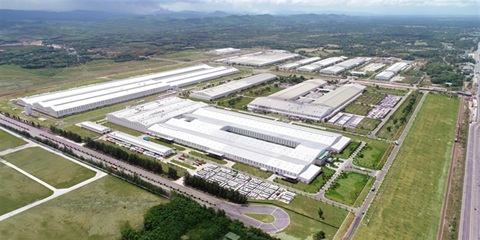
The central city has approved an investment proposal by Thailand’s WHA Group to develop infrastructure for the 400ha WHA Đà Nẵng Industrial Park project on two communes of Thăng Bình and Đồng Dương, with an investment of more than VNĐ2.7 trillion (US$105 million). The city said it approved WHA Industrial Development International's status as an investor in the project, which is expected to take place between 2027 and 2034.
VIETNAM ECONOMY INVESTMENT
MOBILE PHONE EXPORTS RISE 20% TO $51.8 BILLION IN FIRST NINE MONTHS
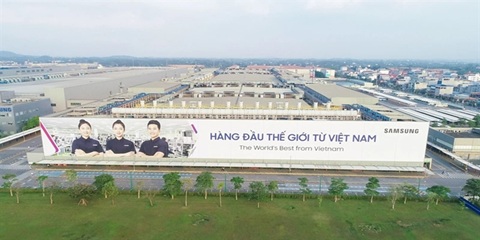
Exports of mobile phones and components rose 20 per cent year-on-year to nearly US$51.8 billion in the first nine months of 2026, with China, the US and Republic of Korea accounting for more than half of the total. Shipments to the three markets reached a combined $26.18 billion, or 50.6 per cent of total exports of the product group during the period, according to data from the Vietnam Department of Customs under the Ministry of Finance.

INFRASTRUCTURE / CONSTRUCTION / LOGISTIC / PORT
VIỆT NAM-CAMBODIA TRADE GATHERS PACE TOWARDS $20 BILLION TARGET
Trade between Việt Nam and Cambodia continues to grow, remaining a bright spot and a key pillar of bilateral cooperation as the two countries aim to raise two-way trade to US$20 billion in the coming years. After setting a record of more than $11.3 billion last year, bilateral trade reached about $8.7 billion in the first eight months of this year, up 8.3 per cent year on year.
VIETNAM ECONOMY INVESTMENT
FRUIT AND VEGETABLE EXPORTS POISED TO HIT $10 BILLION IN 2026
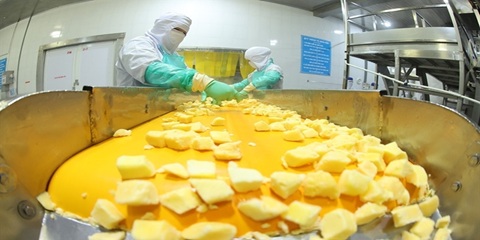
Fruit and vegetable exports are on track to reach nearly US$10 billion in 2026, after rising 19.9 per cent year on year to nearly US$7.4 billion in the first nine months, driven by strong seasonal demand and abundant tropical fruit supplies. The Ministry of Agriculture and Environment said the growth reflected stronger international demand for fresh produce and processed agricultural products.
Events Sponsors






















