Want to be in the loop?
subscribe to
our notification
Business News
2021 REMAINS GAP YEAR FOR SOLAR DEVELOPERS
After a boom in solar development thanks to incentives given in 2020, Vietnam held back due to a policy gap that has pushed investors into an awkward situation this year.
In 2020, Tien Thinh Trading and Construction Services Co., Ltd. implemented dozens of solar projects in many southern provinces and cities, with total revenues of the company reaching around $430,000. However, this year the firm only implemented a few small-scale projects with total revenues shrinking to one-tenth lower.
“Many businesses are waiting for the new solar pricing policy,” said Trinh Ngoc Quyet Tien, director of the company.
Tien explained that the incentives for solar projects have expired, whereas state-run Electricity of Vietnam (EVN) stopped receiving requests for connection and signings of power purchase agreements from residents and businesses after the end of last year.
Under the prime minister’s Decision No.13/2020/QD-TTg on mechanisms to promote the development of solar power projects in Vietnam, the prices of each kilowatt-hour generated from ground-mounted, floating, and rooftop solar initiatives are 7.09, 7.69, and 8.38 US cents, respectively, but this policy also expired last year.
Up to now, the government has not yet issued further instructions on procedures for electricity purchases and sale contracts, as well as payments for purchased electricity from rooftop solar power systems.
The south-central province of Ninh Thuan People’s Committee said in a recent document that investors have worked day and night to complete projects, but some of them missed the deadline to enjoy the feed-in tariffs (FiT). Even now, some electricity has been generated and delivered to the grid, but EVN and investors could not calculate selling prices.
There have been many meetings between investors, EVN, and provinces during this year, but no positive movement has been made.
The FiT has had a great impact on equipment manufacturers and trading units, as well as developers and investors using solar power. Rooftop solar installations skyrocketed in Vietnam last year before the FiT deadline, with more than 9GWp of rooftop solar installed in the country. However, the hot development of solar projects caused an overload of supply.
Bui Van Tien, CEO at VATEC Consulting Co., Ltd., said during the Zoom meeting termed “Paving the way for green growth through buildings in Vietnam” hosted by Energy Box Vietnam last week, “After the boom, the solar market was almost frozen due to both the lack of a pricing policy and the pandemic situation. Electricity consumption in 2021 is also lower as factories reduced their capacities.”
However, Tien predicted that this situation would only last “for the short-term as Vietnam made a strong commitment at COP26 to net-zero emissions and policy development for the solar sector in the coming time.”
Hoang Tien Dung, director of the Department of Electricity and Renewable Energy under the Ministry of Industry and Trade admitted that an FiT for solar power was previously considered suitable to attract investment. “Technological progress also helps projects to be more efficient and calculate solar power price reductions while ensuring benefits for investors as well as electricity buyers,” Dung said.
In March, he stated that rooftop solar power could be traded at only 5.2-5.8 US cents per kWh, with these rates based on an assessment by foreign consultants on the changes to and development of renewable energy, as well as the price of equipment in Vietnam and around the world.
Meanwhile, foreign investors have used mergers and acquisitions to expand their renewable energy investment in Vietnam because of a lack of policy for solar power projects at the moment. All acquired projects are completed and received the FiT prices.
For instance, Banpu Power Plc this month announced that it has acquired Ha Tinh Solar Power JSC in a deal worth $23.9 million as part of its strategy for renewable power businesses across Asia-Pacific.
Source: VIR
Related News

CHARITY / EXHIBITION / OTHER EVENTS
INVESTMENT OPPORTUNITIES IN CA MAU PROVINCE: 96 PROJECTS AND 20 STRATEGIC PROJECTS
We are pleased to share with you information on investment projects currently seeking investors in Ca Mau Province. Should your esteemed company or association be interested, we kindly invite you to review the project information and complete the registration form via the links provided. The Ho Chi Minh City Investment and Trade Promotion Centre (ITPC) will consolidate the expressions of interest and facilitate connections with the leadership of Ca Mau Province at a meeting tentatively scheduled for 13 November 2026 in Ho Chi Minh City.

MEMBER CORNER / PROMOTIONS
BẰNG KIỀU LIVESHOW - A SYMPHONY OF LOVE UNDER THE GOLDEN GLOW
A masterclass in live music that takes the audience on a soulful journey through immortal love songs, guided by the peerless artistry and emotive storytelling of renowned singer Bằng Kiều. The highlight of the night is his seamless musical chemistry with special guest Triệu Hồng Ngọc, promising passionate and deeply resonant duets inside the magnificent Grand Ballroom.
INFRASTRUCTURE / CONSTRUCTION / LOGISTIC / PORT
ĐÀ NẴNG GREEN-LIGHTS US$105 MILLION THAI DEVELOPMENT DEAL
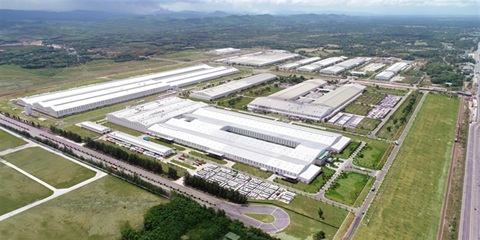
The central city has approved an investment proposal by Thailand’s WHA Group to develop infrastructure for the 400ha WHA Đà Nẵng Industrial Park project on two communes of Thăng Bình and Đồng Dương, with an investment of more than VNĐ2.7 trillion (US$105 million). The city said it approved WHA Industrial Development International's status as an investor in the project, which is expected to take place between 2027 and 2034.

VIETNAM ECONOMY INVESTMENT
MOBILE PHONE EXPORTS RISE 20% TO $51.8 BILLION IN FIRST NINE MONTHS
Exports of mobile phones and components rose 20 per cent year-on-year to nearly US$51.8 billion in the first nine months of 2026, with China, the US and Republic of Korea accounting for more than half of the total. Shipments to the three markets reached a combined $26.18 billion, or 50.6 per cent of total exports of the product group during the period, according to data from the Vietnam Department of Customs under the Ministry of Finance.

INFRASTRUCTURE / CONSTRUCTION / LOGISTIC / PORT
VIỆT NAM-CAMBODIA TRADE GATHERS PACE TOWARDS $20 BILLION TARGET
Trade between Việt Nam and Cambodia continues to grow, remaining a bright spot and a key pillar of bilateral cooperation as the two countries aim to raise two-way trade to US$20 billion in the coming years. After setting a record of more than $11.3 billion last year, bilateral trade reached about $8.7 billion in the first eight months of this year, up 8.3 per cent year on year.
VIETNAM ECONOMY INVESTMENT
FRUIT AND VEGETABLE EXPORTS POISED TO HIT $10 BILLION IN 2026
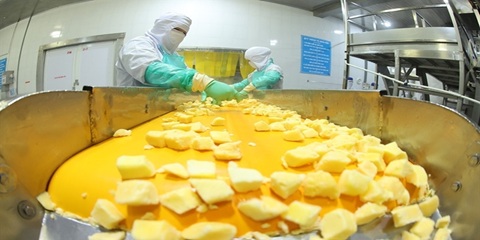
Fruit and vegetable exports are on track to reach nearly US$10 billion in 2026, after rising 19.9 per cent year on year to nearly US$7.4 billion in the first nine months, driven by strong seasonal demand and abundant tropical fruit supplies. The Ministry of Agriculture and Environment said the growth reflected stronger international demand for fresh produce and processed agricultural products.
Events Sponsors






















