Want to be in the loop?
subscribe to
our notification
Business News
4 HURDLES FACING THE HOUSING MARKET
The housing market is witnessing huge demand and its strong growth momentum comes from rapid urbanization, driven by a so-called gold structure. Mr. Neil MacGregor, Managing Director of Savills Vietnam, said the market is still facing big nuisances such as legal procedures, land funds and investment capital, which result in a mismatch between supply and demand.
Real estate experts pointed out that new supplies are limited. For example, Ho Chi Minh City, the largest city in Vietnam, is seeing a serious supply-demand imbalance.
“According to Savills Q1 Market Report, the apartment market in Ho Chi Minh City saw only 2,150 units opened for sale in the first quarter. With a population of more than 10 million, that supply is insufficient. So, when they are opened for sale, they are easily and quickly absorbed by the market. Property prices will go up until the supply improves,” he said.
Without a master plan
According to Savills, in 2020, former Prime Minister Nguyen Xuan Phuc approved the “task of making the national master plan for the 2021 - 2030 period, with a vision to 2050”. However, the planning progress was very slow when only seven out of 111 plans had been approved by the end of May 2022.
Specifically, the plan on a 1:10,000 scale is ratified by the Ministry of Construction while the plans on the 1:2,000 scale and the 1:500 scale are decided by the Provincial People’s Committee. However, a project covering over 30 ha or employing over 50,000 workers is decided by the Ministry of Construction. Insufficient clarity on planning management affects project progress.
Many overlapping laws
Mr. Neil MacGregor, Managing Director of Savills Vietnam, said that the Law on Land and the Law on Construction are overlapping, troubling the ratification of projects invested by domestic and foreign investors. The Planning Law, passed in 2017, confronted a lot of difficulties and obstacles in enforcement due to unclear definitions and regulations.
He believed that laws need to be arranged and organized reasonably and effectively to abolish regulatory overlaps. Then, this perfection will help local authorities in project ratification and increase the land fund for housing development.
Insufficient land funds in big cities, lingering bubble risks
Speculation is an existing headache in many localities. Housing prices are not for end buyers. This will cause unhealthy social and economic development in the long term. The land fund in big cities like Ho Chi Minh City and Hanoi for project development is still small and easily manipulated, leading to lingering bubble risks.
“A market that is not geared toward end buyers cannot be sustainable. Therefore, it is necessary to find solutions to increase the land fund, especially for affordable projects, to support buyers with real housing needs as well as to build a transparent public land auction process to limit speculation,” he noted.
He recommended that competent authorities should come up with solutions to expand the available land fund to prevent speculation and bubbles, deal with housing shortages, and increase affordable housing supplies for end buyers, thus mitigating the risks of real estate bubbles.
In addition, it is necessary to supplement the land fund for housing development projects and to launch infrastructure projects to support urban development.
Regarding land auctions, he recommended that a more transparent public land auctioning process be built. Capacity-proven foreign valuation agencies may be invited to join in this process. Besides, Vietnam can refer to some public land auction processes in more mature markets such as Singapore and Hong Kong.
Tightening property credit
Currently, property credit and corporate bonds are under strict control. The government is also considering limiting short-term foreign loans to finance medium and long-term projects (draft).
In this context, businesses should actively diversify their capital sources and approach alternative channels such as investment funds, M&As, and joint ventures, Neil MacGregor advised. Funding diversity will help stabilize the market and reduce systemic risks.
Source: VCCI
Related News

INFRASTRUCTURE / CONSTRUCTION / LOGISTIC / PORT
VIỆT NAM-CAMBODIA TRADE GATHERS PACE TOWARDS $20 BILLION TARGET
Trade between Việt Nam and Cambodia continues to grow, remaining a bright spot and a key pillar of bilateral cooperation as the two countries aim to raise two-way trade to US$20 billion in the coming years. After setting a record of more than $11.3 billion last year, bilateral trade reached about $8.7 billion in the first eight months of this year, up 8.3 per cent year on year.
TECHNOLOGY
AI BEGINNING TO RESHAPE RECRUITMENT CRITERIA
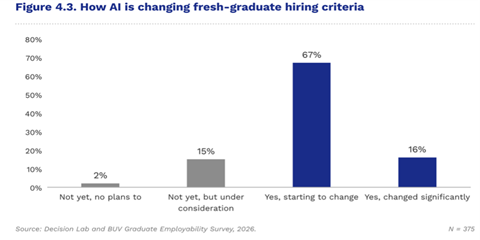
Digital literacy is the only capability area in which fresh graduates meet employers’ expectations, according to a new report. Yet, it is also the standard rising fastest, as businesses increasingly expect new hires to use AI effectively in the workplace. Some 83 per cent of employers say AI has changed, or is beginning to change, their hiring criteria, while 94 per cent report higher expectations for digital and AI capabilities than they had two to three years ago.

INFRASTRUCTURE / CONSTRUCTION / LOGISTIC / PORT
ĐÀ NẴNG GREEN-LIGHTS US$105 MILLION THAI DEVELOPMENT DEAL
The central city has approved an investment proposal by Thailand’s WHA Group to develop infrastructure for the 400ha WHA Đà Nẵng Industrial Park project on two communes of Thăng Bình and Đồng Dương, with an investment of more than VNĐ2.7 trillion (US$105 million). The city said it approved WHA Industrial Development International's status as an investor in the project, which is expected to take place between 2027 and 2034.

VIETNAM ECONOMY INVESTMENT
MOBILE PHONE EXPORTS RISE 20% TO $51.8 BILLION IN FIRST NINE MONTHS
Exports of mobile phones and components rose 20 per cent year-on-year to nearly US$51.8 billion in the first nine months of 2026, with China, the US and Republic of Korea accounting for more than half of the total. Shipments to the three markets reached a combined $26.18 billion, or 50.6 per cent of total exports of the product group during the period, according to data from the Vietnam Department of Customs under the Ministry of Finance.

VIETNAM ECONOMY INVESTMENT
FRUIT AND VEGETABLE EXPORTS POISED TO HIT $10 BILLION IN 2026
Fruit and vegetable exports are on track to reach nearly US$10 billion in 2026, after rising 19.9 per cent year on year to nearly US$7.4 billion in the first nine months, driven by strong seasonal demand and abundant tropical fruit supplies. The Ministry of Agriculture and Environment said the growth reflected stronger international demand for fresh produce and processed agricultural products.
GARMENT / TEXTILE
TEXTILE EXPORTS FACE DUAL CHALLENGES OF SUSTAINING ORDERS AND BOOSTING EFFICIENCY AMID GROWING COMPETITION
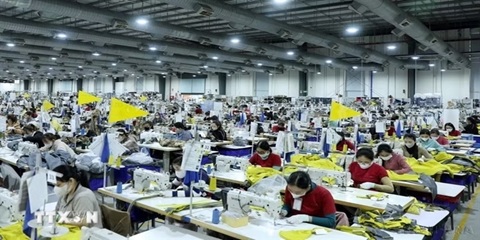
Data shows that the textile and garment sector maintained its growth momentum in the first nine months of this year. The industry's total export turnover reached an estimated US$35.721 billion in the first nine months of this year, up 3.3 per cent year-on-year. Despite posting encouraging export figures, Vietnamese textile and garment enterprises continue to navigate unpredictable market variables.
Events Sponsors






















