Want to be in the loop?
subscribe to
our notification
Business News
ADVANCED LABOUR CODE DISMAYING FOREIGN EMPLOYERS
The fresh Labour Code is burdening foreign employers in Vietnam with new insurance payments for part-time employees.
As soon as the new law came into force in early January, a great number of employers, especially foreign-invested enterprises (FIEs), displayed their dissatisfaction with Article 32.3 which stipulated that part-time employees shall be entitled to receive rights and obligations equal to those of full-time employees, including in equal opportunities, safety, and hygienic working environments.
“In other words, employers have to fulfil insurance fees for part-time employees,” said Mai Duc Thien, deputy director-general of the Department of Legal Affairs at the Ministry of Labour, Invalids, and Social Affairs (MoLISA).
Speaking at a workshop about the Labour Code last month, hundreds of FIEs voiced that the total cost they pay for labourers has now increased greatly as a result of the changes. Those include the on-year growing minimum wage, subsidies, and health and social insurance, among others.
“Thus, paying insurance for part-time labourers will increase the cost burden for FIEs in Vietnam,” said Tran Nguyen Trung, director at Japanese-backed recruitment consultants I-GLOCAI.
Early this month, Hoang Xuan Hiep, a member of the Vietnam Textile and Apparel Association and owner of a garment facility employing dozens of part-time workers, said that the cost for businesses will be higher if paying insurance for labourers who work fewer hours than full-time labourers.
“Increasing costs are seen as inappropriate at this time as many businesses like us are struggling to cope with COVID-19,” said Hiep.
Vietnamese labour costs have been a concern for many businesses, especially FIEs, despite the nation’s perceived advantage of low-cost labour. Speaking at a webinar about the law last month, Thiet Nguyen, director of Management Consulting at PwC, said that the minimum wage in Vietnam has constantly increased over the years. “In the 2006-2015 period, the sum grew as much as four times. Annually, the wage on average increases by 6-10 per cent.”
Nguyen added that one of the things businesses need to be aware of is the high insurance contribution. “Employers currently pay 21.5 per cent of labourers’ social insurance, much higher than other regional countries such as Malaysia’s 13 per cent, the Philippines’ 10 per cent, Indonesia at 8 per cent, and Thailand at 5 per cent,” he said.
Working part-time roles is very popular in Vietnam. Over the years, a large number of FIEs such as Lotte, McDonald’s, KFC, and Shopee have constantly recruited part-time employees, reflecting the high demand for such positions. Data published by job listing site vn.indeed.com showed that the monthly number of available part-time positions on their site was at around 30,000. According to the MoLISA, as of mid-2020, part-time workers occupy 8.5 per cent of the total labour force in Vietnam.
The main beneficiaries of such part-time jobs are students and those who have yet to find full-time roles. Most of them may also be unfamiliar with their rights in regards to insurance or labour contracts.
“They hire me for serving drinks for about four hours per day with the wage of VND30,000 ($1.30) per hour,” said Nguyen Thi My, a 21-year-old student at Hanoi University who is working at a café. “That is basically all the information I have about my current job.”
Sam Luong, a former student at the Foreign Trade University, also shared, “I worked as a teacher at an English language centre for nearly two years. During that time, I never signed any labour contract or received any rights similar to full-time jobs.”
Luong said that most people she knows who are working part-time assume that the jobs are temporary, so they do not care too much about rights or benefits. “And most employers, of course, always do their best to cut costs. If part-time workers like us were entitled to more insurance benefits, our job-related risks would be reduced significantly,” she added.
Commenting on the change in the new law, Colin Blackwell, chairman of the HR Committee at the Vietnam Business Forum, said that improving local labourers’ rights and benefits on par with international standards is necessary. However, in some cases, those might lower the ability of employers because the businesses are already struggling to ensure appropriate human resources in Vietnam.
“The biggest problem with finding quality staff in Vietnam are educational certificates. Companies currently have to spend too much time trying to retrain people,” Blackwell said.
Source: VIR
Related News
INFRASTRUCTURE / CONSTRUCTION / LOGISTIC / PORT
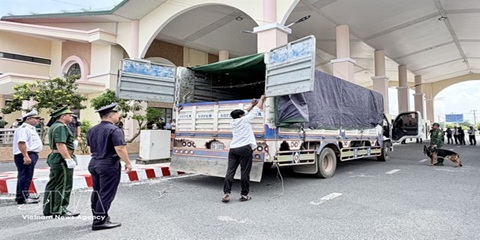
VIỆT NAM-CAMBODIA TRADE GATHERS PACE TOWARDS $20 BILLION TARGET
Trade between Việt Nam and Cambodia continues to grow, remaining a bright spot and a key pillar of bilateral cooperation as the two countries aim to raise two-way trade to US$20 billion in the coming years. After setting a record of more than $11.3 billion last year, bilateral trade reached about $8.7 billion in the first eight months of this year, up 8.3 per cent year on year.
TECHNOLOGY
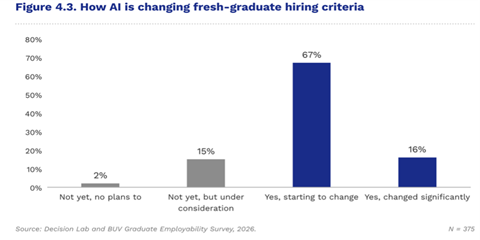
AI BEGINNING TO RESHAPE RECRUITMENT CRITERIA
Digital literacy is the only capability area in which fresh graduates meet employers’ expectations, according to a new report. Yet, it is also the standard rising fastest, as businesses increasingly expect new hires to use AI effectively in the workplace. Some 83 per cent of employers say AI has changed, or is beginning to change, their hiring criteria, while 94 per cent report higher expectations for digital and AI capabilities than they had two to three years ago.
INFRASTRUCTURE / CONSTRUCTION / LOGISTIC / PORT
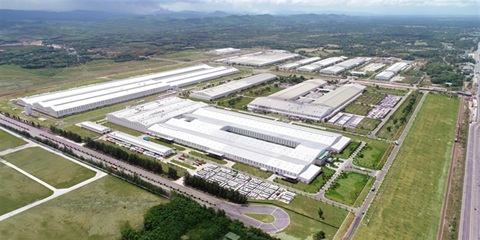
ĐÀ NẴNG GREEN-LIGHTS US$105 MILLION THAI DEVELOPMENT DEAL
The central city has approved an investment proposal by Thailand’s WHA Group to develop infrastructure for the 400ha WHA Đà Nẵng Industrial Park project on two communes of Thăng Bình and Đồng Dương, with an investment of more than VNĐ2.7 trillion (US$105 million). The city said it approved WHA Industrial Development International's status as an investor in the project, which is expected to take place between 2027 and 2034.
VIETNAM ECONOMY INVESTMENT
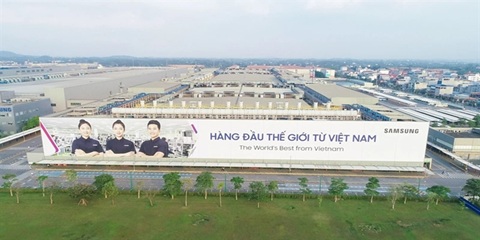
MOBILE PHONE EXPORTS RISE 20% TO $51.8 BILLION IN FIRST NINE MONTHS
Exports of mobile phones and components rose 20 per cent year-on-year to nearly US$51.8 billion in the first nine months of 2026, with China, the US and Republic of Korea accounting for more than half of the total. Shipments to the three markets reached a combined $26.18 billion, or 50.6 per cent of total exports of the product group during the period, according to data from the Vietnam Department of Customs under the Ministry of Finance.
VIETNAM ECONOMY INVESTMENT
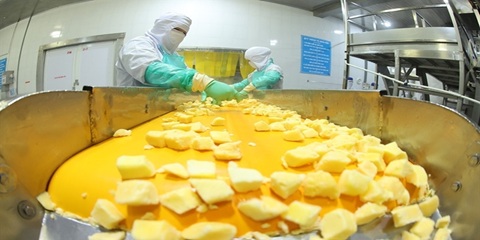
FRUIT AND VEGETABLE EXPORTS POISED TO HIT $10 BILLION IN 2026
Fruit and vegetable exports are on track to reach nearly US$10 billion in 2026, after rising 19.9 per cent year on year to nearly US$7.4 billion in the first nine months, driven by strong seasonal demand and abundant tropical fruit supplies. The Ministry of Agriculture and Environment said the growth reflected stronger international demand for fresh produce and processed agricultural products.
GARMENT / TEXTILE
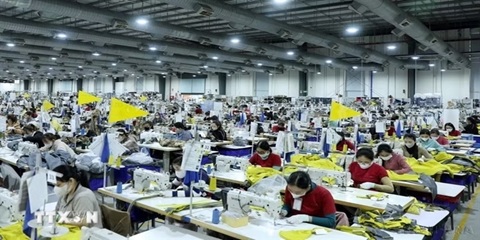
TEXTILE EXPORTS FACE DUAL CHALLENGES OF SUSTAINING ORDERS AND BOOSTING EFFICIENCY AMID GROWING COMPETITION
Data shows that the textile and garment sector maintained its growth momentum in the first nine months of this year. The industry's total export turnover reached an estimated US$35.721 billion in the first nine months of this year, up 3.3 per cent year-on-year. Despite posting encouraging export figures, Vietnamese textile and garment enterprises continue to navigate unpredictable market variables.
Events Sponsors






















