Want to be in the loop?
subscribe to
our notification
Business News
ADVANCING DIGITAL TRANSFORMATION IN CUSTOMS TO BETTER SERVE BUSINESS COMMUNITY
The Customs Development Strategy to 2030 sets an overarching goal: “Building professional and modern Vietnamese customs on par with that of developed countries in the world, taking the lead in the construction of digital government, digital customs and smart customs”. The General Department of Vietnam Customs (GDC) has worked out and carried out the Customs Digital Transformation Plan to 2025, with a vision to 2030, as per Decision 707/QD-TCHQ dated May 4, 2022. In the plan, GDC strives to complete digital customs by 2025 to create more favorable conditions for the business community.
All customs procedures will be digitized and carried out electronically by 2025
According to its strategic goals by 2025, the customs sector will basically achieve digital customs; process 95% of customs records at GDC on the electronic environment (except for those classified as State secret); conduct 80% of customs inspections through the digital environment and information technology system. This shows that its fight against smuggling and trade fraud depends greatly on data sources in reviewing and analyzing risks, determining key areas for industries, trade routes, merchandise and other criteria.
Currently, the customs sector is tasked to lead other relevant bodies to compile a decree on connection and information sharing under the National Single Window mechanism and the National Single Window information portal. Accordingly, administrative procedures for specialized State inspection of exported, imported and transited goods; data and electronic documents are received and shared for all stakeholders in cross-border trade, supply chain, logistics through data centralization and processing. By 2030, all customs documents of basic types will be converted to electronic data and digitized. Therefore, information search and review by anti-smuggling forces on conditional exports and imports is made easier and more convenient.
To ensure sector-wide consistent implementation of digital transformation, the General Department of Customs has directed local customs authorities to develop and launch their digital transformation plans. At the same time, it has also established the Digital Transformation Steering Committee and a working group to assist this committee.
GDC has completed the 5E targets (E-Declaration, E-payment, E-C/O; E- Permit and E-Manifest) on information technology (IT) application in State customs management, built a centralized IT system at GDC to serve State customs management in all aspects to ensure stable, smooth, inclusive and supportive operation.
According to a GDC official, the customs workload has increased rapidly. Specifically, the average import and export turnover rose by 23% a year. The average amount of import and export tax collected each year climbed by 9.2%. The average number of import and export declarations increased by 22% annually while customs officers decreased. Therefore, digitizing the customs industry is an inevitable path.
Carrying out key solutions toward digital customs
Since 2017, GDC has deployed the Vietnam Automated System for Seaport Customs Management (VASSCM). It has also further improved the quality and number of online public services for people and businesses. The sector has provided 215 out of 237 online public services of Level 3 and Level 4 (approximately 91% of total administrative procedures performed by customs authorities), of which 209 procedures are provided online at Level 4 (accounting for 88%), enabling people and businesses to submit documents and receive results via the internet.
GDC has integrated 98 online public services of Level 4 into the National Public Service Portal. As of June 15, 2022, the National Single Window accepted 249 administrative procedures delivered by 13 ministries and agencies. It handled over 4.92 million records filed by more than 54,800 companies.
Regarding the ASEAN Single Window mechanism, Vietnam has to date exchanged electronic Certificate of Origin Form D (e-C/O Form D) with nine ASEAN countries: Indonesia, Malaysia, Singapore, Thailand, Brunei, Cambodia, Myanmar, Laos and the Philippines.
Mr. Le Duc Thanh, Director of Customs Information Technology & Statistics Department, emphasized that, to speed up digital transformation, information technology must be strongly and comprehensively applied to customs operations, with a focus placed on three key tasks: Accelerating digital transformation in customs operations with the deployment of information technology outsourcing services, the overall redesign of the information technology system to meet requirements for digital customs operations and for system information security; Speeding up digital transformation in implementation of the National Single Window and the ASEAN Single Window mechanisms to ensure synchronization with digital transformation of customs operations and businesses toward digitized and centralized settlement of administrative procedures performed by ministries and agencies for imported and exported goods, increasing the number of administrative procedures delivered by ministries and agencies, connecting, exchanging and sharing information between customs authorities with ministries and relevant bodies; and finally, implementing the National Database Project on Customs.
In the coming time, GDC will continue to promote research and application of Technology 4.0 achievements to State customs management such as artificial intelligence (AI) in freight scanning, internet of things (IoT) in customs supervision, and big data analysis in importer and exporter management in a bid to create breakthrough development in collecting, managing, storing, processing, analyzing centralized customs data and databases. It will also adopt and apply a scientific data analysis model to effectively serve professional work, management and administration at all levels through the integrated customs information technology system.
Source: VCCI
Related News

CHARITY / EXHIBITION / OTHER EVENTS
INVESTMENT OPPORTUNITIES IN CA MAU PROVINCE: 96 PROJECTS AND 20 STRATEGIC PROJECTS
We are pleased to share with you information on investment projects currently seeking investors in Ca Mau Province. Should your esteemed company or association be interested, we kindly invite you to review the project information and complete the registration form via the links provided. The Ho Chi Minh City Investment and Trade Promotion Centre (ITPC) will consolidate the expressions of interest and facilitate connections with the leadership of Ca Mau Province at a meeting tentatively scheduled for 13 November 2026 in Ho Chi Minh City.

MEMBER CORNER / PROMOTIONS
BẰNG KIỀU LIVESHOW - A SYMPHONY OF LOVE UNDER THE GOLDEN GLOW
A masterclass in live music that takes the audience on a soulful journey through immortal love songs, guided by the peerless artistry and emotive storytelling of renowned singer Bằng Kiều. The highlight of the night is his seamless musical chemistry with special guest Triệu Hồng Ngọc, promising passionate and deeply resonant duets inside the magnificent Grand Ballroom.
INFRASTRUCTURE / CONSTRUCTION / LOGISTIC / PORT
ĐÀ NẴNG GREEN-LIGHTS US$105 MILLION THAI DEVELOPMENT DEAL
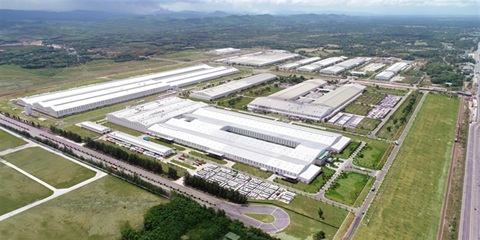
The central city has approved an investment proposal by Thailand’s WHA Group to develop infrastructure for the 400ha WHA Đà Nẵng Industrial Park project on two communes of Thăng Bình and Đồng Dương, with an investment of more than VNĐ2.7 trillion (US$105 million). The city said it approved WHA Industrial Development International's status as an investor in the project, which is expected to take place between 2027 and 2034.
VIETNAM ECONOMY INVESTMENT
MOBILE PHONE EXPORTS RISE 20% TO $51.8 BILLION IN FIRST NINE MONTHS
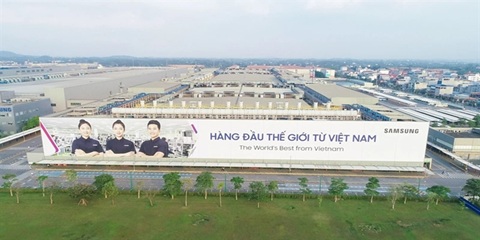
Exports of mobile phones and components rose 20 per cent year-on-year to nearly US$51.8 billion in the first nine months of 2026, with China, the US and Republic of Korea accounting for more than half of the total. Shipments to the three markets reached a combined $26.18 billion, or 50.6 per cent of total exports of the product group during the period, according to data from the Vietnam Department of Customs under the Ministry of Finance.
INFRASTRUCTURE / CONSTRUCTION / LOGISTIC / PORT
VIỆT NAM-CAMBODIA TRADE GATHERS PACE TOWARDS $20 BILLION TARGET
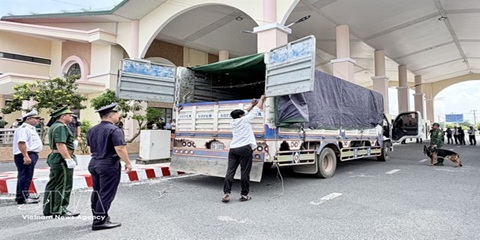
Trade between Việt Nam and Cambodia continues to grow, remaining a bright spot and a key pillar of bilateral cooperation as the two countries aim to raise two-way trade to US$20 billion in the coming years. After setting a record of more than $11.3 billion last year, bilateral trade reached about $8.7 billion in the first eight months of this year, up 8.3 per cent year on year.
VIETNAM ECONOMY INVESTMENT
FRUIT AND VEGETABLE EXPORTS POISED TO HIT $10 BILLION IN 2026
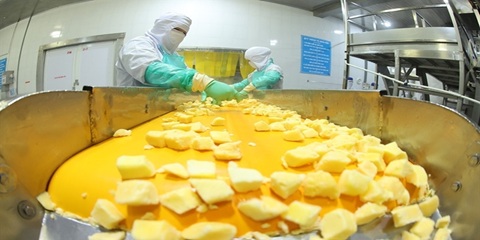
Fruit and vegetable exports are on track to reach nearly US$10 billion in 2026, after rising 19.9 per cent year on year to nearly US$7.4 billion in the first nine months, driven by strong seasonal demand and abundant tropical fruit supplies. The Ministry of Agriculture and Environment said the growth reflected stronger international demand for fresh produce and processed agricultural products.
Events Sponsors






















