Want to be in the loop?
subscribe to
our notification
Business News
HANOI CITY WANTS NIGHTTIME ECONOMY TO CONTRIBUTE 5% TO GRDP BY 2030
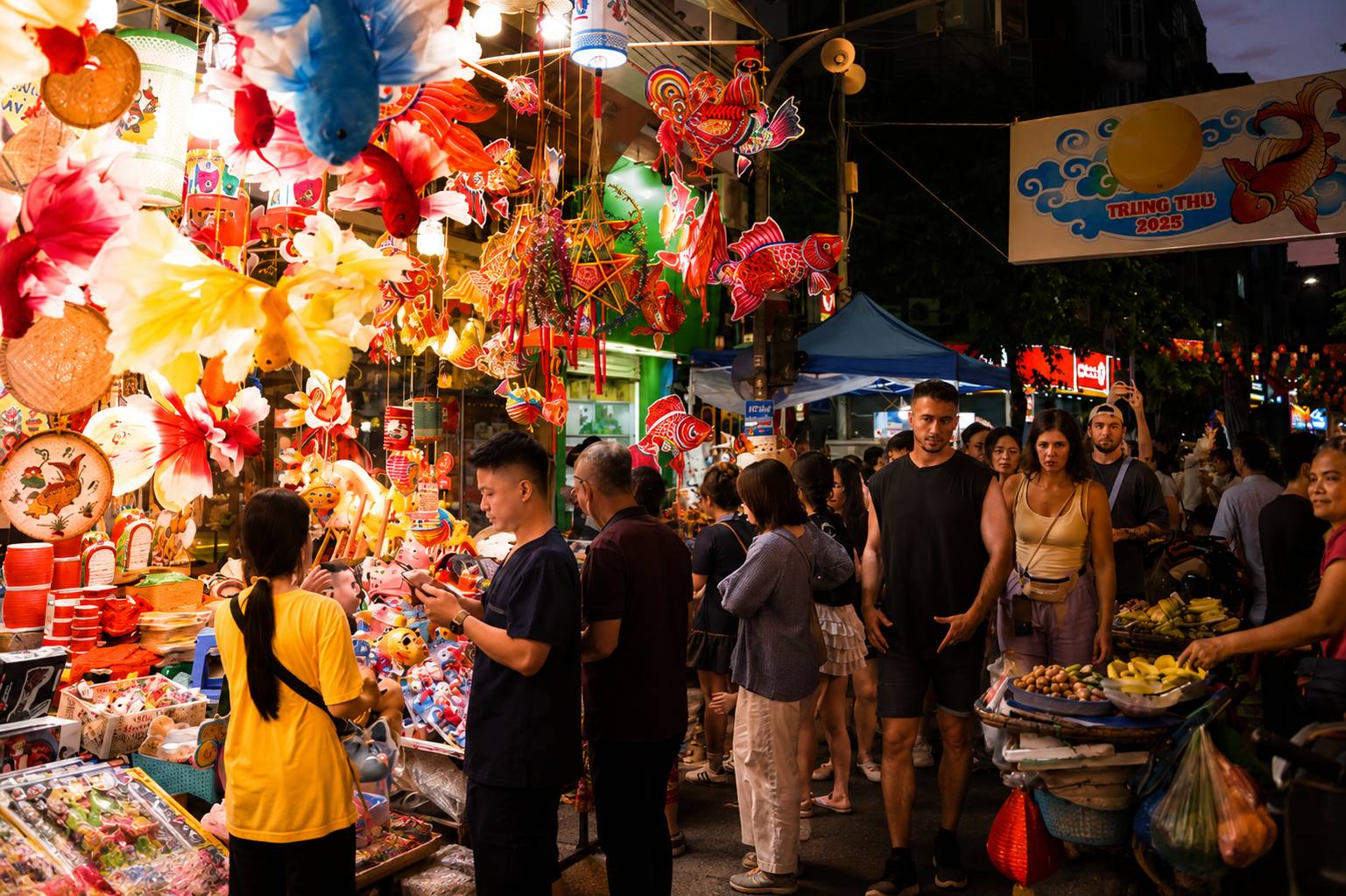
Visitors and local residents inspect lanterns and Mid-Autumn Festival decorations at a night market - PHOTO: NGOC LUONG
HCMC – Hanoi City aims for its nighttime economy to contribute around 5% of the city’s gross regional domestic product (GRDP) by 2030 under a new development plan approved by the municipal government.
The Hanoi People’s Committee approved the plan for 2026-2030, with a vision to 2045, on May 9. The city expects the nighttime economy to become a new growth driver for its service and tourism sectors.
The plan covers economic activities operating from 6 p.m. to 6 a.m. Authorities aim to expand services by leveraging Hanoi’s cultural, heritage, tourism and creative industry assets while maintaining urban order, public security and residents’ quality of life.
Hanoi expects to receive 35 million to 40 million visitors in 2026. International arrivals are projected to rise further as tourism recovers and more night-time tourism products are introduced, according to the plan.
The city targets night-time spending by tourists at 25% to 30% of total visitor spending by 2030. Average stays are expected to increase to between 2.5 and 3.5 days.
Authorities plan to establish three to five key nighttime economy zones. These include a cultural and heritage area in Hoan Kiem and Cua Nam, an entertainment area in Tay Ho, and a creative and industrial zone in Gia Lam.
The city also plans to develop three to five signature night events and products. Night cultural tourism offerings are expected to be introduced at all nationally recognized special heritage sites in Hanoi.
The plan identifies culture, tourism and creative industries as the foundation of the nighttime economy. Hanoi also intends to apply digital technology and smart-city management systems to oversee night-time activities.
Authorities are studying the deployment of AI-powered cameras and real-time sensors to improve security, fire prevention and crowd management at busy locations.
The city plans to build a digital ecosystem for the nighttime economy, including databases, digital maps and integrated management systems linking authorities, businesses and residents. Digital payments, e-commerce and multi-platform business models will also be promoted.
Hanoi currently has 11 night tours and nine pedestrian streets. Existing nighttime economy activities include heritage tours, art performances, walking streets and late-night food spaces.
Source: The Saigon Times
Related News
VIETNAM ECONOMY INVESTMENT
FOREIGN INVESTORS SEEKING A SYNCHRONISED MANUFACTURING ECOSYSTEM
Instead of focusing only on land costs and incentives as usual, foreign investors are seeking a synchronised manufacturing ecosystem, from stable power supply and logistics to shared infrastructure and the convenience of completing residence procedures for experts to serve their long-term investment in the country.
INFRASTRUCTURE / CONSTRUCTION / LOGISTIC / PORT
DONG THAP PROVINCE STEPS UP INDUSTRIAL EXPANSION AND INFRASTRUCTURE CONNECTIVITY
Accelerating public investment, strengthening inter-regional connectivity, and expanding industrial land are helping Dong Thap efficiently bolster competitiveness and drive economic growth. Following the 2025 merger of the former Dong Thap and Tien Giang provinces, the expanded Dong Thap province in the Mekong Delta faces mounting pressure to accelerate infrastructure development and strengthen connectivity among local economic zones, urban areas, industrial parks (IPs), and production centres.
PROPERTY / INDUSTRIAL ZONE
HCM CITY ATTRACTS US$5.7 BILLION INTO EXPORT PROCESSING AND INDUSTRIAL ZONES
HCM City attracted US$5.7 billion in domestic and foreign investment into its export processing and industrial zones during the first nine months of 2026. The figure exceeded the city's full-year target by 31 per cent, highlighting strong momentum in high-quality industrial investment under Resolution No.10-NQ/TW. Total investment reached 131 per cent of the 2026 target of $4.25 billion and represented a 29 per cent increase compared with the same period in 2025, according to the city's Export Processing and Industrial Zones Authority (HEPZA).
BANKING / FINANCE / INSURANCE / TAX
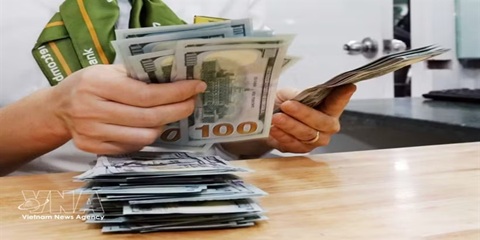
REMITTANCES TO HCM CITY RISE NEARLY 40% IN Q3
Remittances to HCM City reached more than US$2.83 billion in the third quarter of this year, up 39.5 per cent from the previous quarter and 3.6 per cent year-on-year. This was the first quarter showing positive annual growth this year, helping narrow the decline in remittance inflows over the first nine months. According to the State Bank of Vietnam (SBV)’s Regional Branch 2, remittances transferred to HCM City through credit institutions and economic organisations totalled $2.835 billion in Q3, an increase of more than $802 million from the previous quarter.
VIETNAM ECONOMY INVESTMENT
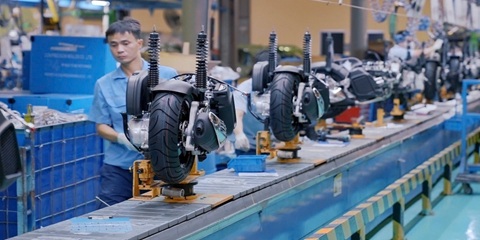
LOCALITIES REPORT BREAKTHROUGH RESULTS IN FDI IN FIRST NINE MONTHS
In Ho Chi Minh City, total registered capital reached $17.2 billion in the first nine months, up 4.2 times from the same period last year. The figure included more than $9.35 billion in newly registered capital and over $4.9 billion in additional capital for existing projects. Foreign investors also registered more than $2.9 billion through capital contributions and share purchases.
TECHNOLOGY
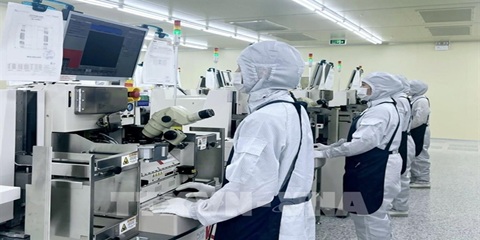
TECH SECTOR GROWTH OPENS UP OPPORTUNITIES FOR VIỆT NAM TO GO GLOBAL
The growth of the electronics, semiconductor and high-tech sectors worldwide is opening up a variety of opportunities for Vietnamese enterprises to integrate more deeply into the global supply chain. However, to become suppliers for these corporations, domestic enterprises must meet rigorous standards regarding quality, technology, productivity and order fulfilment capabilities.
Events Sponsors






















