Want to be in the loop?
subscribe to
our notification
Business News
TECHNOLOGY, INNOVATION DRIVE CHEMICAL INDUSTRY TOWARDS HIGHER-VALUE GROWTH
By 2040, Việt Nam aims to develop greater capabilities in research, design and manufacturing while mastering technologies for selected high-quality products, including organic basic chemicals, specialised coatings and advanced batteries.
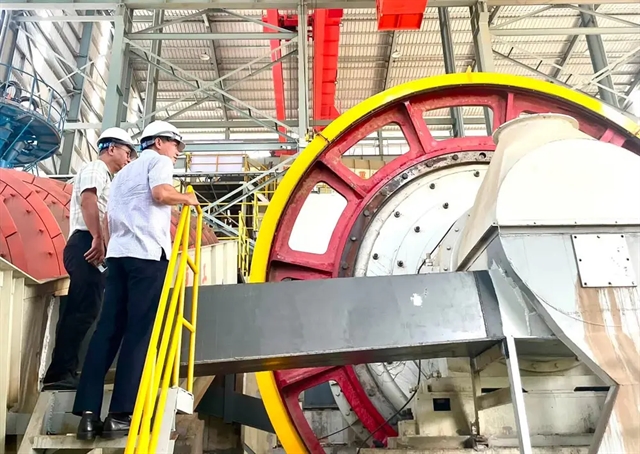
Inside a plant of DAP2 – Vinachem. — Photo vinachem.com.vn
HÀ NỘI — Technological innovation, automation and digital transformation are becoming central to the chemical industry as companies seek to move towards higher-value products, strengthen domestic technological capabilities and pursue greener, more sustainable production.
The shift is being accelerated by Politburo Resolution No. 57-NQ/TW on breakthroughs in science, technology, innovation and national digital transformation, alongside Việt Nam's chemical industry development strategy to 2030 with a vision to 2040.
Under the strategy, the industry is expected to increasingly adopt advanced and environmentally friendly technologies, improve energy efficiency and participate more deeply in global value chains.
By 2040, Việt Nam aims to develop greater capabilities in research, design and manufacturing while mastering technologies for selected high-quality products, including organic basic chemicals, specialised coatings and advanced batteries.
The chemical industry is already among Việt Nam's 10 largest industrial sectors, accounting for about 2-5 per cent of industrial GDP, according to the Vietnam Chemicals Agency under the Ministry of Industry and Trade. Industrial production value has grown by around 10-11 per cent annually, while the sector employs approximately 2.7 million workers.
Labour productivity is about 1.36 times the industrial average, partly reflecting the relatively high level of automation in chemical manufacturing.
The Fourth Industrial Revolution made it necessary to strengthen support for scientific and technological research in the chemical industry, particularly technologies supporting greener and more sustainable production, Phùng Mạnh Ngọc, director general of the Vietnam Chemicals Agency, told congthuong.vn.
Technological applications are already emerging in areas such as next-generation rechargeable batteries, lithium batteries, polymer electrolyte membrane fuel cells and sodium-sulphur batteries for renewable energy applications. In the rubber industry, technological development has also enabled production of synthetic polyisoprene and bio-based isoprene through fermentation processes.
Vietnam National Chemical Group (Vinachem), meanwhile, has identified science and technology, innovation and digital transformation as pillars of its development strategy under Resolution 57.
The group plans to move further into higher-technology and higher-value-added segments, including pharmaceuticals, cosmetics, new materials, chemicals for electronics and semiconductor manufacturing, energy-storage batteries and rare-earth extraction.
It also plans to strengthen its research and development ecosystem while expanding the use of artificial intelligence, big data, enterprise resource planning (ERP) systems and other digital platforms across its operations.
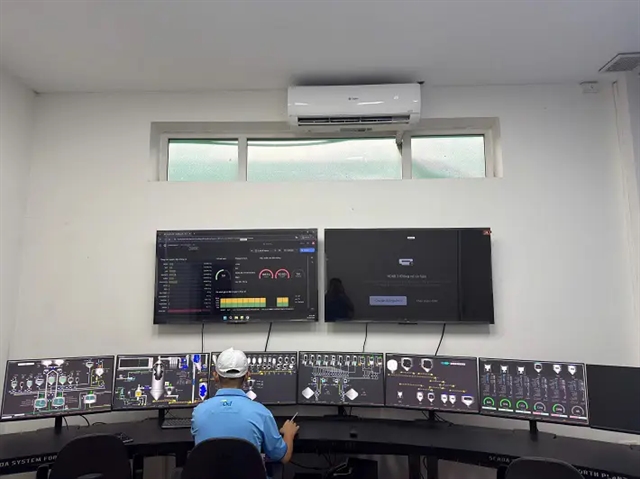
SCADA system for monitoring and control at a detergent powder plant, a member of Vinachem. — Photo vinachem.com.vn
During the 2021-25 period, Vinachem implemented 76 scientific and industrial projects and more than 3,700 initiatives, helping reduce energy consumption and costs, increase productivity, master technical processes and develop new products.
Several subsidiaries have moved towards greater technological self-reliance.
Viet Tri Chemical developed the De-virus disinfectant solution and upgraded its powdered polyaluminium chloride production line, while Southern Basic Chemicals mastered technologies for producing Chloramine B and powdered PAC, replacing imported products and saving tens of billions of đồng annually.
In the rubber segment, Da Nang Rubber and Southern Rubber Industry have invested in technologies for radial and electric-vehicle tyres meeting international quality standards.
Nguyễn Hữu Tú, Vinachem's general director, said technological development would increasingly determine the group's competitiveness.
"The focus for our units is to continue technological innovation, modernisation and production restructuring to expand capacity, closely following Resolution No. 57," Tú said.
Vinachem has already produced high-purity sulphuric acid for businesses, particularly foreign-invested enterprises, he said, adding that innovation should extend from management thinking and operating mechanisms to product research and development.
The group is also considering establishing a Science, Technology and Innovation Research and Development Centre with an estimated investment of VNĐ1.5 trillion (US$57 million) during 2026-30.
The proposed centre would focus on four areas: ultra-high-purity chemicals, pharmaceuticals, new materials, and solutions to technical and technological challenges arising from production and business activities at Vinachem subsidiaries.
Associate Professor Nguyễn Trần Hùng from the Institute of Military Science and Technology also called for greater attention to the chemical industry's dual-use potential, serving both economic development and national defence and security requirements.
He proposed mechanisms through which the State could commission key research programmes, providing conditions for businesses to increase R&D investment and develop chemical technologies and products with higher science and technology content. — BIZHUB/VNS
Source: VNS
Related News

MEMBER CORNER / PROMOTIONS
A CULINARY MASTERPIECE
Don't need a special occasion to treat yourself to a perfect Chinese dining experience. This October, Ngan Dinh Restaurant introduces an exquisite three-dish menu, promising to satisfy diners who appreciate culinary innovation and refined flavors. Enjoy 20% OFF a glass of house red/white wine, or Imported German Veltins Draught Beer/Maisel's Weisse Dunkel when ordering any of the above dishes!

MEMBER CORNER / PROMOTIONS
ONE YEAR OF PRIME MOMENTS — LET’S CELEBRATE!
Olivia’s Prime Saigon is turning one, and we’d love to celebrate this special milestone with you! Order any featured steak size and enjoy all its designated complimentary pasta, side dishes and sauces — with a combined value of up to 80% of your steak price! Thank you for being part of our journey. Here’s to great steaks, wonderful company, and many more prime moments together!
MEMBER CORNER / PROMOTIONS
SENTRYSAFE - PROTECT WHAT MATTERS MOST
From cash, important documents and records to valuable belongings, a quality safe gives you greater peace of mind against unexpected risks. SentrySafe - a trusted safe brand from the USA, suitable for homes, offices and various storage needs. Contact Sen Wai Vietnam for expert advice and to find the right safe for your needs.

MEMBER CORNER / PROMOTIONS
50% DISCOUNT FOR HKBAV MEMBER: EUGENE ONEGIN - EIFMAN BALLET OF ST. PETERSBURG WORLD TOUR 2026
Adapted from the classic novel in verse by acclaimed Russian poet Alexander Pushkin, Eugene Onegin explores timeless themes of love, pride, choices, and irreversible regret. Eifman's distinctive language of psychological ballet is brought to life through Tchaikovsky's music alongside contemporary rock by Alexander Sitkovetsky, creating an extraordinary artistic experience.
MEMBER CORNER / PROMOTIONS
COSMOPARK – ENERGY ADVANTAGES FOR POWER-INTENSIVE INDUSTRIES
As global corporations place increasing emphasis on energy security, renewable energy adoption, and carbon emissions reduction, electricity is no longer viewed merely as a component of technical infrastructure. For high-tech projects, data centers, and large-scale manufacturing facilities, reliable energy infrastructure has become a critical factor in investment location decisions.
VIETNAM ECONOMY INVESTMENT
FOREIGN INVESTORS TO BE WIDENED FOR MARKET ACCESS
Vietnam is moving to widen market access, improve investment incentives, and streamline procedures, with greater support tied to investors’ actual commitments and results, as part of the law on amending and supplementing a number of articles of the Law on Investment. The proposal was mentioned at the sixth session of the National Assembly Standing Committee in Hanoi on September 30, on amending the Law on Investment.
Events Sponsors






















