Want to be in the loop?
subscribe to
our notification
Business News
FOREIGN INVESTORS TO BE WIDENED FOR MARKET ACCESS
Vietnam is moving to widen market access, improve investment incentives, and streamline procedures, with greater support tied to investors’ actual commitments and results, as part of the law on amending and supplementing a number of articles of the Law on Investment.
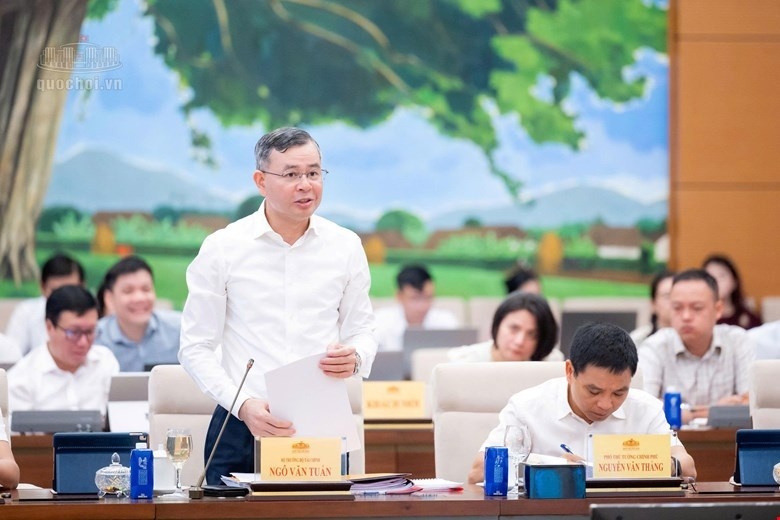
Law on Investment revision aims to create a more open, efficient investment environment. Photo: National Assembly
The proposal was mentioned at the sixth session of the National Assembly Standing Committee in Hanoi on September 30, on amending the Law on Investment.
The proposed amendments seek to address institutional obstructions in investment and create a framework that is more responsive to investors, while ensuring that incentives generate tangible economic and social benefits.
Presenting the government’s proposal, Minister of Finance Ngo Van Tuan said, “The draft focuses on three major areas, namely improving regulations on market access for foreign investors; renewing investment incentives and support policies; and further streamlining investment procedures and strengthening state management of foreign-invested economic activities.”
The draft law adds Clause 3a, Article 8, regarding the loosening of market access conditions for foreign investors according to a suitable roadmap based on a full and comprehensive assessment of impacts, ensuring transparency, uniform application, and non-discrimination among investors.
Besides that, it aims to improve market access for foreign investors, accelerate the process of upgrading the stock market based on substantive reforms, and resolve the pending limitations in the list of industries and trades with restricted market access.
The draft also refines regulations on investment incentives and support policies to innovate the orientation of foreign investment, build superior and competitive incentive mechanisms, and boost the green economy and digital economy.
The draft law adds new investment support methods: for supply chain development; for product manufacturing, product improvement, and innovation; and for initial investment and fixed-asset investment. In addition, it offers support for cooperation and linkages between businesses and higher education institutions, vocational education institutions, and sci-tech organisations.
The proposed approach would gradually shift from offering tax and land cost incentives towards support linked to the effectiveness of projects and their contributions over the project life cycle.
The draft also provides for incentives allowing the government to decide on exceptional support packages for projects that are considered necessary to attract and have significant spillover effects.
The draft combines the revised content relating to regulations supporting the transformation and development of eco-industrial parks to boost the green economy, and regulations on the operating period of projects in eco-industrial parks (allowing the operating period of projects to be extended but not exceeding 70 years).
Furthermore, the draft also adds regulations on localities’ specific mechanisms for attracting investment, amends and supplements regulations on the Investment Support Fund, and adds regulations on investment attraction orientation by geographical area. It also seeks to encourage investment according to regional growth poles, with priority given to high-tech and green investment in key economic areas and to processing, manufacturing and supporting services in surrounding areas.
The government expects that the new legislation will take effect by April 2027.
Source: VIR
Related News
GARMENT / TEXTILE
TEXTILE, GARMENT FIRMS REFORM TO MEET CPTPP ORIGIN RULES
Vietnamese textile and garment manufacturers are aggressively restructuring their supply chains and diversifying material sources to unlock untapped tariff benefits. To capitalise on the Comprehensive and Progressive Agreement for Trans-Pacific Partnership (CPTPP), companies are racing to align with the pact's strict "yarn-forward" rules — a task made difficult by a shortage of raw materials within the trade bloc.

MEMBER CORNER / PROMOTIONS
COSMOPARK ECO INDUSTRIAL ZONE – LONG-TERM ADVANTAGES FOR INDUSTRIAL INVESTORS IN VIETNAM
Spanning 322.3 hectares, with a project operational term extending to 2095 and plans for large-scale power infrastructure, COSMOPARK Eco Industrial Zone offers a strong foundation for manufacturing, high-tech industries, and international supply chain development. As global supply chains continue to evolve, Vietnam is strengthening its position as a strategic destination for international businesses seeking to diversify their manufacturing operations.

INFRASTRUCTURE / CONSTRUCTION / LOGISTIC / PORT
HCM CITY ACCELERATES POWER INFRASTRUCTURE INVESTMENT TO ATTRACT HIGH-TECH CAPITAL
High-tech projects, particularly data centres, are not confined to SHTP but are also expanding into export processing zones and industrial parks across HCM City, driving up electricity demand. Proactively developing power infrastructure, diversifying energy supplies and expanding access to green energy are becoming essential for HCM City to maintain its competitive edge in attracting high-tech foreign direct investment (FDI).
VIETNAM ECONOMY INVESTMENT
VIETNAMESE COMPANIES OPTIMISTIC ON INTERNATIONAL GROWTH
Vietnamese businesses are among the most confident about the outlook for international trade, according to HSBC’s Global Trade Pulse Survey 2026, released on November 16. The survey captures the views of 10,000 senior business leaders across 26 markets on trade, tariffs, supply chains, and technology. Findings show that 94 per cent of Vietnamese businesses expect their international trade to grow over the next two years. Vietnam ranks joint top in the survey with the Philippines, compared with 86 per cent globally.
TECHNOLOGY
ĐÀ NẴNG SEEKS TO BUILD HIGH-TECH AGRICULTURE, INTEGRATED VALUE CHAINS
Đà Nẵng is seeking to transform its agricultural sector from a supplier of raw materials into a technology-driven, market-oriented economy, with investment opportunities spanning concentrated production areas, deep processing, logistics and agricultural product distribution. The city aims to shift from traditional agricultural production towards agricultural economic development, organising value chains and increasing the technological content and added value of products through closer links between production and processing.
TECHNOLOGY
VIỆT NAM'S DIGITAL TECHNOLOGY INDUSTRY REVENUE SURGES 53% TO $254.6B
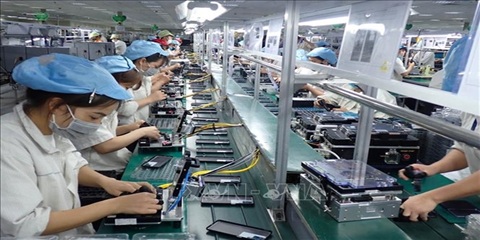
Việt Nam's digital technology industry generated an estimated US$254.6 billion in revenue in the first 10 months of 2026, up 53 per cent from a year earlier, while exports rose 46.2 per cent to $212 billion, the Ministry of Science and Technology said in its latest report. According to the report, hardware and electronics exports reached an estimated $30.681 billion in October, up 108 per cent from the same month last year.
Events Sponsors