Want to be in the loop?
subscribe to
our notification
Business News
VIỆT NAM TARGETS INVESTMENT-GRADE SOVEREIGN CREDIT RATING BY 2030
Việt Nam aims to achieve a rating of at least Baa3 from Moody’s or BBB- from S&P and Fitch by 2030.
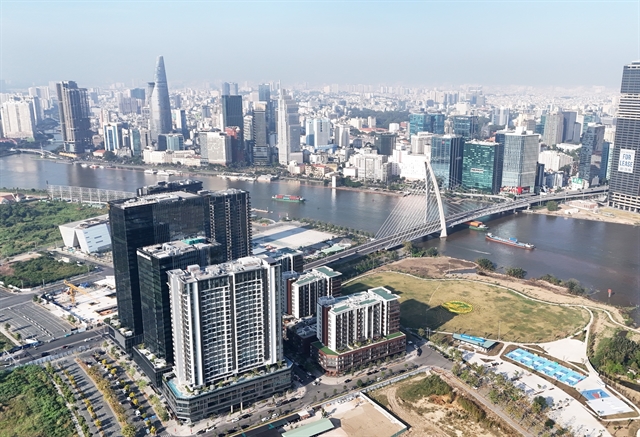
The core area of Việt Nam International Financial Centre in HCM City. Improving the sovereign rating is critical for Việt Nam to enhance the country's international standing, facilitate its access to capital and reduce borrowing costs and sovereign credit risk. — VNA/VNS Photo Hồng Đạt
HÀ NỘI — Việt Nam has revised the plan to improve its sovereign credit rating which sets a target of reaching investment-grade status by 2030 while linking the effort more closely to economic growth, innovation, digital transformation and fiscal sustainability.
Deputy Prime Minister Nguyễn Văn Thắng has signed Decision 1919/QĐ-TTg amending the Government’s 2022 scheme on improving the country’s sovereign credit rating through 2030.
Under the revised plan, Việt Nam aims to achieve a rating of at least Baa3 from Moody’s or BBB- from S&P and Fitch by 2030.
The Government said improving the sovereign rating is critical for Việt Nam to enhance the country's international standing, facilitate its access to capital and reduce borrowing costs and sovereign credit risk.
The revised scheme sets an average annual GDP growth target of at least 10 per cent for 2026-30, with GDP per capita expected to reach about US$8,500 by 2030.
Total social investment is targeted at around 40 per cent of GDP on average during the period, with public investment accounting for 20-22 per cent.
On fiscal policy, the Government aims to keep the average state budget deficit at around 5 per cent of GDP during 2026-30, while public debt would remain below 60 per cent of GDP and government debt below 50 per cent.
The plan calls for a stronger and more sustainable public finance system, broader revenue sources and tighter management of public debt.
The revised scheme also targets stronger resilience of the banking sector. Minimum capital adequacy ratios at commercial banks are expected to move towards Basel III standards and reach 8.625 per cent by 2030 at the latest.
Credit policy will be aligned with macro-economic and monetary-market developments, with lending directed towards production, priority sectors and key growth drivers while risks in potentially vulnerable areas are closely controlled.
The plan also places greater emphasis on improving the financial structure and quality of State-owned enterprises (SOEs) to reduce potential fiscal risks.
SOEs will be encouraged to invest in science and technology, innovation, digital and green transformation, while reforms will focus on corporate governance, restructuring and the management of State capital.
Việt Nam will also develop a system to compile, monitor and analyse its international investment position (IIP), with the data to be made available to sovereign credit-rating agencies when requested.
The revised plan also covers measures to respond proactively to climate change and natural disasters, strengthen resource and environmental management, improve resilience to external risks through market diversification and energy security, and gradually integrate environmental, social and governance (ESG) factors into national governance in line with evolving sovereign credit-rating criteria.
Moody’s in May affirmed Việt Nam’s Ba2 rating but raised its outlook to positive from stable, still below investment-grade status. — VNS
Source: VNS
Việt Nam aims to achieve a rating of at least Baa3 from Moody’s or BBB- from S&P and Fitch by 2030.
The core area of Việt Nam International Financial Centre in HCM City. Improving the sovereign rating is critical for Việt Nam to enhance the country's international standing, facilitate its access to capital and reduce borrowing costs and sovereign credit risk. — VNA/VNS Photo Hồng Đạt
HÀ NỘI — Việt Nam has revised the plan to improve its sovereign credit rating which sets a target of reaching investment-grade status by 2030 while linking the effort more closely to economic growth, innovation, digital transformation and fiscal sustainability.
Deputy Prime Minister Nguyễn Văn Thắng has signed Decision 1919/QĐ-TTg amending the Government’s 2022 scheme on improving the country’s sovereign credit rating through 2030.
Under the revised plan, Việt Nam aims to achieve a rating of at least Baa3 from Moody’s or BBB- from S&P and Fitch by 2030.
The Government said improving the sovereign rating is critical for Việt Nam to enhance the country's international standing, facilitate its access to capital and reduce borrowing costs and sovereign credit risk.
The revised scheme sets an average annual GDP growth target of at least 10 per cent for 2026-30, with GDP per capita expected to reach about US$8,500 by 2030.
Total social investment is targeted at around 40 per cent of GDP on average during the period, with public investment accounting for 20-22 per cent.
On fiscal policy, the Government aims to keep the average state budget deficit at around 5 per cent of GDP during 2026-30, while public debt would remain below 60 per cent of GDP and government debt below 50 per cent.
The plan calls for a stronger and more sustainable public finance system, broader revenue sources and tighter management of public debt.
The revised scheme also targets stronger resilience of the banking sector. Minimum capital adequacy ratios at commercial banks are expected to move towards Basel III standards and reach 8.625 per cent by 2030 at the latest.
Credit policy will be aligned with macro-economic and monetary-market developments, with lending directed towards production, priority sectors and key growth drivers while risks in potentially vulnerable areas are closely controlled.
The plan also places greater emphasis on improving the financial structure and quality of State-owned enterprises (SOEs) to reduce potential fiscal risks.
SOEs will be encouraged to invest in science and technology, innovation, digital and green transformation, while reforms will focus on corporate governance, restructuring and the management of State capital.
Việt Nam will also develop a system to compile, monitor and analyse its international investment position (IIP), with the data to be made available to sovereign credit-rating agencies when requested.
The revised plan also covers measures to respond proactively to climate change and natural disasters, strengthen resource and environmental management, improve resilience to external risks through market diversification and energy security, and gradually integrate environmental, social and governance (ESG) factors into national governance in line with evolving sovereign credit-rating criteria.
Moody’s in May affirmed Việt Nam’s Ba2 rating but raised its outlook to positive from stable, still below investment-grade status. — VNS
Source: VNS
Related News

MEMBER CORNER / PROMOTIONS
THE REVERIE SAIGON AND ZS HOSPITALITY UNVEIL LYS: A SOFT FRENCH IDENTITY BLOOMS IN HO CHI MINH CITY
On 15th October, an expressive new story unfolds at The Reverie Saigon as Hong Kong-based ZS Hospitality marks its international debut with Lys. Rooted in a gentle, contemporary French culinary identity, Lys combines quiet refinement, luminous local freshness and poetic personal connection bridging Italy and Vietnam. The opening is a pivotal moment, contributing to the collective ambition of establishing Ho Chi Minh City as one of Asia’s premier gastronomic destinations.

VIETNAM ECONOMY INVESTMENT
VIỆT NAM’S PEPPER EXPORTS TOP $1.3 BILLION, MAINTAIN GROWTH MOMENTUM
Việt Nam exported 202,414 tonnes of pepper from the beginning of this year to September 15, earning US$1.32 billion in revenue, up 15.2 per cent in volume and 10.3 per cent in value year-on-year. The outlook for the pepper industry remains positive, but greater efforts are needed to standardise growing areas, improve product value and strengthen competitiveness.

VIETNAM ECONOMY INVESTMENT
LOW-ALTITUDE ECONOMY COULD GROW TO $500 MILLION BY 2035
Việt Nam's low-altitude economy is at an early stage of development and is forecast to grow by around 13 per cent annually by 2035. Việt Nam is seeking to develop a broader low-altitude economy ecosystem, moving beyond drone manufacturing to applications, data services and supporting infrastructure, as unmanned aerial vehicles (UAVs) create new opportunities in agriculture, logistics, energy, transport and other sectors.

MEMBER CORNER / PROMOTIONS
COSMOPARK ECO INDUSTRIAL ZONE – A STRATEGIC DESTINATION FOR HIGH-TECH AND SUSTAINABLE INVESTMENT IN SOUTHERN VIETNAM
As international manufacturers continue to diversify their supply chains and expand their presence in Asia, Vietnam is becoming increasingly relevant to companies seeking a long-term manufacturing and investment base. Beyond land availability and operating costs, investors are placing greater emphasis on tax efficiency, investment tenure, regional connectivity, infrastructure readiness, energy security, digital capability, sustainability and future expansion potential.

VIETNAM ECONOMY INVESTMENT
FIRMS EXPECT STRONGER Q4 ACTIVITY DESPITE COST, FINANCING PRESSURES
More than VNĐ5 quadrillion is registered to be poured into the economy in the first nine months of this year, up 6.1 per cent. Enterprises are expecting stronger business and production in the last quarter of this year, with new orders, output and labour demand set to improve, although high input costs and cash-flow constraints remain major concerns, according to a survey by the National Statistics Office (NSO) released late last week.
INFRASTRUCTURE / CONSTRUCTION / LOGISTIC / PORT
VIỆT NAM RETURNS TO TRADE SURPLUS IN SEPTEMBER BUT NINE-MONTH DEFICIT PERSISTS
Việt Nam returned to a goods trade surplus in September after nine consecutive months of deficit, but remained in a US$19.42 billion deficit for the first nine months of this year, the National Statistics Office (NSO) said in its socio-economic report on October 3. The country posted a trade surplus of $1.27 billion in September, with total trade of goods reaching $117.69 billion, up 7.3 per cent from August and 42.4 per cent from the same month last year.
Events Sponsors






















