Want to be in the loop?
subscribe to
our notification
Business News
BÀ RỊA-VŨNG TÀU TO DEVELOP LOGISTICS SECTOR
The southern province of Bà Rịa-Vũng Tàu has set a goal to develop logistics into a major service sector with a focus on seaport development. The Vũng Tàu Shipbuilding and Oil Services Joint-Stock Company will invest in the new logistics centre and container port.
Located in Phú Mỹ Commune, the Cái Mép Hạ logistics centre will have a total area of 1,200ha, with an estimated investment of VNĐ40 trillion (US$1.71 billion).
The Cái Mép Hạ container port will be developed on an area of 86.6ha with total investment of VNĐ10 trillion.
As a sea-based economy, the province wants to increase the current capacity of its seaports, improve international transshipment services, and achieve throughput capacity of more than 100 million tonnes in coming years.
The province will also continue to upgrade roads to improve connectivity and enhance goods and service circulation, local authorities have said.
By 2020, the province is expected to have 18 port operators and 219 logistics companies, contributing around VNĐ94 trillion to GDP and 47.1 per cent to the service sector.
Seaports in Vũng Tàu City by 2030 will be capable of handling 140 to 275 million tonnes of goods, according to authorities.
Under a master plan for the logistics industry, the province will create favourable conditions for seaport and logistics service providers to meet regional standards.
The master plan calls for businesses in service and market development sectors to join the supply chains of key products like oil and gas, energy, industrial equipment, supporting industries, and building materials, among others.
International gateway
Bà Rịa-Vũng Tàu Province is a major gateway for international shipments in Southeast Asia, especially because of the Cái Mép-Thị Vải port complex, one of the key ports in the region.
The port system is one of only 19 in the world capable of handling 190,000 deadweight tonnage (DWT) vessels.
Container ships from the port complex are capable of transporting goods to Europe and North America.
In addition, the province is only 70km from HCM City’s Cát Lái port.
To improve connectivity, efficiency and port capacity, the province also plans to increase investment in terminals and road infrastructure.
Infrastructure investments in recent years have increased connectivity within the province and with neighbouring economic hubs like HCM City and Đồng Nai Province.
By the end of last year, the province had 315 foreign direct investment (FDI) projects with total registered capital of $27 billion, and 450 domestic projects with total registered capital of more than $11 billion.
Last year, FDI flow reached $1.5 billion in 29 new and seven existing projects.
In the first seven months, the province emerged as the third largest destination of foreign investment, just behind Hà Nội and HCM City.
Total registered capital reached $2.15 billion, accounting for 9.4 percent of total FDI investment in Việt Nam. The province aims to attract $4 billion FDI by 2020.
To meet its target, the provincial government plans on more investor-friendly reforms in many areas.
In addition, it also plans to increase investment in distribution networks, technology transfer, skill development, and funding for small- and medium-sized enterprises.
The four key sectors in the province include seaport logistics, high-tech industrial production, tourism, and high-tech agriculture.
Other areas of opportunities for investors include food processing, shipbuilding, traffic infrastructure, and metallurgy-mechanical engineering.
Located in the southern key economic zone, which contributes nearly 8 per cent to the national GDP and 10 per cent to State revenues, Bà Rịa-Vũng Tàu is one of the country’s major investment destinations.
In the last decade, rapid economic growth has resulted in the province having the highest GDP per capita and the third highest living standard in Việt Nam.
Source: VNS
Related News
MEMBER CORNER / PROMOTIONS
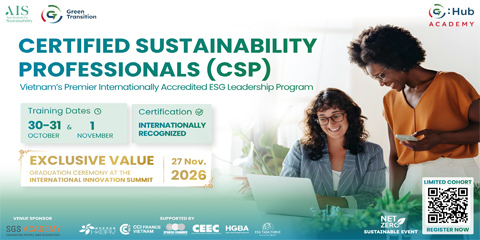
HCMC | CERTIFIED SUSTAINABILITY PROFESSIONAL (CSP) TRAINING | REGISTRATION OPEN
As sustainability becomes deeply embedded in corporate strategy and supply-chain operations across Vietnam, Hong Kong Business Association Vietnam is pleased to endorse the upcoming Certified Sustainability Professional (CSP) training program by the Asia Institute for Sustainability (AIS) - a premier internationally recognized ESG credential in Vietnam.
VIETNAM ECONOMY INVESTMENT
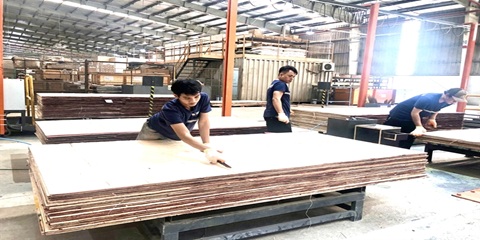
HCM CITY SAYS HOW IT PLANS TO ACHIEVE 10-11% ANNUAL EXPORT GROWTH FOR REST OF DECADE
The southern economic hub aims to strengthen its role as the country’s largest import-export centre while developing into a regional transhipment centre in Southeast Asia, supported by green and digital transformation and a circular economy. HCM City has outlined measures to expand production capacity, cut logistics costs, diversify export markets, and help businesses meet increasingly stringent international standards as it targets average annual export growth of 10-11 per cent through 2030.
VIETNAM ECONOMY INVESTMENT
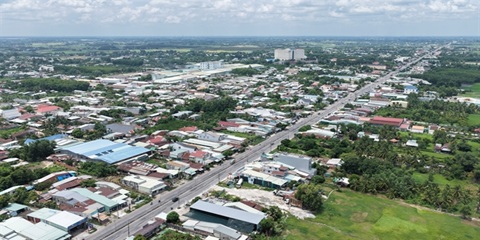
HCM CITY LEADS ECONOMIC RESTRUCTURING IN SOUTHEAST REGION
According to Associate Professor, Dr Vũ Tuấn Hưng, director of the Institute of Social Sciences of the Southern Region, the Southeast is a strategically important socio-economic space in Việt Nam’s development given its advantages in location, industry, trade, services, logistics, science and technology, urbanisation and human resources.
TECHNOLOGY
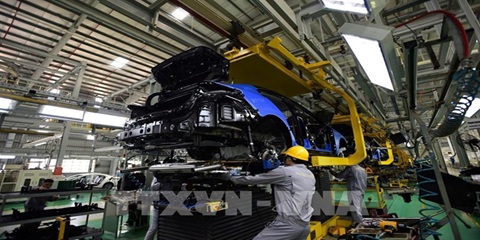
DIGITAL TRANSFORMATION TURNED INTO PRACTICAL TOOLS FOR PEOPLE, BUSINESSES
Việt Nam is moving its digital transformation agenda beyond policy frameworks and individual technology platforms towards practical applications that address everyday needs, as authorities seek measurable outcomes from science, technology and innovation. Under Politburo Resolution No. 57-NQ/TW issued on December 22, 2024, the implementation is increasingly shifting from simply completing assigned tasks towards developing concrete products and services for citizens and businesses.
TECHNOLOGY
APPLYING TECHNOLOGY FOR ECONOMIC TRANSFORMATION
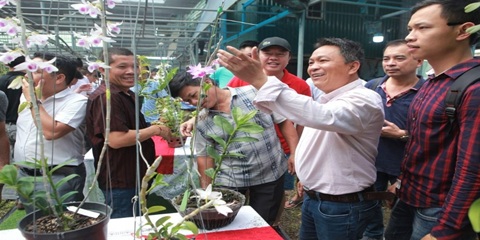
Having completed its new rural development program, Hanoi is shifting its focus toward improving development quality and building smart, sustainable rural areas. The transformation of Dong La orchid-growing village in An Khanh, a western commune of Hanoi, shows how digital technology is becoming a driver of production, market expansion, and higher incomes for local residents.
MEMBER CORNER / PROMOTIONS
VIGLACERA HONORED AS THE "LEADING GREEN INDUSTRIAL REAL ESTATE DEVELOPER 2026"
Organized by the Vietnam Investment Review, this prestigious awards program recognizes industry pioneers advancing eco-industrial parks, clean energy transition, and rigorous ESG standards. Outperforming competitors through a rigorous evaluation, Viglacera Corporation – JSC proudly ranked among the Top 5 highest-positioned enterprises in the Leading Green Industrial Real Estate Developers 2026 category, reinforcing its premier position in Vietnam’s industrial real estate sector.
Events Sponsors






















