Want to be in the loop?
subscribe to
our notification
Business News
VIETNAM APPROVES ROADMAP FOR INT’L FINANCIAL CENTERS THROUGH 2035
Vietnam has approved a development plan through 2035 for its international financial centers, with the one in Ho Chi Minh City positioned as a comprehensive global financial hub.
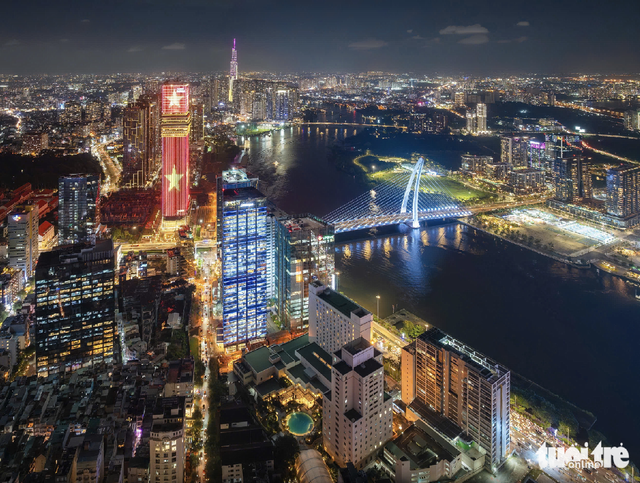
Ho Chi Minh City has reserved land for the Vietnam International Financial Center. Photo: Van Trung
Deputy Prime Minister Nguyen Van Thang, chairman of the governing board of the Vietnam International Financial Center, has signed the decision approving the development plan.
As per the plan, the Vietnam International Financial Center in Ho Chi Minh City will focus on three strategic pillars, including capital market development, asset management, and commodity markets.
The Vietnam International Financial Center in Ho Chi Minh City will provide traditional and advanced financial services, while leveraging synergies among capital raising, investment, payments, and the issuance and trading of financial products.
It will focus on asset management, fund management, green finance, and digital finance.
Besides, it will develop commodity trading and derivatives linked to international trade and logistics.
Meanwhile, the Vietnam International Financial Center in the central city of Da Nang will focus on innovation and financial technology.
The governing board will establish a competitive legal framework recognized internationally, including mechanisms for dispute resolution and enforcement of rulings.
The plan prioritizes attracting leading financial institutions, intermediaries, and major investment funds from the region and the world.
Infrastructure development will cover finance, digital systems, data, transportation, and urban facilities to ensure seamless domestic and international connectivity.
For the 2026-30 period, the government aims to complete a comprehensive legal framework, governance model and supervisory mechanism aligned with international standards, while launching pilot operations for priority financial products and services.
Core financial, digital, legal and social infrastructure supporting the international financial centers will also be completed during this phase.
Vietnam plans to attract major international financial institutions, investment funds, global banks, professional market participants, and highly skilled financial professionals to pave the way for sustainable growth and deeper global integration.
During the 2031-35 period, the government intends to expand and complete a modern financial ecosystem covering capital markets, green finance, digital finance and fintech, while improving market depth, diversity, and connectivity.
By 2035, Vietnam aims for its international financial centers to become key gateways for capital flows with a prominent position in the Asia-Pacific and global financial networks.
The plan targets ranking among the world's top 75 financial hubs, the top 25 in the Asia-Pacific region and the top three within ASEAN under the Global Financial Centres Index or equivalent benchmarks.
Source: Tuổi Trẻ News
Related News
MEMBER CORNER / PROMOTIONS
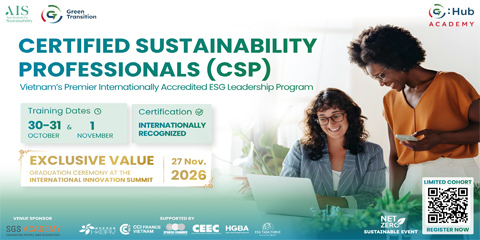
HCMC | CERTIFIED SUSTAINABILITY PROFESSIONAL (CSP) TRAINING | REGISTRATION OPEN
As sustainability becomes deeply embedded in corporate strategy and supply-chain operations across Vietnam, Hong Kong Business Association Vietnam is pleased to endorse the upcoming Certified Sustainability Professional (CSP) training program by the Asia Institute for Sustainability (AIS) - a premier internationally recognized ESG credential in Vietnam.
VIETNAM ECONOMY INVESTMENT
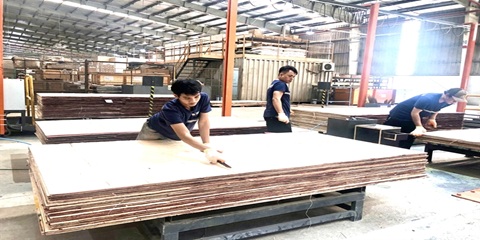
HCM CITY SAYS HOW IT PLANS TO ACHIEVE 10-11% ANNUAL EXPORT GROWTH FOR REST OF DECADE
The southern economic hub aims to strengthen its role as the country’s largest import-export centre while developing into a regional transhipment centre in Southeast Asia, supported by green and digital transformation and a circular economy. HCM City has outlined measures to expand production capacity, cut logistics costs, diversify export markets, and help businesses meet increasingly stringent international standards as it targets average annual export growth of 10-11 per cent through 2030.
VIETNAM ECONOMY INVESTMENT
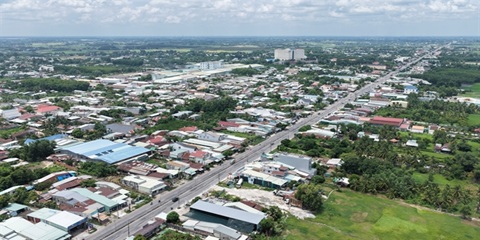
HCM CITY LEADS ECONOMIC RESTRUCTURING IN SOUTHEAST REGION
According to Associate Professor, Dr Vũ Tuấn Hưng, director of the Institute of Social Sciences of the Southern Region, the Southeast is a strategically important socio-economic space in Việt Nam’s development given its advantages in location, industry, trade, services, logistics, science and technology, urbanisation and human resources.
TECHNOLOGY
DIGITAL TRANSFORMATION TURNED INTO PRACTICAL TOOLS FOR PEOPLE, BUSINESSES
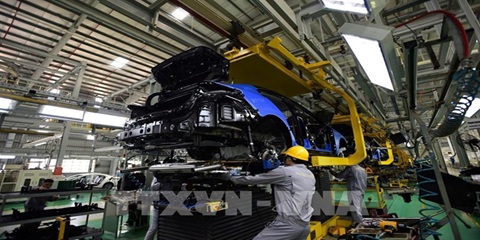
Việt Nam is moving its digital transformation agenda beyond policy frameworks and individual technology platforms towards practical applications that address everyday needs, as authorities seek measurable outcomes from science, technology and innovation. Under Politburo Resolution No. 57-NQ/TW issued on December 22, 2024, the implementation is increasingly shifting from simply completing assigned tasks towards developing concrete products and services for citizens and businesses.
TECHNOLOGY
APPLYING TECHNOLOGY FOR ECONOMIC TRANSFORMATION
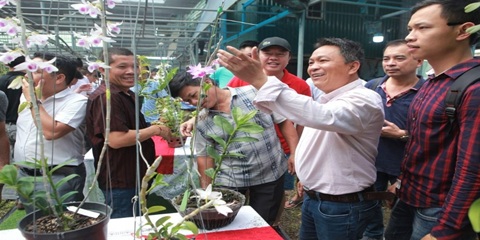
Having completed its new rural development program, Hanoi is shifting its focus toward improving development quality and building smart, sustainable rural areas. The transformation of Dong La orchid-growing village in An Khanh, a western commune of Hanoi, shows how digital technology is becoming a driver of production, market expansion, and higher incomes for local residents.
MEMBER CORNER / PROMOTIONS
VIGLACERA HONORED AS THE "LEADING GREEN INDUSTRIAL REAL ESTATE DEVELOPER 2026"
Organized by the Vietnam Investment Review, this prestigious awards program recognizes industry pioneers advancing eco-industrial parks, clean energy transition, and rigorous ESG standards. Outperforming competitors through a rigorous evaluation, Viglacera Corporation – JSC proudly ranked among the Top 5 highest-positioned enterprises in the Leading Green Industrial Real Estate Developers 2026 category, reinforcing its premier position in Vietnam’s industrial real estate sector.
Events Sponsors






















