Want to be in the loop?
subscribe to
our notification
Business News
BALANCING GROWTH IN IPS AMID SURGING FDI
As Vietnam continues its path toward integration and modernization, industrial parks (IPs) and economic zones (EZs) are playing a pivotal role in driving economic growth, attracting foreign direct investment (FDI), and generating large-scale employment.
Formed through a cooperation model between Vietnam and Singapore, VSIP now operates 20 IPs in Vietnam, covering more than 14,000 ha. It has attracted over 900 FDI projects from 30 countries and territories, generating around 300,000 jobs.
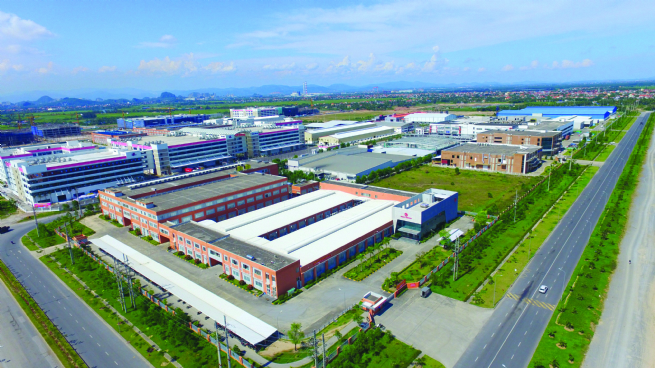
After over 30 years in Vietnam, Amata has established a strong reputation. With 3,000 ha of industrial, commercial, and service land, it has drawn over 220 multinational corporations with total investment exceeding US$6.7 billion, creating more than 60,000 jobs.
Competitive edge of Vietnam’s IPs
One of the most significant advantages propelling Vietnam’s IPs and EZs in the race to attract global investment is their strategic geographical location. Deep C sits adjacent to the Lach Huyen deep-water port and connects directly to the Hanoi–Hai Phong Expressway. VSIP projects in Binh Duong, now integrated into the administrative boundaries of Ho Chi Minh City, have become a key transit hub in the Southern supply chain. Meanwhile, Amata in Dong Nai enjoys seamless access to the Cai Mep–Thi Vai International Port, one of the region’s most critical export gateways.
In the North, Texhong Hai Ha leverages its proximity to the Mong Cai International Border Gate, while Nam Son – Hap Linh and Yen Phong benefit from their close distance to Noi Bai International Airport. Quang Yen EZ is strategically located along the Quang Ninh–Hai Phong–Hanoi economic corridor, and Van Don EZ stands out with a comprehensive infrastructure complex including an international airport and the Van Don–Mong Cai expressway, opening up multidimensional logistics connectivity.
Beyond location, Vietnam’s IPs and EZs are also advancing through increasingly modern and synchronized technical infrastructure. Deep C features a rare liquid cargo jetty in Northern Vietnam capable of handling 20,000 DWT vessels. VSIP incorporates an integrated model of industry, urban living, and services, creating a livable and efficient environment for professionals and high-skilled workers. Amata Dong Nai has invested in state-of-the-art wastewater treatment systems that meet stringent environmental standards.
Infrastructure aside, investment incentives and institutional reforms are key drivers enhancing the appeal of Vietnam’s IPs and EZs. Those located in key economic regions, such as Deep C and Van Don, offer corporate income tax exemptions for the first two years and a 50% reduction over the following four years. Notably, effective from January 15, 2025, the revised Law amending four major laws (Planning, Investment, PPP, and Bidding) introduces a "special investment mechanism" that can shorten procedures by up to 260 days, a major leap in improving the investment climate.
Another notable strength of Vietnam’s IPs and EZs is their capacity to foster diverse and self-sustaining industrial ecosystems. VSIP Trang Due has attracted over 50 supporting firms for LG, while Yen Phong has become a leading electronics manufacturing hub anchored by Samsung. Amata and Texhong Hai Ha are positioning themselves as high-tech centers, catering to streamlined, high-standard production needs.
Strategic shift needed to sustain momentum
One of the most pressing bottlenecks lies in the quality of human resources. FDI enterprises, especially in high-tech sectors such as semiconductors and artificial intelligence, frequently report a mismatch between recruitment needs and the training quality provided by educational institutions. The connection between academia and industry remains weak, resulting in an oversupply of low-skilled labor and a shortage of technically trained workers.
Rapid expansion has placed significant strain on infrastructure in many IPs, particularly in the Mekong Delta and North Central regions. Frequent power shortages, traffic congestion on key transport routes, and delays in planning approvals have all impacted project timelines and investor confidence.
Environmental infrastructure remains another critical shortfall. Statistics indicate that approximately 15% of IPs in Vietnam still lack centralized wastewater treatment systems, a concerning figure given the global shift toward sustainable development standards.
In the increasingly competitive race for global investment, Vietnam is under mounting pressure from countries like Indonesia and India, both of which are rapidly improving their incentive policies and ramping up infrastructure and workforce investments in high-tech sectors. Meanwhile, domestic linkages between Vietnamese firms and FDI enterprises remain weak.
To maintain investor appeal and elevate the stature of its IPs and EZs, Vietnam must implement a broad array of strategic solutions. First and foremost, a new model of collaboration should be built among IPs, businesses, and educational institutions to align training with market demands, especially in digital and core technology fields. Infrastructure investment must be holistic, encompassing power supply, transportation, and waste treatment, while also prioritizing renewable energy and circular economy practices.
Source: VCCI
Related News
INFRASTRUCTURE / CONSTRUCTION / LOGISTIC / PORT
VIỆT NAM-CAMBODIA TRADE GATHERS PACE TOWARDS $20 BILLION TARGET
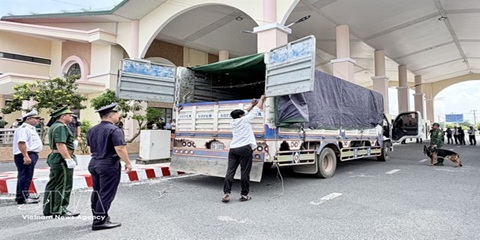
Trade between Việt Nam and Cambodia continues to grow, remaining a bright spot and a key pillar of bilateral cooperation as the two countries aim to raise two-way trade to US$20 billion in the coming years. After setting a record of more than $11.3 billion last year, bilateral trade reached about $8.7 billion in the first eight months of this year, up 8.3 per cent year on year.
TECHNOLOGY
AI BEGINNING TO RESHAPE RECRUITMENT CRITERIA
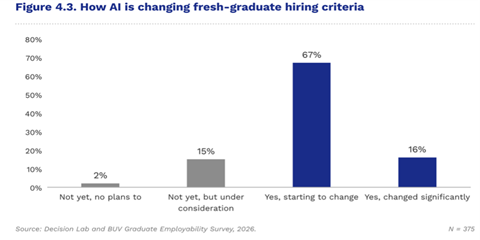
Digital literacy is the only capability area in which fresh graduates meet employers’ expectations, according to a new report. Yet, it is also the standard rising fastest, as businesses increasingly expect new hires to use AI effectively in the workplace. Some 83 per cent of employers say AI has changed, or is beginning to change, their hiring criteria, while 94 per cent report higher expectations for digital and AI capabilities than they had two to three years ago.
INFRASTRUCTURE / CONSTRUCTION / LOGISTIC / PORT
ĐÀ NẴNG GREEN-LIGHTS US$105 MILLION THAI DEVELOPMENT DEAL
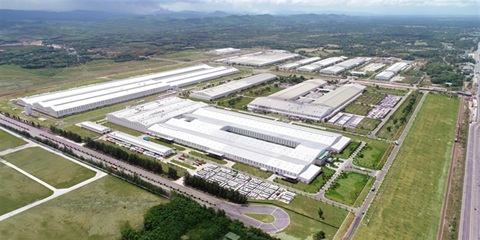
The central city has approved an investment proposal by Thailand’s WHA Group to develop infrastructure for the 400ha WHA Đà Nẵng Industrial Park project on two communes of Thăng Bình and Đồng Dương, with an investment of more than VNĐ2.7 trillion (US$105 million). The city said it approved WHA Industrial Development International's status as an investor in the project, which is expected to take place between 2027 and 2034.
VIETNAM ECONOMY INVESTMENT
MOBILE PHONE EXPORTS RISE 20% TO $51.8 BILLION IN FIRST NINE MONTHS
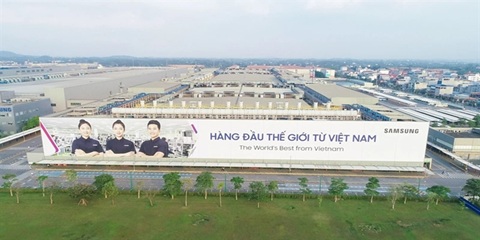
Exports of mobile phones and components rose 20 per cent year-on-year to nearly US$51.8 billion in the first nine months of 2026, with China, the US and Republic of Korea accounting for more than half of the total. Shipments to the three markets reached a combined $26.18 billion, or 50.6 per cent of total exports of the product group during the period, according to data from the Vietnam Department of Customs under the Ministry of Finance.
VIETNAM ECONOMY INVESTMENT
FRUIT AND VEGETABLE EXPORTS POISED TO HIT $10 BILLION IN 2026
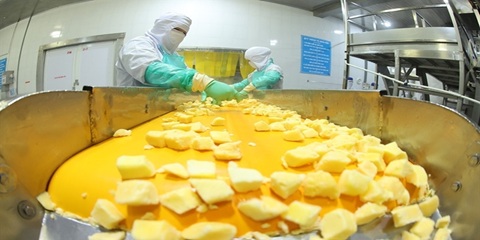
Fruit and vegetable exports are on track to reach nearly US$10 billion in 2026, after rising 19.9 per cent year on year to nearly US$7.4 billion in the first nine months, driven by strong seasonal demand and abundant tropical fruit supplies. The Ministry of Agriculture and Environment said the growth reflected stronger international demand for fresh produce and processed agricultural products.
GARMENT / TEXTILE
TEXTILE EXPORTS FACE DUAL CHALLENGES OF SUSTAINING ORDERS AND BOOSTING EFFICIENCY AMID GROWING COMPETITION
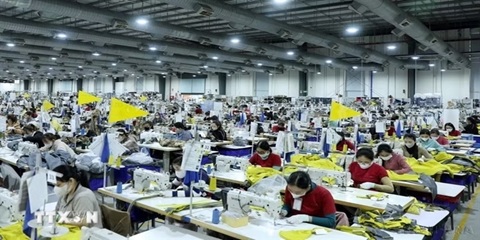
Data shows that the textile and garment sector maintained its growth momentum in the first nine months of this year. The industry's total export turnover reached an estimated US$35.721 billion in the first nine months of this year, up 3.3 per cent year-on-year. Despite posting encouraging export figures, Vietnamese textile and garment enterprises continue to navigate unpredictable market variables.
Events Sponsors






















