Want to be in the loop?
subscribe to
our notification
Business News
BANKING SECTOR KICK-STARTS ACTIONS TO SUPPORT BUSINESSES
SBV Governor Le Minh Hung made the statement as part of Decision No 1355/QD-NHNN, dated Tuesday, while issuing a directive to kick-start an action plan to support the domestic business environment and national competitiveness with a vision towards 2020.
The decision said banking services must be improved in terms of availability and transparency, so that enterprises and individuals from every economic sector have equal access to bank loans.
Procedures must be simplified and costs must be cut for transactions between credit institutions and their customers, it said.
To enhance national credit ratings, Hung said the SBV would operate monetary policies flexibly in tight conjunction with fiscal and other macro-economic policies.
This will help control inflation, stabilise the economy and ensure the operational security of credit institutions, besides supporting national foreign reserves and facilitating production and business activities.
The central bank will also closely monitor developments in the gold and foreign exchange markets and intensify co-ordination with the relevant agencies to guarantee financial stability.
For improved availability of banking services, Hung said the banking sector would continue to complete the legal framework for payment activities, upgrade the infrastructure and technology and enhance the efficiency of inter-bank payment networks.
Banking authorities will create regulations for commercial banks to provide derivatives, reducing the risk for enterprises using the banks' products.
They will encourage more co-operation with international financial organisations to help low-income individuals and small and medium-sized enterprises (SMEs) acquire loans more easily.
Local credit institutions must strengthen their financial capacity and renew their management methods to meet Basel II, a set of international banking regulations set forth by the Basel Committee on Banking Supervision.
Banking authorities are expected to promptly design a plan for the continuing re-organisation of credit institutions between now and 2020 to create a future banking system with multiple functions, secure operations and sustained efficiency.
They were also urged to build schemes to develop a system of credit funds and complete a legal framework for the development of micro-finance institutions.
They must work to gradually form a market for debt trading, helping maintain national bad debt ratios at below 3 per cent of the overall outstanding loans.
Hung asked credit institutions to continue to extend loans in prioritised areas, including agriculture and rural development, exports, support industries and SMEs, as well as start-ups and hi-tech businesses.
Programmes connecting banks and businesses and measures supporting struggling firms are to be promoted, he said.
Source: VIR
Related News
VIETNAM ECONOMY INVESTMENT
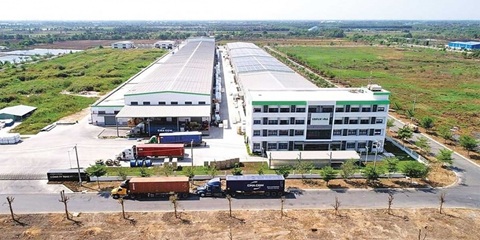
FOREIGN INVESTORS SEEKING A SYNCHRONISED MANUFACTURING ECOSYSTEM
Instead of focusing only on land costs and incentives as usual, foreign investors are seeking a synchronised manufacturing ecosystem, from stable power supply and logistics to shared infrastructure and the convenience of completing residence procedures for experts to serve their long-term investment in the country.
INFRASTRUCTURE / CONSTRUCTION / LOGISTIC / PORT
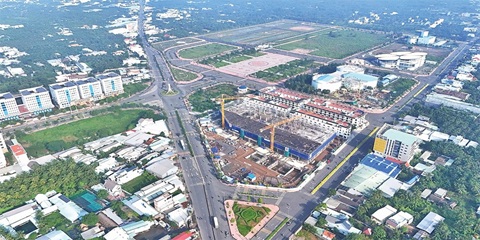
DONG THAP PROVINCE STEPS UP INDUSTRIAL EXPANSION AND INFRASTRUCTURE CONNECTIVITY
Accelerating public investment, strengthening inter-regional connectivity, and expanding industrial land are helping Dong Thap efficiently bolster competitiveness and drive economic growth. Following the 2025 merger of the former Dong Thap and Tien Giang provinces, the expanded Dong Thap province in the Mekong Delta faces mounting pressure to accelerate infrastructure development and strengthen connectivity among local economic zones, urban areas, industrial parks (IPs), and production centres.
PROPERTY / INDUSTRIAL ZONE
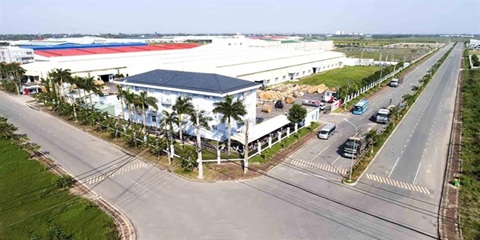
HCM CITY ATTRACTS US$5.7 BILLION INTO EXPORT PROCESSING AND INDUSTRIAL ZONES
HCM City attracted US$5.7 billion in domestic and foreign investment into its export processing and industrial zones during the first nine months of 2026. The figure exceeded the city's full-year target by 31 per cent, highlighting strong momentum in high-quality industrial investment under Resolution No.10-NQ/TW. Total investment reached 131 per cent of the 2026 target of $4.25 billion and represented a 29 per cent increase compared with the same period in 2025, according to the city's Export Processing and Industrial Zones Authority (HEPZA).

BANKING / FINANCE / INSURANCE / TAX
REMITTANCES TO HCM CITY RISE NEARLY 40% IN Q3
Remittances to HCM City reached more than US$2.83 billion in the third quarter of this year, up 39.5 per cent from the previous quarter and 3.6 per cent year-on-year. This was the first quarter showing positive annual growth this year, helping narrow the decline in remittance inflows over the first nine months. According to the State Bank of Vietnam (SBV)’s Regional Branch 2, remittances transferred to HCM City through credit institutions and economic organisations totalled $2.835 billion in Q3, an increase of more than $802 million from the previous quarter.
VIETNAM ECONOMY INVESTMENT
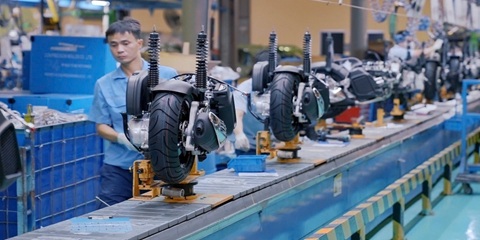
LOCALITIES REPORT BREAKTHROUGH RESULTS IN FDI IN FIRST NINE MONTHS
In Ho Chi Minh City, total registered capital reached $17.2 billion in the first nine months, up 4.2 times from the same period last year. The figure included more than $9.35 billion in newly registered capital and over $4.9 billion in additional capital for existing projects. Foreign investors also registered more than $2.9 billion through capital contributions and share purchases.

TECHNOLOGY
TECH SECTOR GROWTH OPENS UP OPPORTUNITIES FOR VIỆT NAM TO GO GLOBAL
The growth of the electronics, semiconductor and high-tech sectors worldwide is opening up a variety of opportunities for Vietnamese enterprises to integrate more deeply into the global supply chain. However, to become suppliers for these corporations, domestic enterprises must meet rigorous standards regarding quality, technology, productivity and order fulfilment capabilities.
Events Sponsors






















