Want to be in the loop?
subscribe to
our notification
Business News
BANKING INDUSTRY PROMOTES DIGITAL TRANSFORMATION FOR SMART DIGITAL ECOSYSTEM
Many credit institutions in Việt Nam have achieved a digital transaction rate of more than 95 per cent. Nearly 87 per cent of Vietnamese adults have bank accounts.
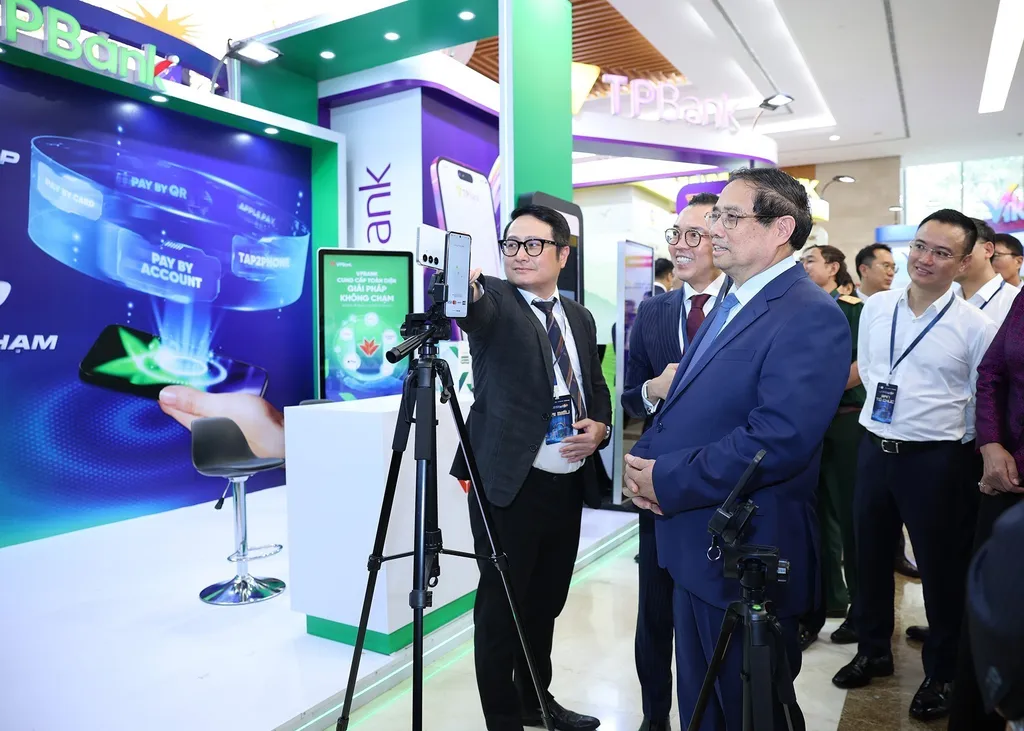
Prime Minister Phạm Minh Chính visits a booth that displays digital banking products and services at the event. — VNA/VNS Photo
HÀ NỘI — The digital transformation of the banking industry must be further promoted to better the connection between commercial banks with people, enterprises and the State, Prime Minister Phạm Minh Chính said at a banking event on Thursday.
Addressing the ‘Digital Transformation of the Banking Industry in 2025’ event with the theme ‘Smart Digital Ecosystem in the New Era’ held in Hà Nội by the State Bank of Vietnam (SBV), the PM Chính, who is also head of the Government's Steering Committee on Science and Technology, Innovation and Digital Transformation, said the digital transformation of the banking industry has made progress. It has so far gained certain achievements on data, non-cash payments and implementation of practical digital utilities and technology solutions such as online account opening, digital signatures on the VNeID platform and cross-border payments using QR codes.
However, there are still many limitations and challenges in the digital transformation of the banking industry related the legal corridor, including development of digital infrastructure and digital platforms, a shortage of high-quality employees and concerns about information security and safety.
Therefore, the PM directed: “The banking sector must complete the legal framework and policies in line with reality. It needs to urgently implement the sandbox in the banking sector and promptly submit to the Government for promulgation of the Decree on Mobile Money besides reviewing legal regulations to amend and supplement the existing regulations to ensure consistency and compliance with the provisions of the Law on Credit Institutions, the Law on Data and the Law on Electronic Transactions.”
In addition it is necessary to develop modern digital infrastructure and platforms with high interoperability, and ensure security and safety.
The banking sector must comprehensively digitise traditional banking processes and products, develop new digital financial products and services to meet the increasingly high and diverse needs of customers.
“Notably, banks must expand access to financial services for disadvantaged groups, remote areas, border areas and islands,” the PM said, adding digital data, combined with Project 06, need to be developed.
Besides prioritising human resource development to meet the transformation requirements of the banking industry, the PM said that it is necessary to enhance dissemination about the benefits of digital transformation in the banking sector to each citizen and business, helping them understand the benefits and effectiveness of the work.
At the event, SBV Governor Nguyễn Thị Hồng said: “This is an important annual event, showing the high determination and strong commitment of the entire banking industry in implementing Resolution 57-NQ/TW on breakthroughs in science, technology, innovation and national digital transformation, and the National Digital Transformation Programme to 2025, with a vision to 2030.”
According to Hồng, the theme ‘Smart digital ecosystem in the new era’ of the event shows the determination of the banking industry in realising the Party’s and Government's directions on breakthroughs in science and technology development, innovation and national digital transformation. They include the National Digital Transformation Programme to 2025, with a vision to 2030; and the Project on Developing Non-cash Payments for the 2021-25 Period, which aim towards creating a digital ecosystem interconnected with other economic sectors to create momentum for the development of the digital economy.
After constantly improving the legal framework to promote digital transformation activities in banking and promoting investment and upgrade in infrastructure serving digital transformation, the banking sector has so far achieved many outstanding achievements in digital transformation, contributing to the overall development of the economy.
Hồng reports that the interbank electronic payment system processes an average of VNĐ820 trillion per day, while the financial switching and electronic clearing system processes 26 million transactions per day. More than 113 million individual customer profiles and more than 711,000 corporate customer profiles have been cross-checked with biometric information.
Many credit institutions in Việt Nam have achieved a digital transaction rate of more than 95 per cent. Nearly 87 per cent of Vietnamese adults have bank accounts.
“Việt Nam is also a pioneer in connecting cross-border retail payments via QR codes with Thailand, Cambodia and Laos, aiming to expand in the Asian region,” Hồng said.
At the event, participants also experienced direct services at 19 booths that displayed digital banking products and services of commercial banks, payment intermediaries and technology solution providers. — BIZHUB/VNS
Source: VNS
Related News

CHARITY / EXHIBITION / OTHER EVENTS
INVESTMENT OPPORTUNITIES IN CA MAU PROVINCE: 96 PROJECTS AND 20 STRATEGIC PROJECTS
We are pleased to share with you information on investment projects currently seeking investors in Ca Mau Province. Should your esteemed company or association be interested, we kindly invite you to review the project information and complete the registration form via the links provided. The Ho Chi Minh City Investment and Trade Promotion Centre (ITPC) will consolidate the expressions of interest and facilitate connections with the leadership of Ca Mau Province at a meeting tentatively scheduled for 13 November 2026 in Ho Chi Minh City.

MEMBER CORNER / PROMOTIONS
BẰNG KIỀU LIVESHOW - A SYMPHONY OF LOVE UNDER THE GOLDEN GLOW
A masterclass in live music that takes the audience on a soulful journey through immortal love songs, guided by the peerless artistry and emotive storytelling of renowned singer Bằng Kiều. The highlight of the night is his seamless musical chemistry with special guest Triệu Hồng Ngọc, promising passionate and deeply resonant duets inside the magnificent Grand Ballroom.
INFRASTRUCTURE / CONSTRUCTION / LOGISTIC / PORT
ĐÀ NẴNG GREEN-LIGHTS US$105 MILLION THAI DEVELOPMENT DEAL
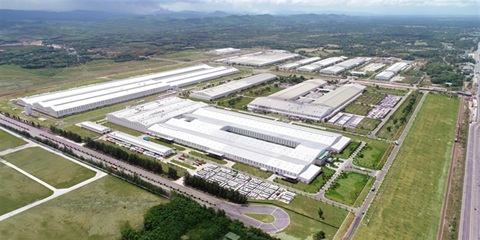
The central city has approved an investment proposal by Thailand’s WHA Group to develop infrastructure for the 400ha WHA Đà Nẵng Industrial Park project on two communes of Thăng Bình and Đồng Dương, with an investment of more than VNĐ2.7 trillion (US$105 million). The city said it approved WHA Industrial Development International's status as an investor in the project, which is expected to take place between 2027 and 2034.
VIETNAM ECONOMY INVESTMENT
MOBILE PHONE EXPORTS RISE 20% TO $51.8 BILLION IN FIRST NINE MONTHS
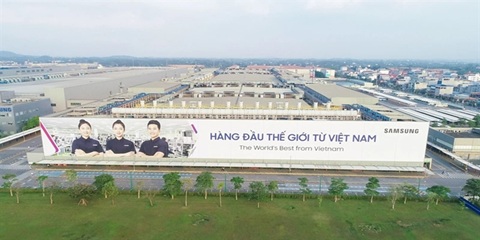
Exports of mobile phones and components rose 20 per cent year-on-year to nearly US$51.8 billion in the first nine months of 2026, with China, the US and Republic of Korea accounting for more than half of the total. Shipments to the three markets reached a combined $26.18 billion, or 50.6 per cent of total exports of the product group during the period, according to data from the Vietnam Department of Customs under the Ministry of Finance.

INFRASTRUCTURE / CONSTRUCTION / LOGISTIC / PORT
VIỆT NAM-CAMBODIA TRADE GATHERS PACE TOWARDS $20 BILLION TARGET
Trade between Việt Nam and Cambodia continues to grow, remaining a bright spot and a key pillar of bilateral cooperation as the two countries aim to raise two-way trade to US$20 billion in the coming years. After setting a record of more than $11.3 billion last year, bilateral trade reached about $8.7 billion in the first eight months of this year, up 8.3 per cent year on year.
VIETNAM ECONOMY INVESTMENT
FRUIT AND VEGETABLE EXPORTS POISED TO HIT $10 BILLION IN 2026
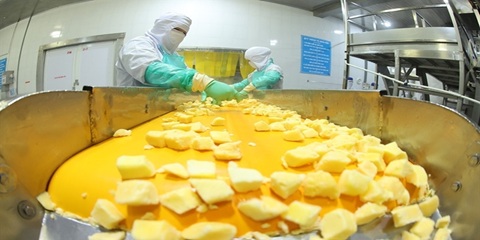
Fruit and vegetable exports are on track to reach nearly US$10 billion in 2026, after rising 19.9 per cent year on year to nearly US$7.4 billion in the first nine months, driven by strong seasonal demand and abundant tropical fruit supplies. The Ministry of Agriculture and Environment said the growth reflected stronger international demand for fresh produce and processed agricultural products.
Events Sponsors






















