Want to be in the loop?
subscribe to
our notification
Business News
BANKING SUCCESSES AMID MOUNTING PRESSURES
In 2024, the Vietnamese banking industry faced continuing headwinds with flexible policies on sectoral administration and inflation control and strong restructuring steps designed for the 2021-2025 phase.
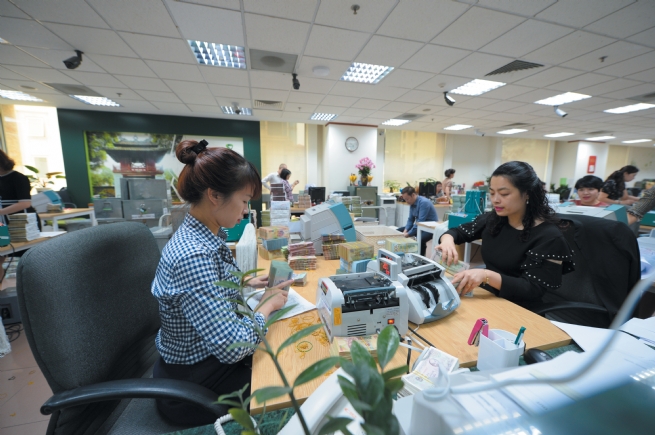
Several monetary policy solutions have been adopted to overcome challenges and drive stronger economic growth than global and regional averages
Overcoming challenges in multitarget administration
According to Governor of the State Bank of Vietnam (SBV) Nguyen Thi Hong, in 2024, the world economy continued to confront many complicated and unpredictable fluctuations. Although global growth showed signs of recovery, the pace remained slow. World inflation subsided but rates remained higher than expected in many countries.
As a highly open economy, Vietnam is strongly affected by these ebbs and flows. The domestic economy markedly recovered but internal weaknesses still needed more time to be addressed. Especially for the banking sector, developments in property and corporate bond markets alongside public concerns over skyrocketing gold prices also exerted a strong impact on banking activities.
This posed a major challenge for the SBV in running monetary policies and banking administration. The SBV had to rein in inflation and support economic growth at the same time, while having to ensure banking safety, slash interest rates and stabilize exchange rates.
Governor Hong emphasized that, led by strong directions of the Government and the Prime Minister plus the close coordination with central and local agencies and the support of businesses and people, 2024 was a successful year of the banking system.
Accordingly, effective monetary policies helped control inflation at 3.63% in 2024. Monetary policy also managed solutions to tackle difficulties and supported higher economic growth than other countries in the world and the region. To facilitate credit institutions to provide credit for robust economic growth, from the beginning of the year, the SBV assigned the entire credit growth target of 15% in 2024. On August 28, 2024, the SBV actively issued a document stating revised credit growth target for 2024 to credit institutions. Credit growth was slow in the first months of the year, but gradually improved towards the end of the year, driven by economic recovery and stronger demand and capital absorption capacity. Annual credit growth reached 15.08% in 2024 compared to the previous year. This truly depicted flexible and effective credit growth management, aimed to promptly provide credit for the economy and support production and business development.
In the meantime, lending rates dipped 0.96% from the end of 2023. The exchange rate was stable despite strong volatility in the international market. International organizations highly appreciate Vietnam's monetary and banking policy management.
Regarding banking system restructuring, the central bank made important progress in handling ailing banks. In 2024, two out of four zero-dong banks were forced to be handed over, CB Bank to Vietcombank and OceanBank to MBBank in September.
The two remaining, GP Bank and Dong A Bank, are also being urged by the SBV for forced transfer in the near future. In addition, the central bank is finalizing a handling plan for SCB for submission to the Government. According to Governor Hong, this marks a very difficult and unprecedented process, requiring close coordination of relevant agencies.
Notably, the additional State investment in State-owned banks was aimed to meet mandatory minimum capital adequacy ratios and help them to carry out state policies and support the economy such as credit policies for agricultural and rural development, rate cut support policies and fiscal obligations. Accordingly, in 2024, the National Assembly (NA) allowed Vietcombank to raise its registered capital by VND20,695 billion by issuing stock dividends to state shareholders, sourced by the remaining accumulated profit to the end of 2018 and the remaining profit in 2021. Before Vietcombank, Agribank also completed hiking its registered capital, sourced from the State budget as per the previously approved policy. The SBV also said that it will submit the registered capital increase plans for BIDV and VietinBank to the National Assembly for consideration and approval. This move will enable State-owned banks to further edge up their competitiveness and fulfill their business targets and tasks.
In payment and digital transformation, in 2024, the banking industry reaffirmed its pioneering role and gained high appreciation from the National Steering Committee on Digital Transformation. In addition, other aspects of SBV's operations also achieved positive results.
Renewed financing solutions to support business and economic development
2025 is the year of acceleration and breakthrough to achieve the highest possible goals and targets in the 5-year Socioeconomic Development Plan from 2021 to 2025, said Standing Deputy Governor of the SBV Dao Minh Tu. Given headwinds and tailwinds intertwined, the SBV will closely follow the goals and orientations of the Party and Government to quickly complete reviewing and streamlining its apparatus and organizational structure; adopt credit solutions based on macroeconomic development, inflation and credit needs of the economy; direct credit institutions to grow credit safely and effectively, and channel credit into manufacturing and trading sectors. Specific credit programs and policies continue to be implemented for a number of sectors and fields under the direction of the Government and the Prime Minister.
At the same time, the SBV will also continue to improve the banking legal system, create a consistent and favorable legal basis for monetary policy management and banking operations; drastically adopt administrative reforms, improve the investment and business environment, and create favorable conditions for people and businesses; and enhance the credit rating and trust of people and businesses in banking mechanisms, policies and operations. In particular, the central bank will step up inspection, examination and supervision of the operations of credit institutions; probe potentially risky areas; detect and strictly handle risks, problems and violations committed by credit institutions so as to ensure security and discipline in monetary and banking markets.
According to Deputy Prime Minister Ho Duc Phoc, to successfully achieve the goals and tasks of the socioeconomic development plan in 2025, the banking sector needs to uphold its dynamism, innovation and creativity, and strive to outperform its assigned functions and tasks. For its part, the State Bank of Vietnam will continue to closely track world economic situations to prepare timely, appropriate and effective management solutions; coordinate monetary policy, fiscal policy and other policies to warrant the safety of the banking system, reduce bad debt, and provide capital to boost economic development.
The arrangement and streamlining of the SBV’s apparatus must ensure the normal operation of the banking system to serve socioeconomic development without interruption.
Particularly, the SBV and credit institutions will continue to effectively implement capital support solutions for businesses, especially small and medium-sized enterprises, in the spirit of "win-win"; strengthen security and ensure safety in banking payment; promote the development of digital banking, electronic payment and enhance customer convenience; implement renewed capital support measures for green development, green production, green consumption, clean energy; handle bad debts; and restructure weak banks.
What's more, the SBV will continue stable and reasonable monetary, interest rate and exchange rate policies, control inflation well, and appropriately manage credit to support development; reinforce anti-money laundering; improve the institutional system in the banking sector; and promptly apply measures to support customers exposed to risks due to natural disasters and epidemics. The central bank needs to see the Vietnam Bank for Social Policies as an important tool to ensure social security in order to have appropriate and effective investment measures.
Source: VCCI
Related News

CHARITY / EXHIBITION / OTHER EVENTS
INVESTMENT OPPORTUNITIES IN CA MAU PROVINCE: 96 PROJECTS AND 20 STRATEGIC PROJECTS
We are pleased to share with you information on investment projects currently seeking investors in Ca Mau Province. Should your esteemed company or association be interested, we kindly invite you to review the project information and complete the registration form via the links provided. The Ho Chi Minh City Investment and Trade Promotion Centre (ITPC) will consolidate the expressions of interest and facilitate connections with the leadership of Ca Mau Province at a meeting tentatively scheduled for 13 November 2026 in Ho Chi Minh City.

MEMBER CORNER / PROMOTIONS
BẰNG KIỀU LIVESHOW - A SYMPHONY OF LOVE UNDER THE GOLDEN GLOW
A masterclass in live music that takes the audience on a soulful journey through immortal love songs, guided by the peerless artistry and emotive storytelling of renowned singer Bằng Kiều. The highlight of the night is his seamless musical chemistry with special guest Triệu Hồng Ngọc, promising passionate and deeply resonant duets inside the magnificent Grand Ballroom.
INFRASTRUCTURE / CONSTRUCTION / LOGISTIC / PORT
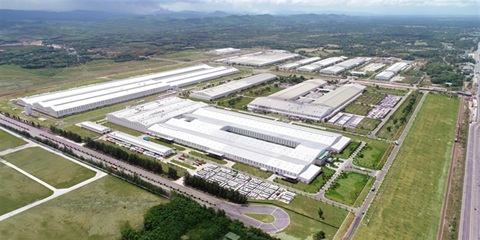
ĐÀ NẴNG GREEN-LIGHTS US$105 MILLION THAI DEVELOPMENT DEAL
The central city has approved an investment proposal by Thailand’s WHA Group to develop infrastructure for the 400ha WHA Đà Nẵng Industrial Park project on two communes of Thăng Bình and Đồng Dương, with an investment of more than VNĐ2.7 trillion (US$105 million). The city said it approved WHA Industrial Development International's status as an investor in the project, which is expected to take place between 2027 and 2034.

VIETNAM ECONOMY INVESTMENT
MOBILE PHONE EXPORTS RISE 20% TO $51.8 BILLION IN FIRST NINE MONTHS
Exports of mobile phones and components rose 20 per cent year-on-year to nearly US$51.8 billion in the first nine months of 2026, with China, the US and Republic of Korea accounting for more than half of the total. Shipments to the three markets reached a combined $26.18 billion, or 50.6 per cent of total exports of the product group during the period, according to data from the Vietnam Department of Customs under the Ministry of Finance.

INFRASTRUCTURE / CONSTRUCTION / LOGISTIC / PORT
VIỆT NAM-CAMBODIA TRADE GATHERS PACE TOWARDS $20 BILLION TARGET
Trade between Việt Nam and Cambodia continues to grow, remaining a bright spot and a key pillar of bilateral cooperation as the two countries aim to raise two-way trade to US$20 billion in the coming years. After setting a record of more than $11.3 billion last year, bilateral trade reached about $8.7 billion in the first eight months of this year, up 8.3 per cent year on year.
VIETNAM ECONOMY INVESTMENT
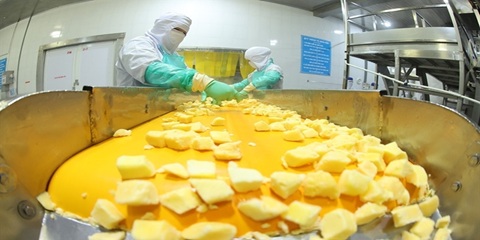
FRUIT AND VEGETABLE EXPORTS POISED TO HIT $10 BILLION IN 2026
Fruit and vegetable exports are on track to reach nearly US$10 billion in 2026, after rising 19.9 per cent year on year to nearly US$7.4 billion in the first nine months, driven by strong seasonal demand and abundant tropical fruit supplies. The Ministry of Agriculture and Environment said the growth reflected stronger international demand for fresh produce and processed agricultural products.
Events Sponsors






















