Want to be in the loop?
subscribe to
our notification
Business News
BANKS CUT LENDING INTEREST RATES ON GOV€™T ADVICE
The bank also earmarked VND300 billion ($13.4 million) to lend to companies for expansion. Vietcombank said this package was made possible by its cut in operational costs, strong risk management, and maximised efficiency.
BIDV, another large State-owned lender, has also reduced its short-term rates by 0.5 per cent for selected borrowers.
Medium- and long-term loans for manufacturing and business can now be obtained at less than 10 per cent interest, down from the previous 10-11 per cent.
Vietinbank, Agribank, Saigon-Hanoi Bank and many others have since followed suit.
The banks’ rate cut decision came after Prime Minister Nguyen Xuan Phuc met with 300 business executives in HCM City on April 29. At the meeting he urged the central bank to maintain reasonable interest rates on loans for manufacturing and business, keep foreign exchange rates under control, and provide all assistance to the business community.
However, many other banks, particularly small ones, have said it is very difficult for them to lower the lending interest rates at this time and asked for support from the Government and shareholders.
Though the Government has been keen to bring interest rates down since early 2015, they stood stubbornly high, even showing an upward tendency recently.
Analysts blamed this on many reasons including increasing dollarisation, rising public debts and banks’ bad debts.
Over the last year, despite the low inflation rate that during many months remained under 1 per cent, banks kept hiking deposit interest rates, which have now reached rather high levels.
Some banks now offer 8 per cent for deposits of over one year.
There is increasing dollarisation because of the economy’s recovery and devaluation of the dong.
The SBV decided to weaken the currency by 3 per cent in response to China’s depreciation of its yuan by 5 per cent last August. This made people reluctant to keep the dong and shift instead to US dollars.
With regard to public debt, some analysts said the Government recently issued more bonds mainly to serve rollover of debts because many short-term debts had fallen due.
Consequently, the government had to compete with businesses to get loans from banks, thus putting upward pressure on interest rates.
But bad debts are believed to be the main reason for making interest rates at least 2 per cent higher than the average inflation rate of the last few years.
VietinBank’s bad debt ratio as of March 31 was 0.96 per cent, or equivalent to VND5.3 trillion, more than half deemed irrecoverable.
For Vietcombank, the figure was 1.84 per cent, equivalent to VND7.6 trillion.
But these are official figures, and speculation has been rife for long that the actual figure could be in double digits.
The dampening effect on liquidity and profits means the banks cannot lower lending interest.
Some analysts expect the interest rates to dip by a further 0.5 per cent this year since the dollarisation could decrease thanks to the central bank’s new mechanism to manage foreign exchange rates more flexibly.
The policy is expected to increase risks while reducing rewards at the same time for those keeping dollars.
The dong is unlikely to see any major devaluation also since the possibility of the US central bank increasing rates is low as the inflation rate is still much below the 2 per cent target.
The central bank’s determination to limit loans to the property sector is likely to help reduce bad debts and constrain credit growth, easing the pressure on lending interest rates.
Some analysts said to bring down the interest rates the central bank should not rely solely on banks’efforts since the latter face many difficulties themselves.
Instead, it needs to instil market discipline by severely punishing all violations of interest rate regulations, they said.
The national lender should also seek ways to regularly reduce the benchmark interest rates, which has been kept unchanged since 2014.
Latex price surges
The Gia Lai-based Hoang Anh Gia Lai Corporation announced losses of VND589 billion ($26.4 million) for the fourth quarter of 2015, the first time it has been in the red since its stock market listing in 2008.
HAGL chairman Doan Nguyen Duc said he has “to sell his house” if he wants to continue growing rubber trees.
But luckily for him, there has been a strong increase in latex prices, which have risen from VND22 million per tonne to VND37-38 million.
This enables rubber companies to earn VND12-13 million per tonne.
After rising to a peak in 2011, latex prices have been falling relentlessly, badly affecting natural rubber producers.
The sharp increase in latex prices is attributed to certain reasons, one of which is the recovery in global rubber prices.
As the trading session ended on March 10 on the Tokyo Commodity Exchange, rubber futures contract prices were Y173 per kilogramme, up 18 per cent from the beginning of the year.
That major rubber businesses in Thailand, Indonesia and Malaysia decided to reduce exports by 615,000 tonnes over a six-month period beginning on March 1 is another reason for rubber prices to increase.
The sharp increase in global oil prices is also an important factor in the rise in natural rubber prices because oil prices are correlated to those of synthetic rubber, a downstream oil product. As synthetic rubber prices harden, consumers turn to natural rubber.
The question is whether Vietnamese rubber producers can capitalize on the price hike.
Many said however that they might miss out on the opportunity due to seasonal factors.
In the first and second quarters of the year, Vietnamese rubber firms have to stop tapping latex to maintain their equipment and wait for the trees to shed their leaves.
The tapping will resume in mid-May and most companies do not have large inventories.
HAGL and Quang Nam Rubber Company said they have no latex inventories. The Hoa Binh Rubber Company has an inventory worth just VND600 million.
The Rubber Phuoc Hoa Company is said to have the largest inventory, one that is worth VND53.547 trillion.
Many rubber businesses are still worried about price volatility because rubber prices are linked to oil prices.
Because of this, many are still running a tight ship, cutting the cost of cultivation and laying off workers.
It looks like the rubber industry is set to miss the boat.
Source: VNEP
Related News
VIETNAM ECONOMY INVESTMENT
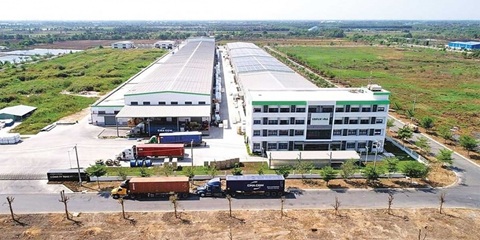
FOREIGN INVESTORS SEEKING A SYNCHRONISED MANUFACTURING ECOSYSTEM
Instead of focusing only on land costs and incentives as usual, foreign investors are seeking a synchronised manufacturing ecosystem, from stable power supply and logistics to shared infrastructure and the convenience of completing residence procedures for experts to serve their long-term investment in the country.
INFRASTRUCTURE / CONSTRUCTION / LOGISTIC / PORT
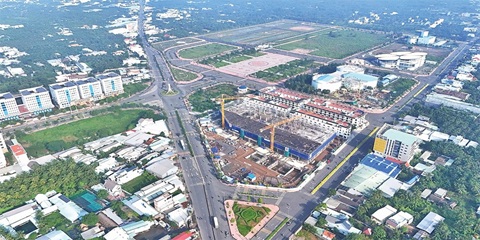
DONG THAP PROVINCE STEPS UP INDUSTRIAL EXPANSION AND INFRASTRUCTURE CONNECTIVITY
Accelerating public investment, strengthening inter-regional connectivity, and expanding industrial land are helping Dong Thap efficiently bolster competitiveness and drive economic growth. Following the 2025 merger of the former Dong Thap and Tien Giang provinces, the expanded Dong Thap province in the Mekong Delta faces mounting pressure to accelerate infrastructure development and strengthen connectivity among local economic zones, urban areas, industrial parks (IPs), and production centres.
PROPERTY / INDUSTRIAL ZONE
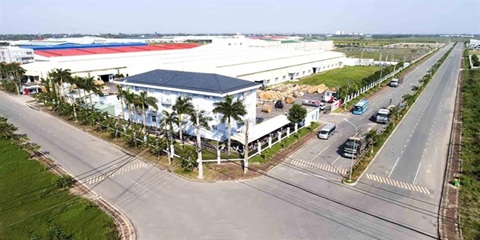
HCM CITY ATTRACTS US$5.7 BILLION INTO EXPORT PROCESSING AND INDUSTRIAL ZONES
HCM City attracted US$5.7 billion in domestic and foreign investment into its export processing and industrial zones during the first nine months of 2026. The figure exceeded the city's full-year target by 31 per cent, highlighting strong momentum in high-quality industrial investment under Resolution No.10-NQ/TW. Total investment reached 131 per cent of the 2026 target of $4.25 billion and represented a 29 per cent increase compared with the same period in 2025, according to the city's Export Processing and Industrial Zones Authority (HEPZA).

BANKING / FINANCE / INSURANCE / TAX
REMITTANCES TO HCM CITY RISE NEARLY 40% IN Q3
Remittances to HCM City reached more than US$2.83 billion in the third quarter of this year, up 39.5 per cent from the previous quarter and 3.6 per cent year-on-year. This was the first quarter showing positive annual growth this year, helping narrow the decline in remittance inflows over the first nine months. According to the State Bank of Vietnam (SBV)’s Regional Branch 2, remittances transferred to HCM City through credit institutions and economic organisations totalled $2.835 billion in Q3, an increase of more than $802 million from the previous quarter.
VIETNAM ECONOMY INVESTMENT
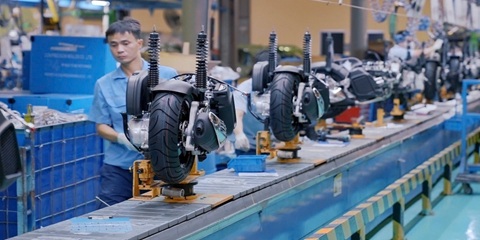
LOCALITIES REPORT BREAKTHROUGH RESULTS IN FDI IN FIRST NINE MONTHS
In Ho Chi Minh City, total registered capital reached $17.2 billion in the first nine months, up 4.2 times from the same period last year. The figure included more than $9.35 billion in newly registered capital and over $4.9 billion in additional capital for existing projects. Foreign investors also registered more than $2.9 billion through capital contributions and share purchases.

TECHNOLOGY
TECH SECTOR GROWTH OPENS UP OPPORTUNITIES FOR VIỆT NAM TO GO GLOBAL
The growth of the electronics, semiconductor and high-tech sectors worldwide is opening up a variety of opportunities for Vietnamese enterprises to integrate more deeply into the global supply chain. However, to become suppliers for these corporations, domestic enterprises must meet rigorous standards regarding quality, technology, productivity and order fulfilment capabilities.
Events Sponsors






















