Want to be in the loop?
subscribe to
our notification
Business News
BANKS TO SEE CHANGES IN HIGH PERSONNEL
AT Eximbank, after Le Hung Dung, former chairman, quit, Pham Huu Phu, CEO and deputy chairman of the board, also quit, only after one year of returning to the bank.
The bank’s extraordinary shareholders’ meeting on December 15 decided on the personnel for the 2015-2020 period, with Le Minh Quoc, independent member of the board, elected as chairman.
But the bank has yet to appoint a CEO. Acting CEO Tran Tan Loc is looking at a possibility to be replaced at the next shareholders’ meeting. As of now, Eximbank has not announced information on the next meeting but a source said it is likely to be in April.
The market is wondering whether in this meeting Eximbank is going to add two former members of Nam A Bank to the board, because they are currently holding 20 per cent of Eximbank. The contenders were left out from the list of candidates for the board at the 2016-2020 of the extraordinary meeting for some reason, giving fertile ground for guesswork and speculation.
Before the shareholders’ meeting, many banks, such as Maritime Bank, Saigonbank, and Sacombank, have requested shareholders to vote for candidates of the board. MaritimeBank, for example, plans the addition of two members to the board at a shareholders’ meeting on April 14. Saigonbank is also going to add two more members to its board.
Sacombank’s shareholders’ meeting will take place in the second quarter. The market expects to see a lot of changes in high personnel after the meeting.
Tram Be, former deputy chairman of the board, has allowed the SBV, or any institution or individual authorised by it, to have shareholders’ right with all the shares that he’s holding after Sacombank is merged with another bank. The SBV is going to handle all the shares now held by Tram Be and associates and is going to assign a new management to Sacombank after the merger.
It is expected that a government representative is going to join the board of Sacombank after the annual shareholders’ meeting in April, along with a new CEO. Some stakeholders guessed that it would be someone from a bank with state holdings, while others were of the opinion that it would be someone from the SBV.
The SBV aims to merge banks to eliminate cross-ownership and “make the system healthier.”
SBV Governor Nguyen Van Binh said that the scale of Vietnam’s economy necessitated only about 15 banks. In 2016 all banks have to meet international requirements in risk management and chartered capital requirements outlined in Vietnamese regulations—falling short, the only recourse would be M&A. If a bank cannot increase its chartered capital, the SBV will buy a stake in order to join in its management.
Source: VIR
Related News
VIETNAM ECONOMY INVESTMENT
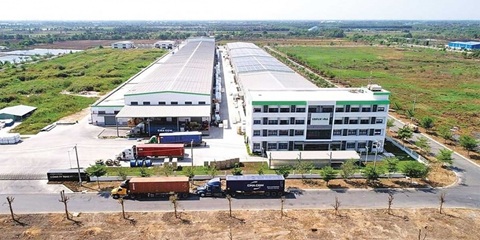
FOREIGN INVESTORS SEEKING A SYNCHRONISED MANUFACTURING ECOSYSTEM
Instead of focusing only on land costs and incentives as usual, foreign investors are seeking a synchronised manufacturing ecosystem, from stable power supply and logistics to shared infrastructure and the convenience of completing residence procedures for experts to serve their long-term investment in the country.
INFRASTRUCTURE / CONSTRUCTION / LOGISTIC / PORT
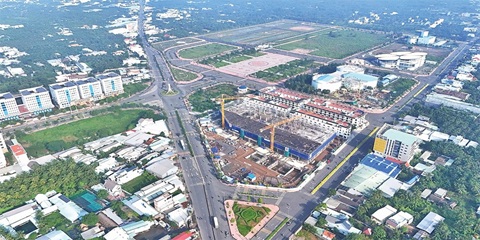
DONG THAP PROVINCE STEPS UP INDUSTRIAL EXPANSION AND INFRASTRUCTURE CONNECTIVITY
Accelerating public investment, strengthening inter-regional connectivity, and expanding industrial land are helping Dong Thap efficiently bolster competitiveness and drive economic growth. Following the 2025 merger of the former Dong Thap and Tien Giang provinces, the expanded Dong Thap province in the Mekong Delta faces mounting pressure to accelerate infrastructure development and strengthen connectivity among local economic zones, urban areas, industrial parks (IPs), and production centres.
PROPERTY / INDUSTRIAL ZONE
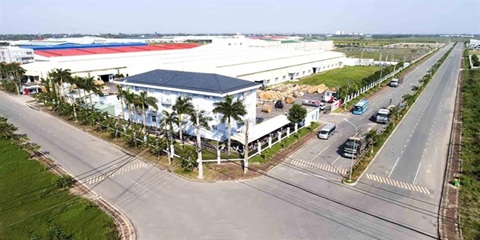
HCM CITY ATTRACTS US$5.7 BILLION INTO EXPORT PROCESSING AND INDUSTRIAL ZONES
HCM City attracted US$5.7 billion in domestic and foreign investment into its export processing and industrial zones during the first nine months of 2026. The figure exceeded the city's full-year target by 31 per cent, highlighting strong momentum in high-quality industrial investment under Resolution No.10-NQ/TW. Total investment reached 131 per cent of the 2026 target of $4.25 billion and represented a 29 per cent increase compared with the same period in 2025, according to the city's Export Processing and Industrial Zones Authority (HEPZA).

BANKING / FINANCE / INSURANCE / TAX
REMITTANCES TO HCM CITY RISE NEARLY 40% IN Q3
Remittances to HCM City reached more than US$2.83 billion in the third quarter of this year, up 39.5 per cent from the previous quarter and 3.6 per cent year-on-year. This was the first quarter showing positive annual growth this year, helping narrow the decline in remittance inflows over the first nine months. According to the State Bank of Vietnam (SBV)’s Regional Branch 2, remittances transferred to HCM City through credit institutions and economic organisations totalled $2.835 billion in Q3, an increase of more than $802 million from the previous quarter.
VIETNAM ECONOMY INVESTMENT
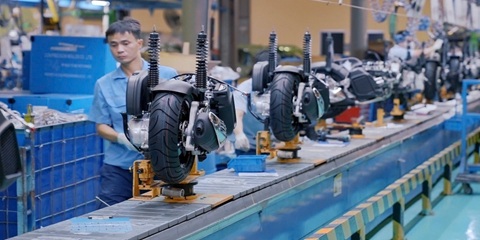
LOCALITIES REPORT BREAKTHROUGH RESULTS IN FDI IN FIRST NINE MONTHS
In Ho Chi Minh City, total registered capital reached $17.2 billion in the first nine months, up 4.2 times from the same period last year. The figure included more than $9.35 billion in newly registered capital and over $4.9 billion in additional capital for existing projects. Foreign investors also registered more than $2.9 billion through capital contributions and share purchases.
TECHNOLOGY
TECH SECTOR GROWTH OPENS UP OPPORTUNITIES FOR VIỆT NAM TO GO GLOBAL
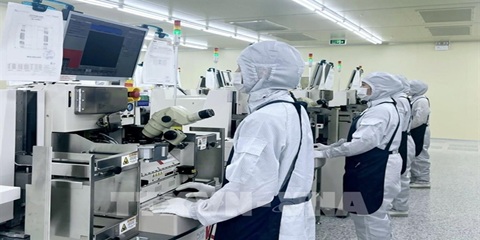
The growth of the electronics, semiconductor and high-tech sectors worldwide is opening up a variety of opportunities for Vietnamese enterprises to integrate more deeply into the global supply chain. However, to become suppliers for these corporations, domestic enterprises must meet rigorous standards regarding quality, technology, productivity and order fulfilment capabilities.
Events Sponsors






















